


Table of Contents
Norway travel has a way of ruining other destinations for you. By no means is it perfect. It’s expensive, the weather can be unpredictable, and some of the most well-known viewpoints involve a steep hike to reach. But once you’ve stood at the edge of a fjord, watched the Northern Lights ripple overhead, or walked through a fishing village in the Lofoten Islands, everywhere else starts to feel a little too… ordinary.
The challenge isn’t convincing yourself to go. It’s figuring out where to go. Norway is bigger than most people realize, and the best places to visit in Norway aren’t always clustered conveniently together. From the cosmopolitan streets of Oslo to the midnight sun above the Arctic Circle, there’s a lot of ground to cover.
This guide breaks it all down: the iconic cities, the natural wonders, the off-the-beaten-path spots worth going out of your way for, and the practical info to make your Norway vacation a reality. Let’s get into it.
Key takeaways
- Oslo, Bergen, and Tromsø are Norway’s three essential cities, each offering a completely different experience.
- The Norwegian fjords (especially Geirangerfjord and Nærøyfjord) are the scenic centerpieces most visitors come for.
- The Lofoten Islands and Svalbard are ideal for travelers who want more adventure and fewer crowds.
- Summer (June to August) is peak season, while winter offers the Northern Lights and snow sports.
- Norway is one of the world’s most expensive countries, but a little planning goes a long way toward helping you not break the bank.
- Most travelers fly into Oslo (OSL), the main gateway to Norway. Going members save an average of 40–50% on international flights, bringing the typical cost of a Norway roundtrip down to around $474. Set up a flight alert in the Going app so you never miss a deal.

Norway’s most iconic destinations
If you’re mapping out your first Norway trip, these are the cities and regions that should anchor your itinerary. Each one has a distinct character, and most visitors will want to hit at least two or three of them.
Oslo: A cosmopolitan capital surrounded by nature
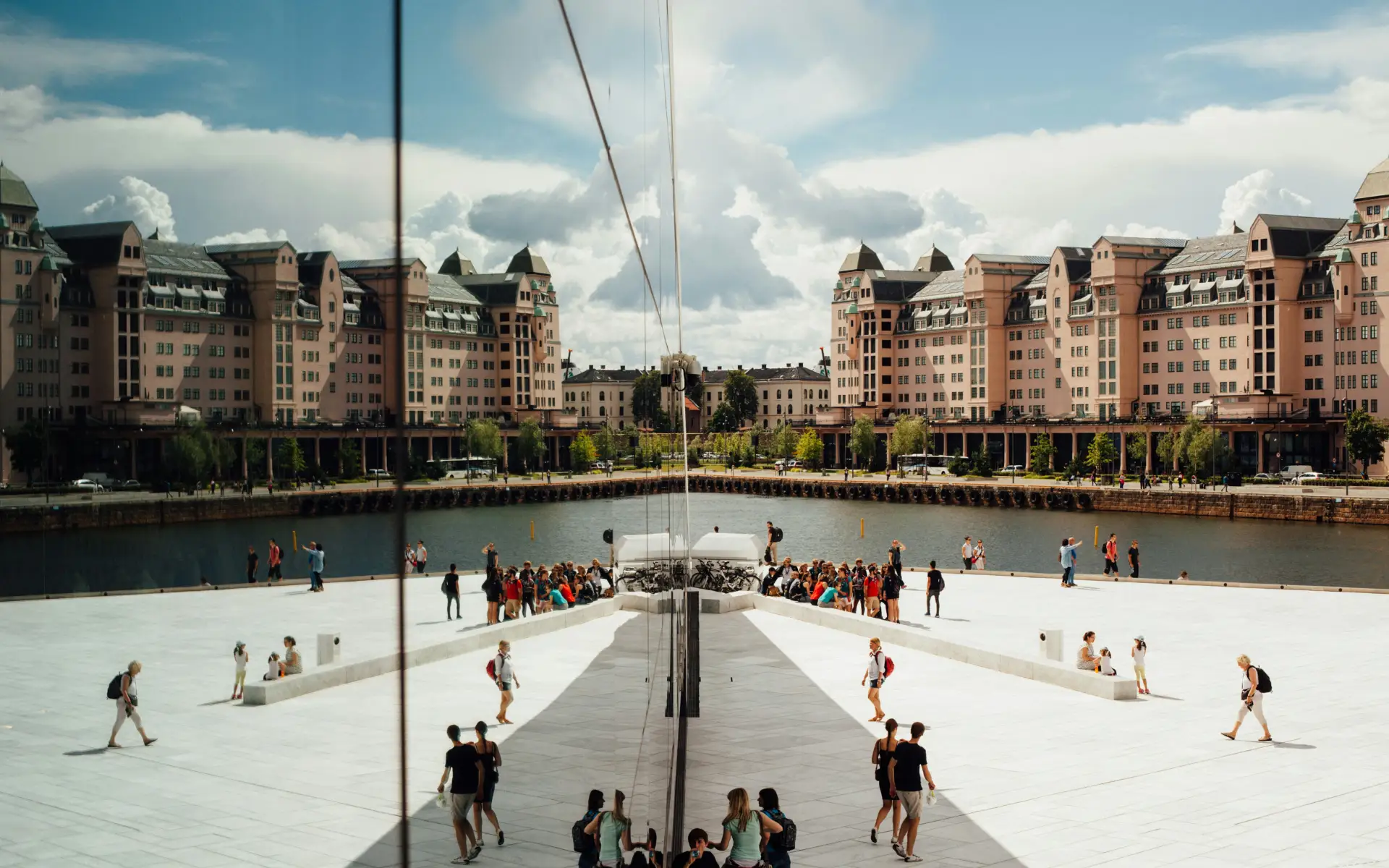
Oslo often surprises first-time visitors. Most people expect a sleepy Scandinavian capital and get something far more dynamic, thanks to world-class museums, a buzzing waterfront, cutting-edge architecture, and one of the best food scenes in northern Europe. The Munch Museum and the Viking Ship Museum alone could fill a day, and that’s before you factor in the Aker Brygge harbor district or the Oslo Opera House (a building you can walk on top of).
What makes Oslo unique among European capitals is how quickly the city gives way to wilderness. The Nordmarka forest sits right at the edge of town, offering cross-country ski trails in winter and hiking paths in summer, all accessible by public transit. It’s the kind of city that rewards a slow visit. Two or three days is a good starting point.
Bergen: The colorful gateway to the fjords
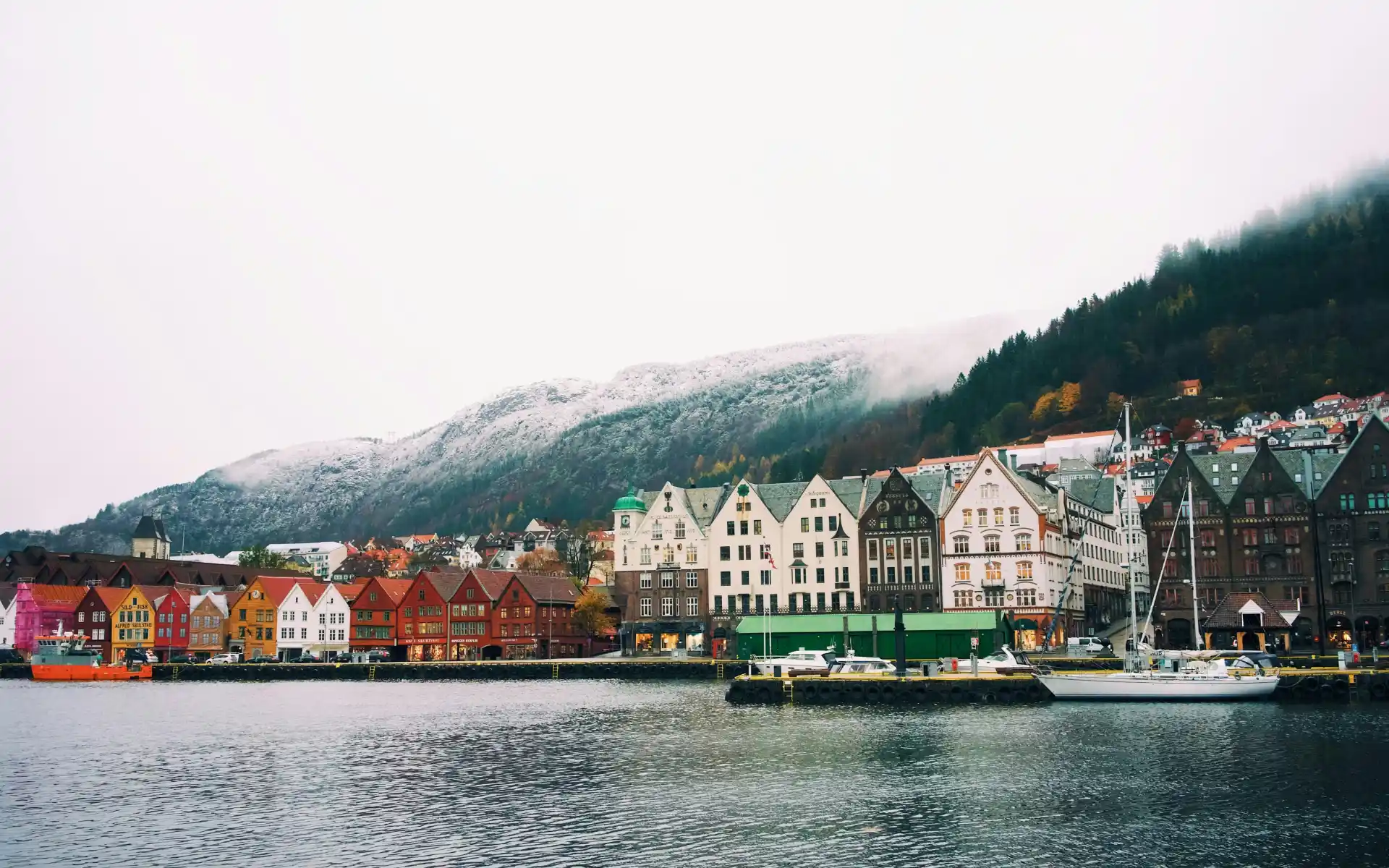
Bergen looks exactly like its photographs, yet it still somehow manages to exceed expectations when you’re standing in front of the Bryggen wharf with its rows of colorful wooden houses. A UNESCO World Heritage Site, Bryggen dates back to the 14th century Hanseatic trading era, and it’s still the heart of the city.
But Bergen’s bigger draw is what it leads to. As the gateway to the fjords, it’s the most convenient jumping-off point for both Hardangerfjord and Sognefjord, the longest fjord in the world. Take the Fløibanen funicular up Mount Fløyen for a breathtaking view, and budget time for the lively Mathallen food hall if Norwegian seafood is on your list.
Tromsø: The capital of the Arctic
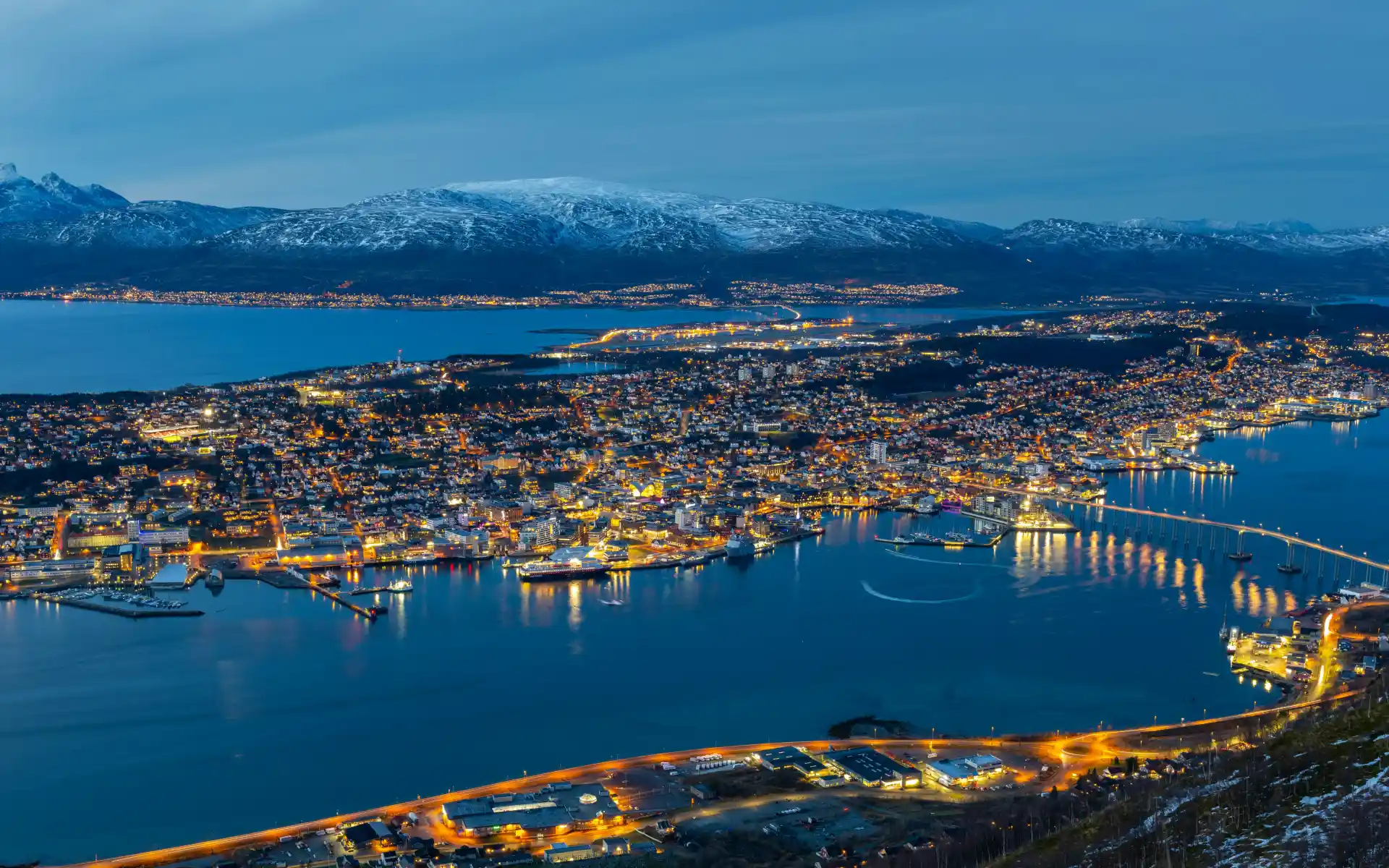
Tromsø sits 217 miles above the Arctic Circle, and everything about it feels a little otherworldly. In winter, it’s one of the best places in the world to witness the Northern Lights, with a long polar night season (late November through late January) that gives you maximum darkness for aurora hunting. In summer, the Midnight Sun makes the city feel like it operates on a different clock entirely.
The city itself is charming and surprisingly lively for its size, with a strong café culture and a proud food scene built around Arctic ingredients like reindeer, king crab, and stockfish. The Arctic Cathedral—its dramatic triangular facade reflected in the water—is one of Norway’s most photographed landmarks.
Stavanger: Pulpit Rock and the Lysefjord
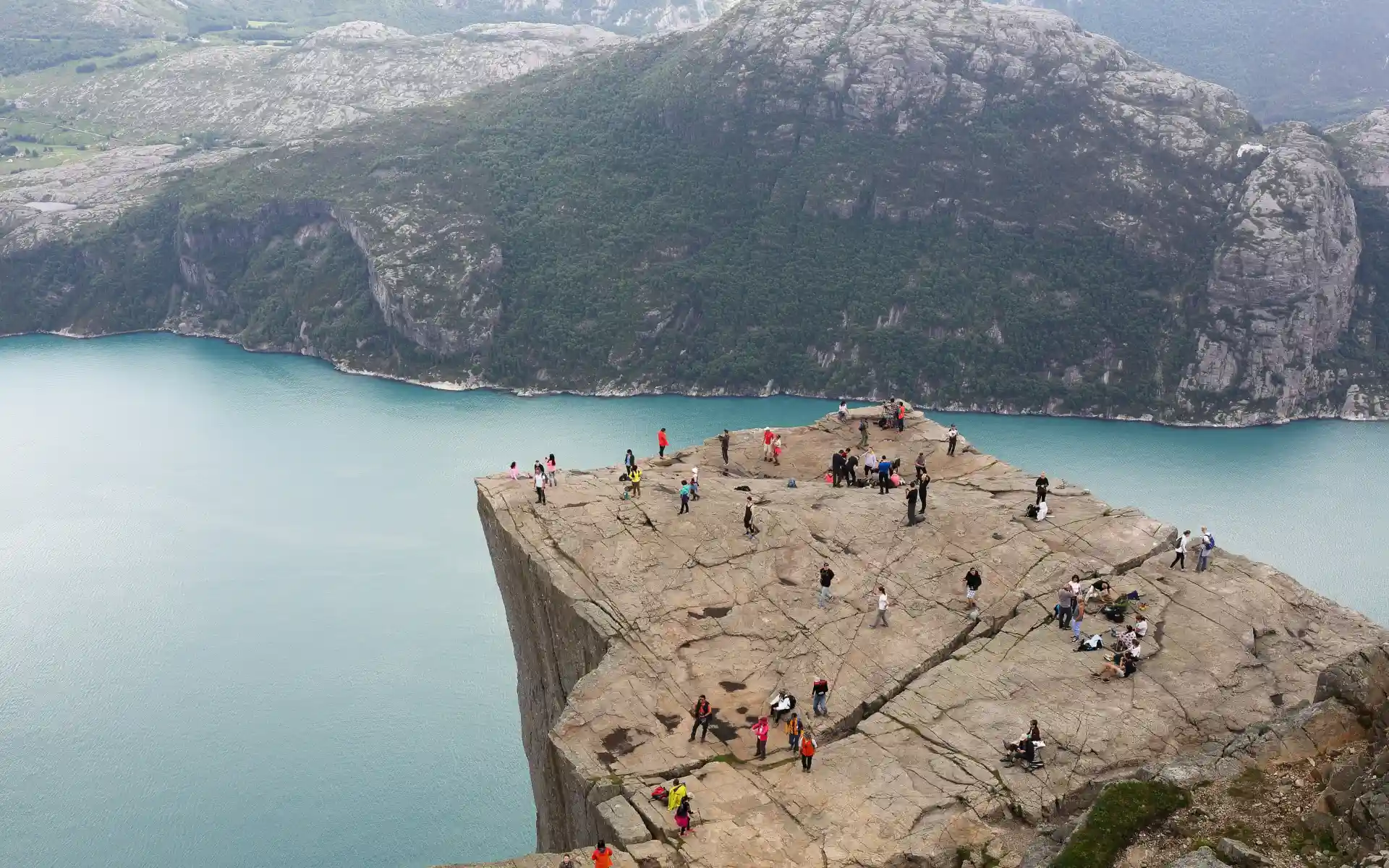
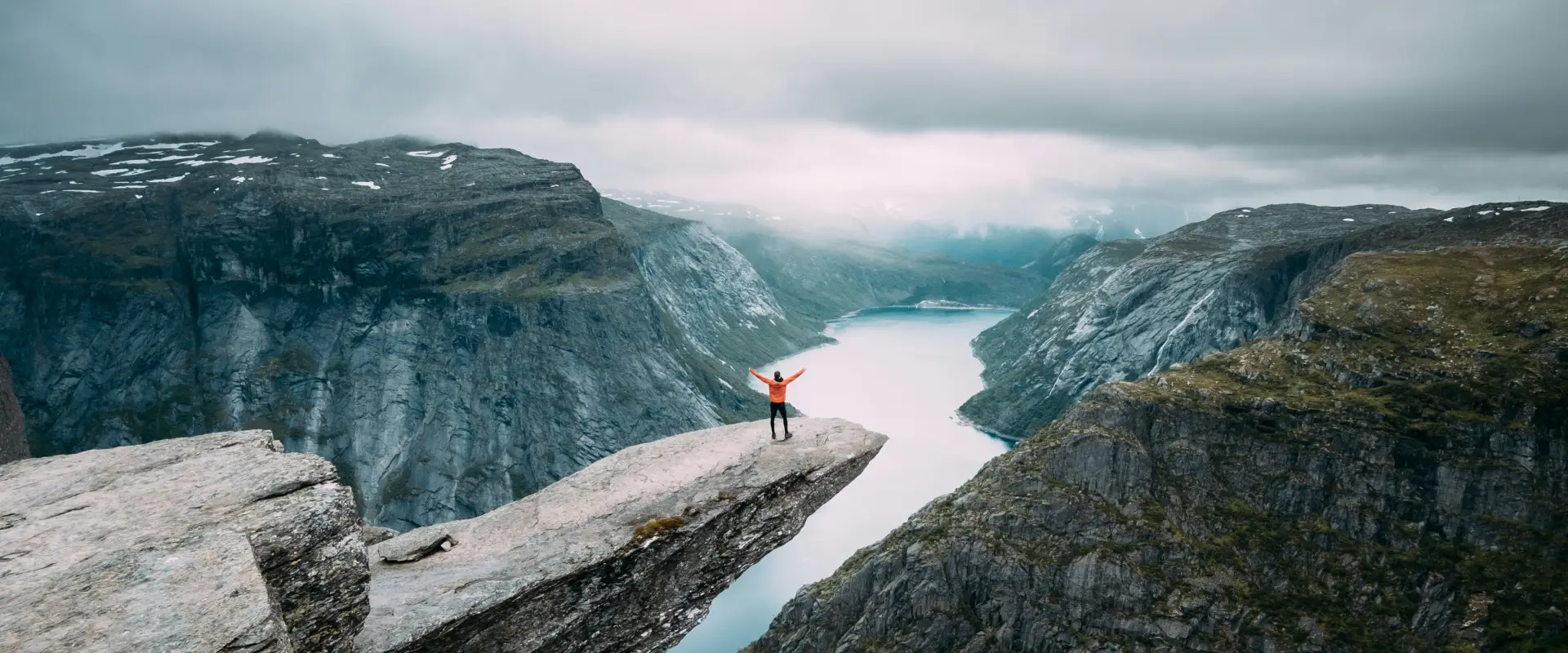
Stavanger doesn’t always make the short list for first-time visitors to Norway, but it should. The city’s charming old town, Gamle Stavanger, is one of the best-preserved wooden house districts in Scandinavia. Just as importantly, it’s the base for two of the most iconic hikes in Norway: the climb up to Preikestolen (Pulpit Rock), a flat cliff ledge 1,982 feet above the Lysefjord, and the longer, more demanding hike to Kjeragbolten, a boulder wedged between two rock faces with a sheer drop below.
Even if hiking isn’t your thing, a cruise or boat tour through the Lysefjord itself is spectacular. Stavanger is also a convenient city to fly into for west Norway travel, with good international connections.
Trondheim: Norway’s Viking-age capital
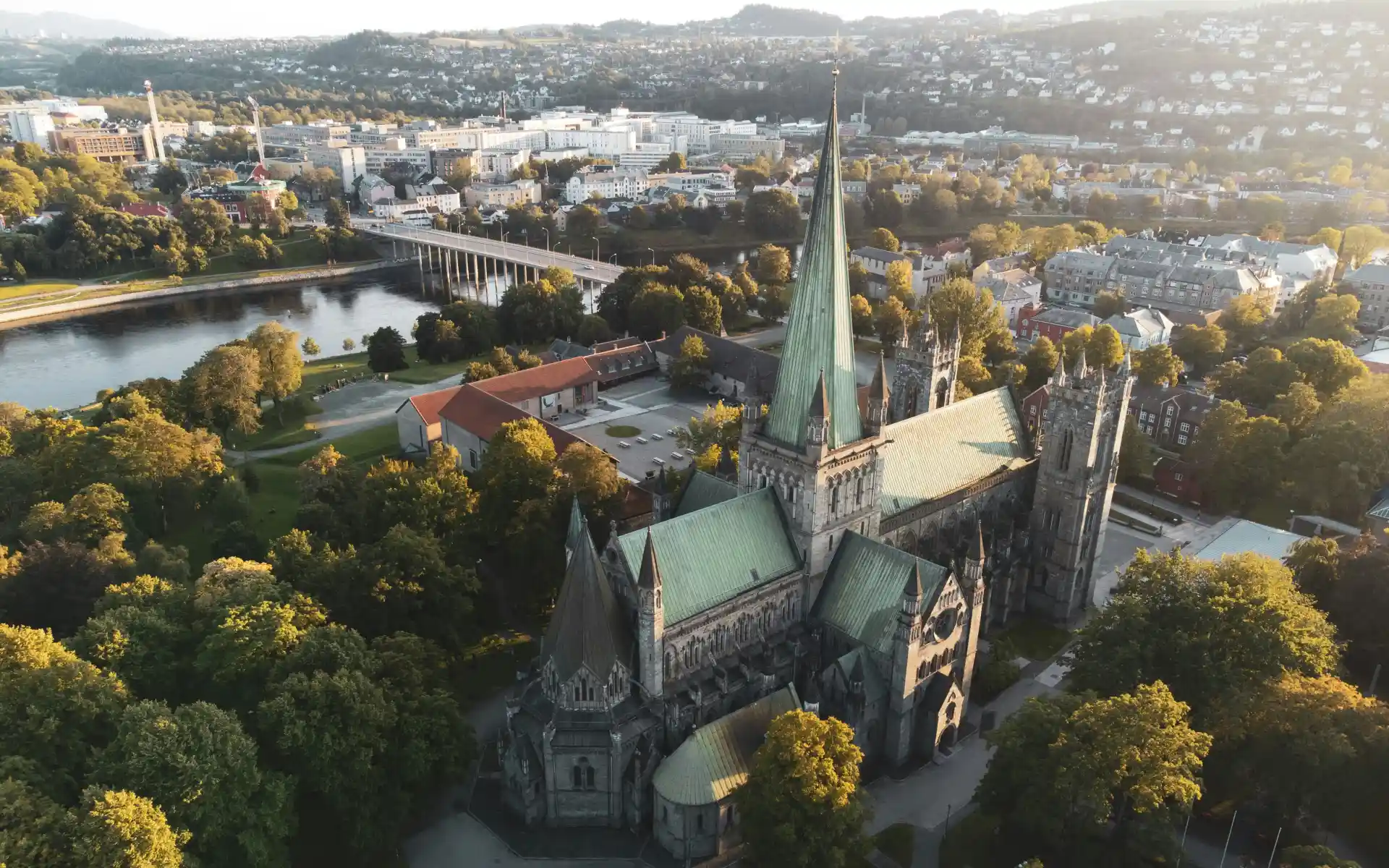
Trondheim is Norway’s third-largest city and one of its most underrated. Founded by the Viking king Olaf Tryggvason in 997 AD, it served as Norway’s capital for centuries, and the Nidaros Cathedral at its center is a direct link to its history. Nidaros is the northernmost medieval cathedral in the world and the burial site of Saint Olav, who made Norway a Christian kingdom.
The city has a strong student population (Trondheim is home to Norway’s largest university), which gives it an energy that feels larger than its actual size. The old Hanseatic wharf area of Nedre Elvehavn, with its converted warehouses and riverside restaurants, is worth a long afternoon.
Ålesund: An Art Nouveau town on the water
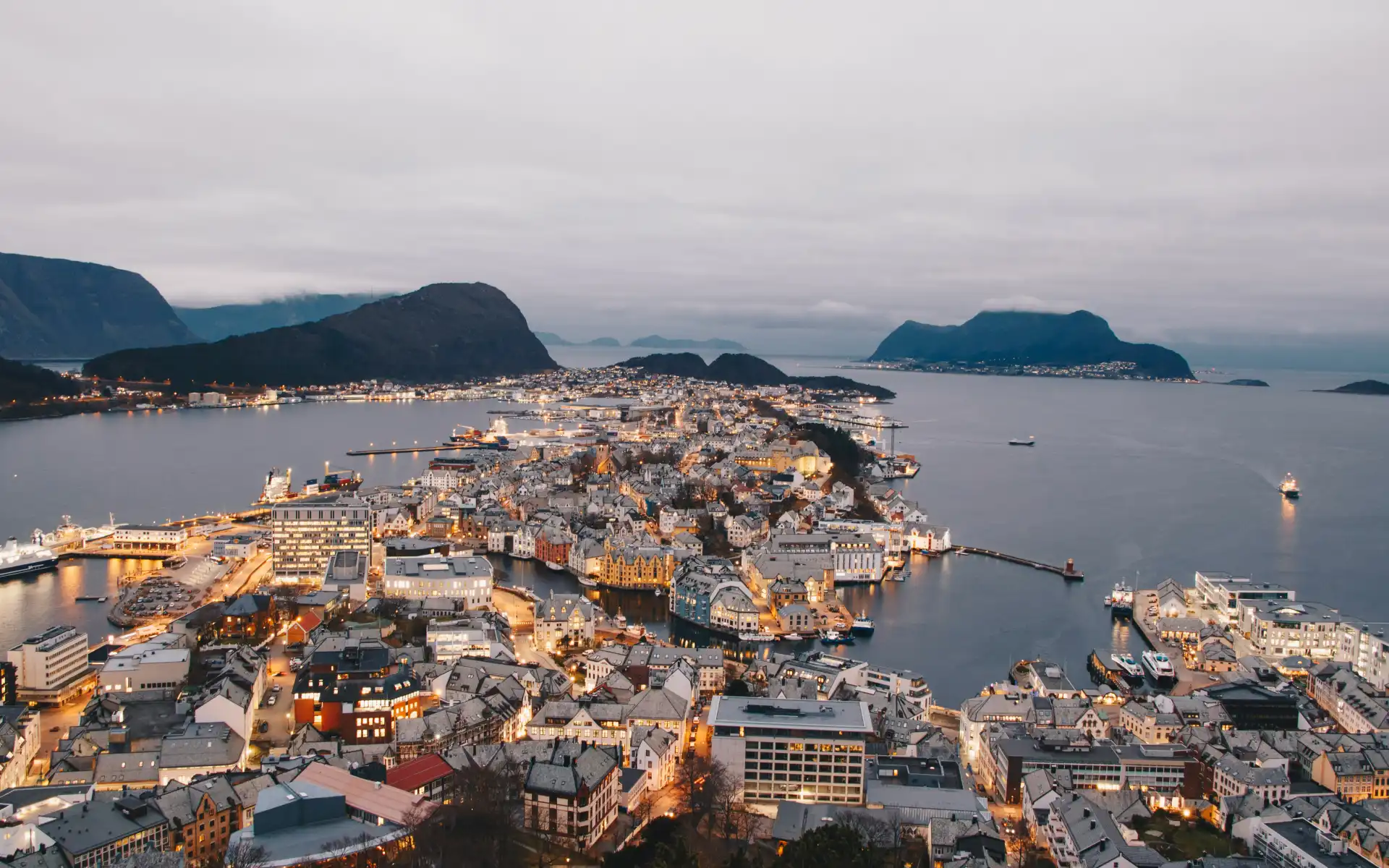
Ålesund is unlike anywhere else in Norway, architecturally speaking. After a devastating fire in 1904 destroyed most of the city, it was rebuilt almost entirely in Art Nouveau style, funded largely by Kaiser Wilhelm II of Germany who had a personal fondness for the area. The result is a remarkably cohesive townscape of ornate facades and decorative turrets spread across a series of islands.
The climb up to Aksla viewpoint offers one of the most panoramic views of any Norway city, with islands, fjords, and mountains stretching as far as you can see. Ålesund is also a convenient gateway to the Geirangerfjord, making it a natural stop on any west Norway itinerary.

Natural wonders you shouldn’t miss
Norway’s cities are worth your time, but the country’s real draw is its landscape. Here are the natural landmarks that should be on every Norway travel itinerary.
The Norwegian fjords: Geirangerfjord and Nærøyfjord
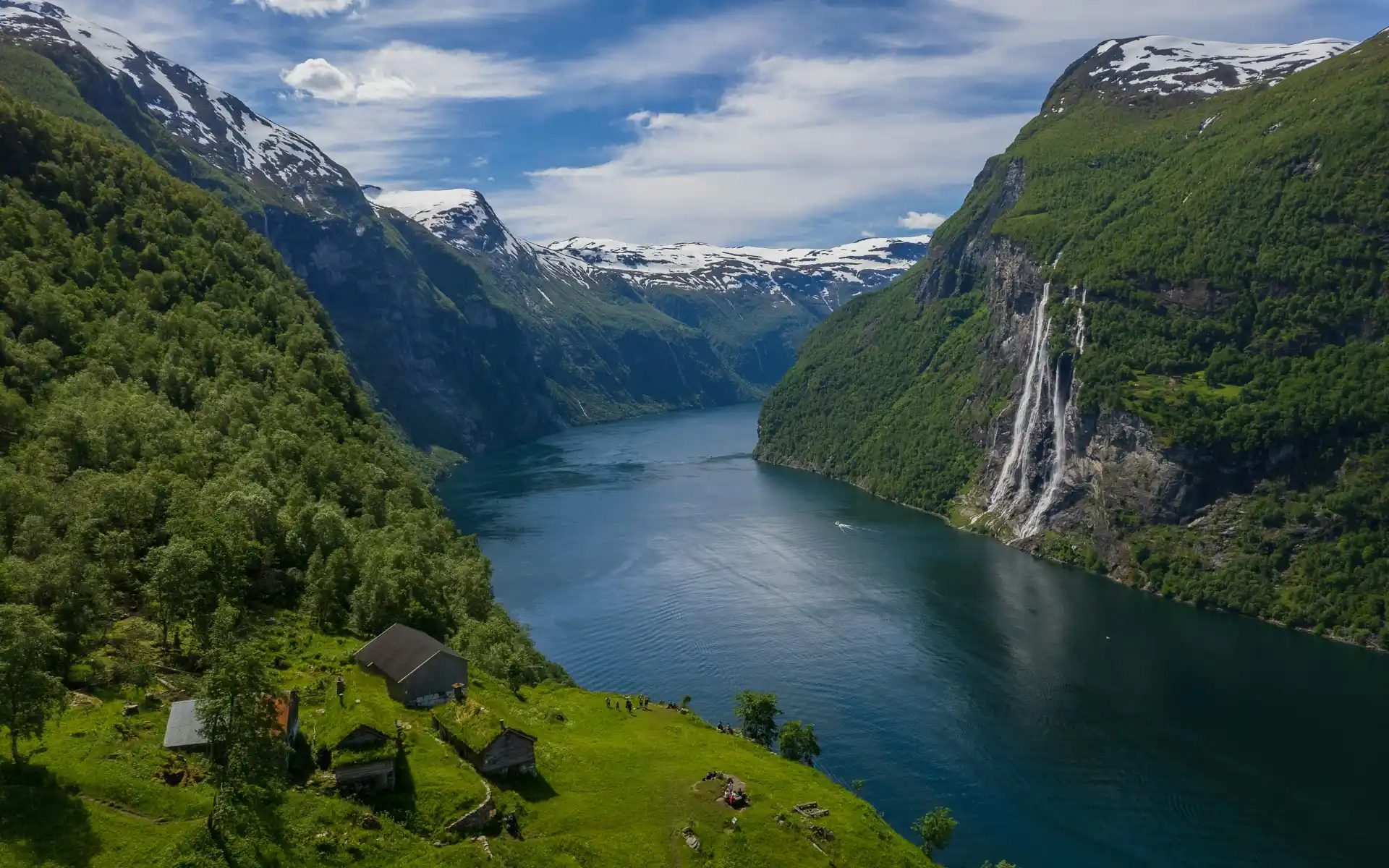
Both UNESCO World Heritage Sites, Geirangerfjord and Nærøyfjord are the definitive Norwegian landscape experiences. Geirangerfjord, in the Sunnmøre region, is famous for its dramatic width, towering waterfalls like the Seven Sisters and the Suitor, and the sheer verticality of its walls. Nærøyfjord, a branch of Sognefjord, is narrower and arguably more intimate, with the cliffs closing in around you as you move through it.
You can experience both by boat tour, kayak, or ferry. The classic Norway in a Nutshell route—a combination of ferry, train, and bus—is a well-worn but excellent way to see Nærøyfjord alongside the famous Flåm Railway.
The Lofoten Islands: Jagged peaks and postcard-perfect fishing villages
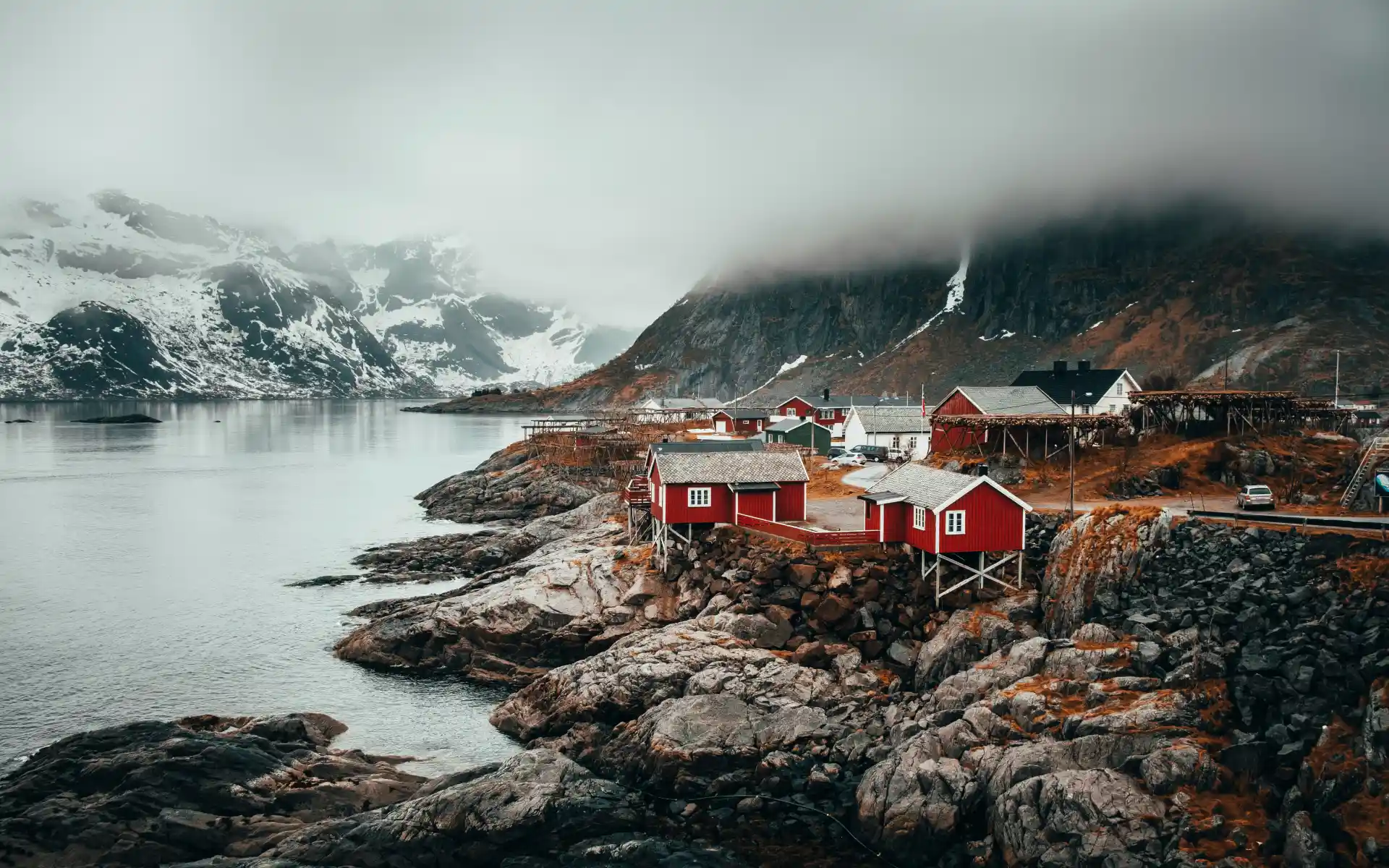
Few places in Europe match the visual impact of the Lofoten Islands. An archipelago sitting above the Arctic Circle in northern Norway, Lofoten is defined by dramatic mountain peaks that rise from the sea, red and yellow rorbu fishing cabins (traditional Norwegian fishermans’ homes) clustered along the water, and a quality of light that photographers travel across the world to capture.
The main villages—Å, Reine, Henningsvær, and Svolvær—are all worth a visit. Reine is the one that tends to appear on every “best places in Norway” list, and rightfully so, but Henningsvær’s island-hopping village character is equally memorable. Lofoten is accessible by plane to Svolvær or Leknes, or by ferry from Bodø.
Jotunheimen National Park: Home of the giants
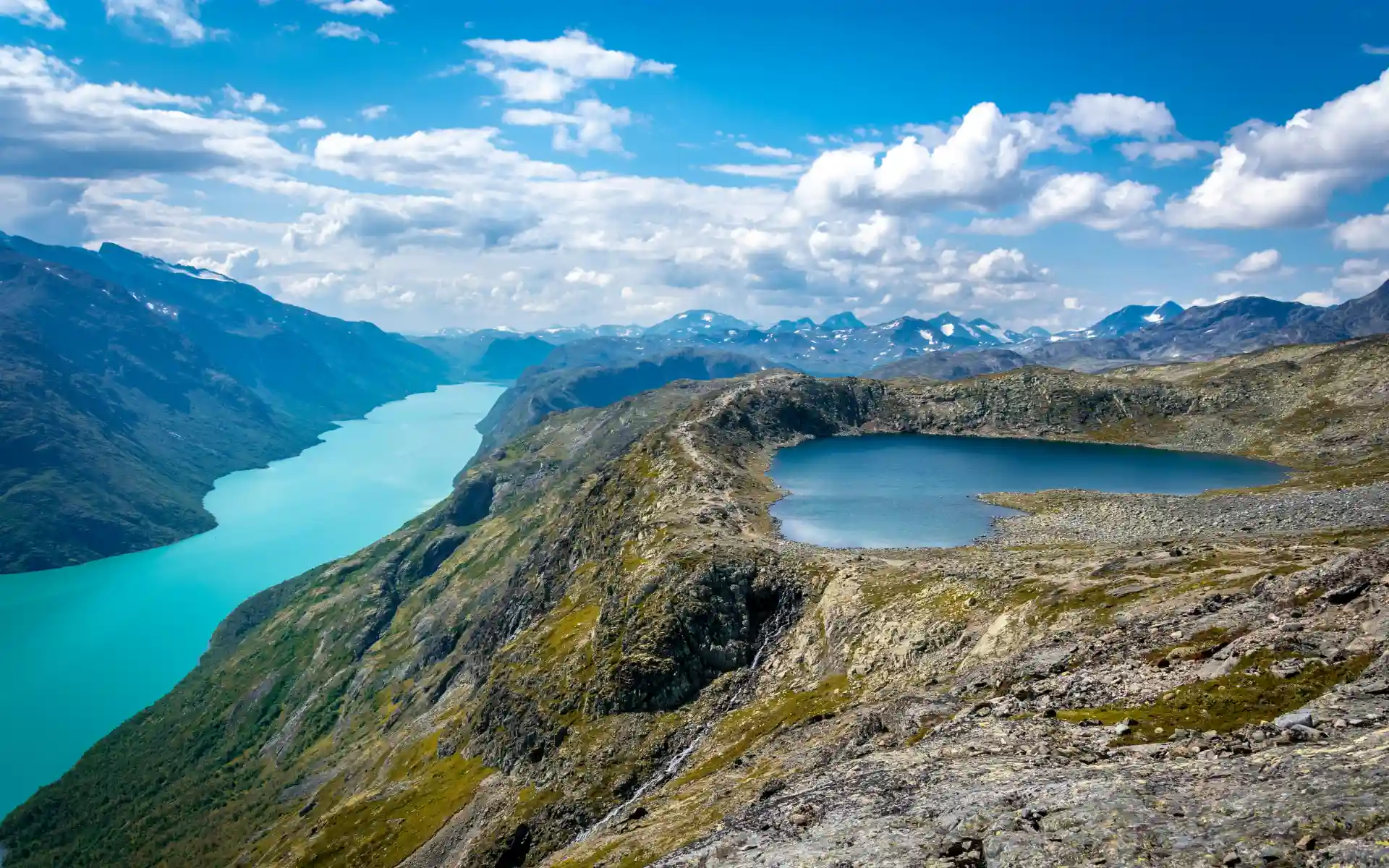
The name translates to “home of the giants.” Take a spin through Jotunheimen, and you’ll quickly see why. This is Norway’s premier hiking destination, home to Galdhøpiggen and Glittertind, the two highest peaks in Scandinavia, as well as the famous Besseggen Ridge hike, a narrow spine of rock between two lakes of strikingly different colors that is widely considered one of the best day hikes in Europe.
Access is centered around the mountain lodge village of Jotunheimen, and the park is best visited July through September when most trails are free of snow. The Sognefjell Mountain Road, which cuts through the park, is one of the highest mountain passes in northern Europe and a spectacular drive.
The Northern Lights: Where, when, and how to see them
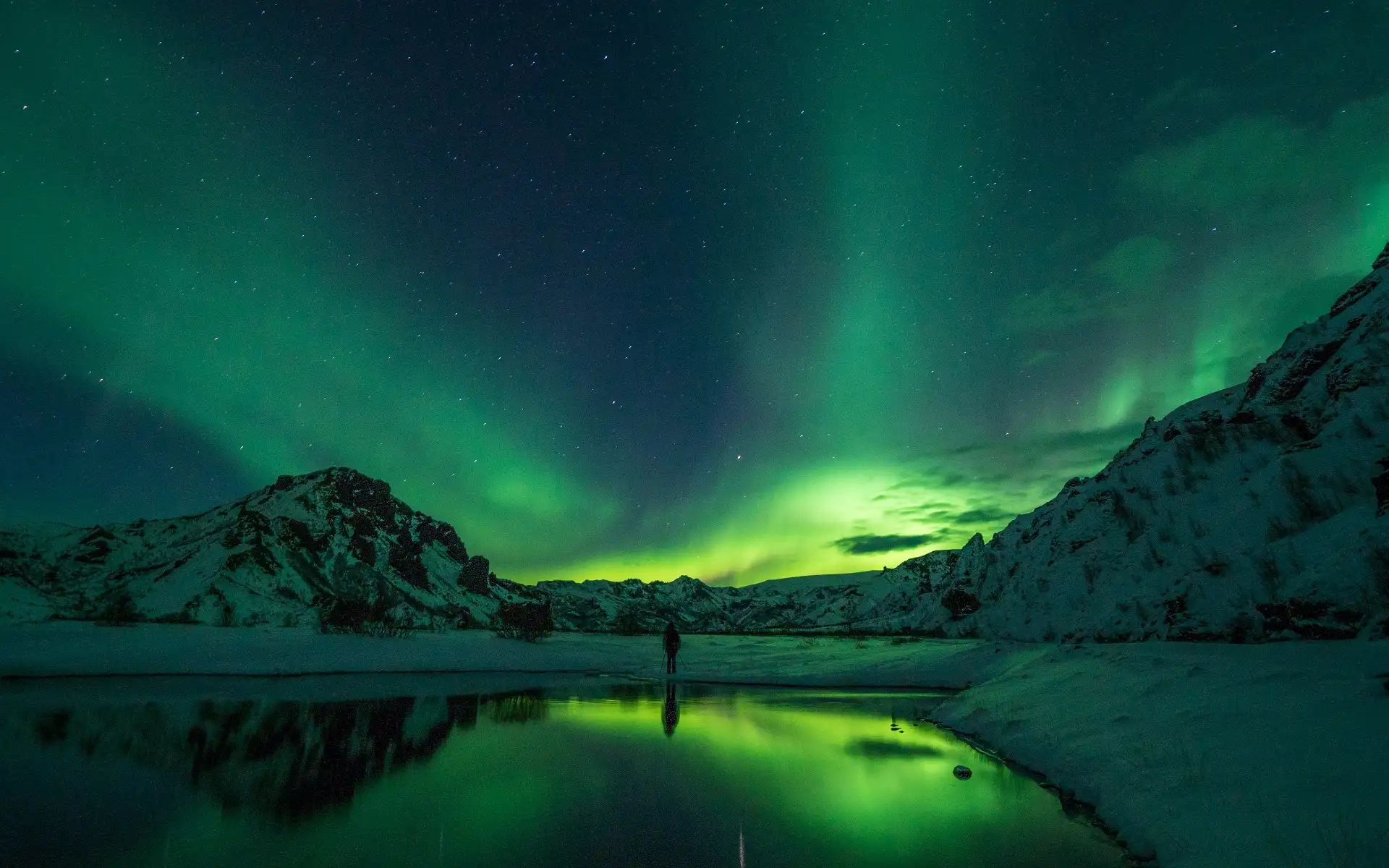
The Northern Lights (aurora borealis) are one of Norway’s biggest draws, and while they’re not guaranteed, Norway gives you some of the best odds in the world. The key variables:
- Location: It helps to be above the Arctic Circle. Tromsø is the most popular base, but Bodø, the Lofoten Islands, and Svalbard all work.
- Timing: September through March, with peak activity in September/October and February/March. You need darkness, so the polar night period (late November to late January in Tromsø) is ideal.
- Conditions: Clear skies and high solar activity. Download a KP index app, and watch the forecast. Locals swear by Yr.no for Norwegian weather.
Guided Northern Lights chases are widely available in Tromsø and worth the investment if you’re determined to see them, as guides know where to go to escape cloud cover.
The Midnight Sun: Norway’s most surreal natural phenomenon
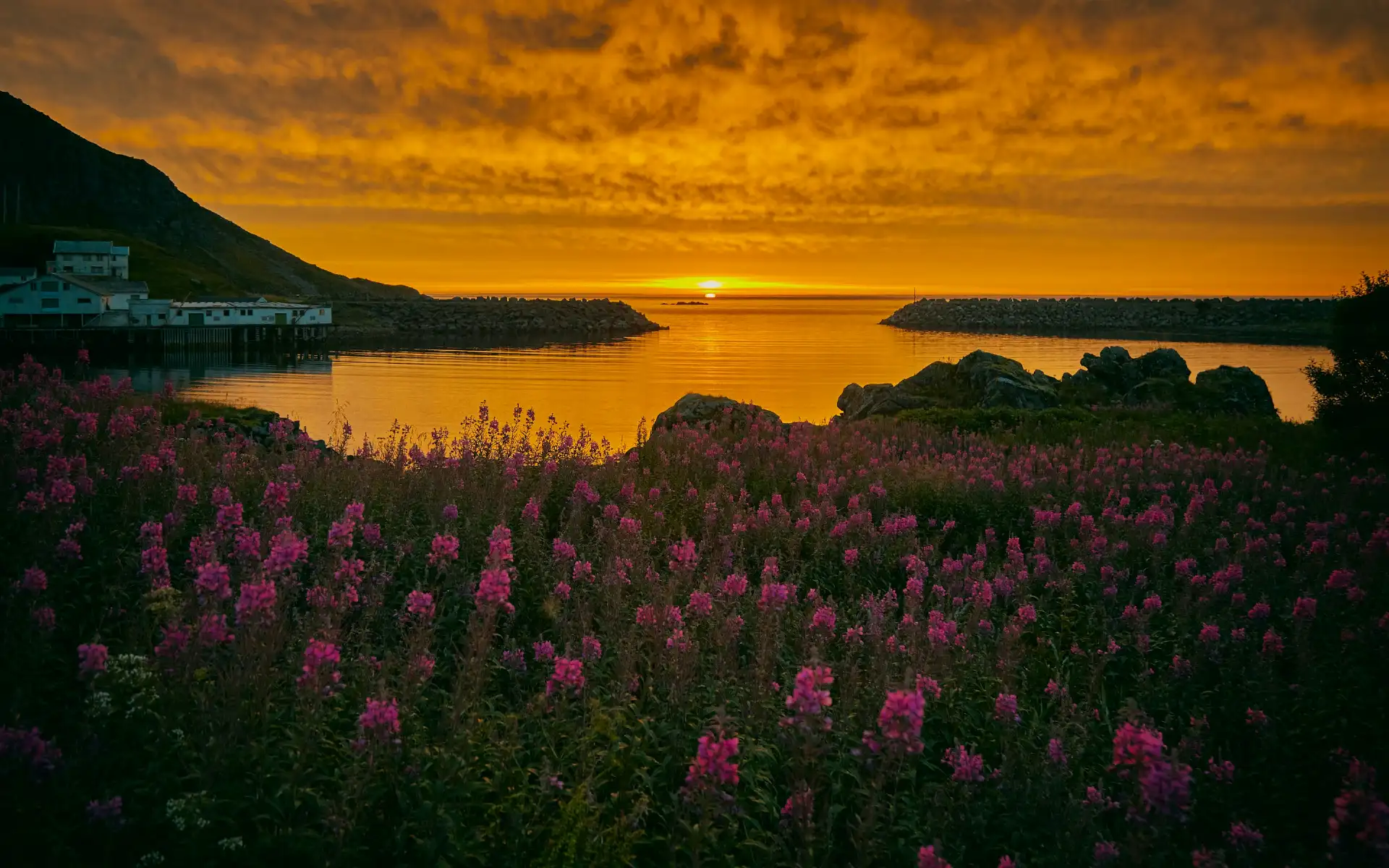
The flip side of polar nights, the Midnight Sun is what happens in summer above the Arctic Circle: The sun simply doesn’t set. In Tromsø, continuous daylight runs from late May to late July. In Svalbard, the sun stays above the horizon from mid-April to late August.
Experiencing this once is deeply disorienting in the best way. You’ll find yourself having dinner at 10pm in full golden sunlight, or watching the sea reflect a warm orange sky at 2am. Bring a sleep mask.
Off the beaten path in Norway
Norway’s most famous destinations are famous for good reason. But if you’ve already checked off the fjords and the Lofoten Islands, or if you simply want more space to yourself, these destinations offer some of the country’s most memorable experiences with a fraction of the foot traffic.
The Vesterålen Islands: Whale watching without the crowds
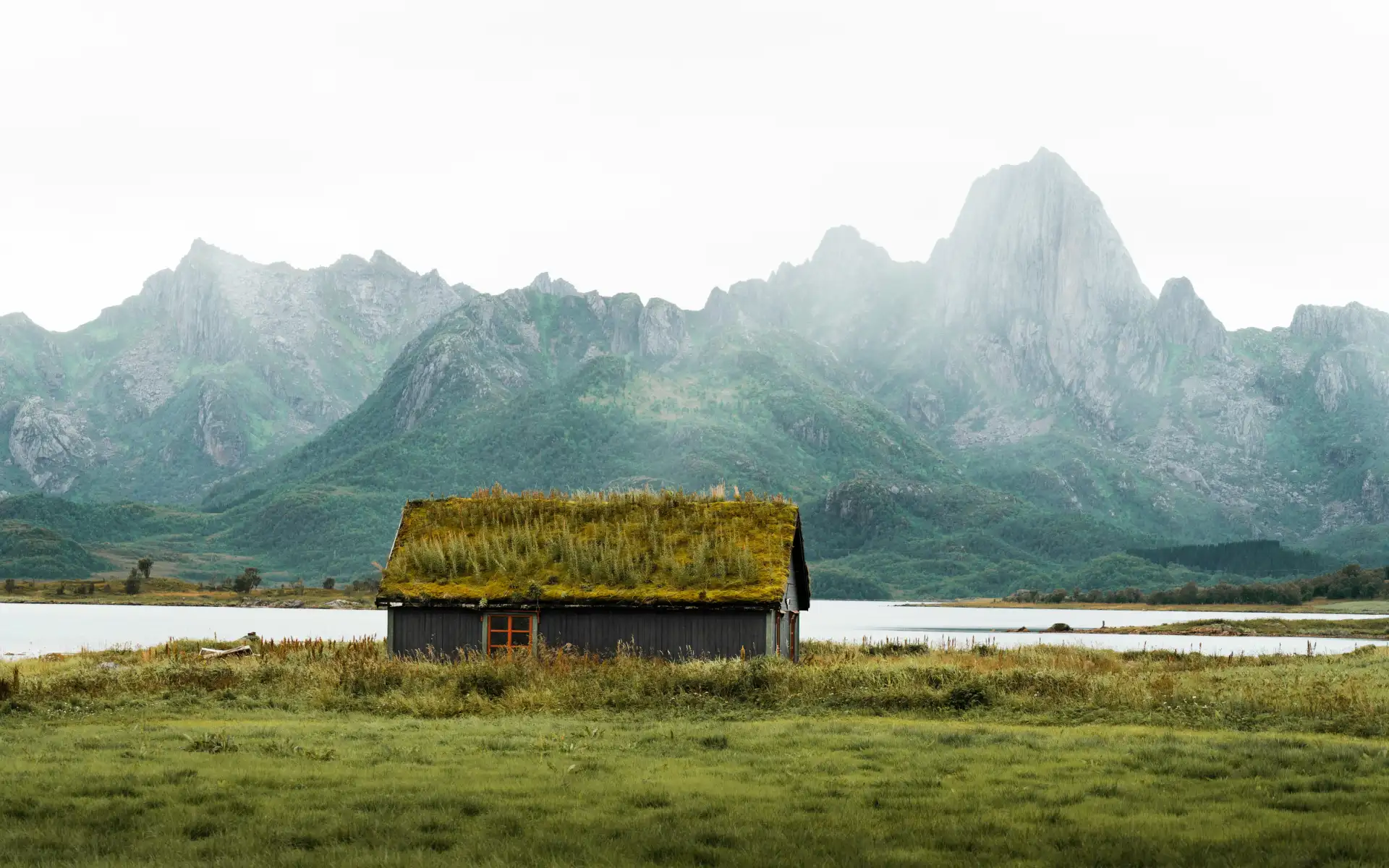
Just north of the Lofoten Islands, the Vesterålen archipelago sits in the shadow of its more famous neighbor. The landscape is softer and more varied than Lofoten, with rolling hills and longer beaches alongside the peaks, but the real draw is the marine life.
Vesterålen is one of the best places in Norway (and arguably in the world) for whale watching. Sperm whales are present year-round, and humpback and orca whales follow the herring in winter. The town of Andenes is the main whale-watching hub, with tours running most of the year.
Røros: A UNESCO-listed mining town
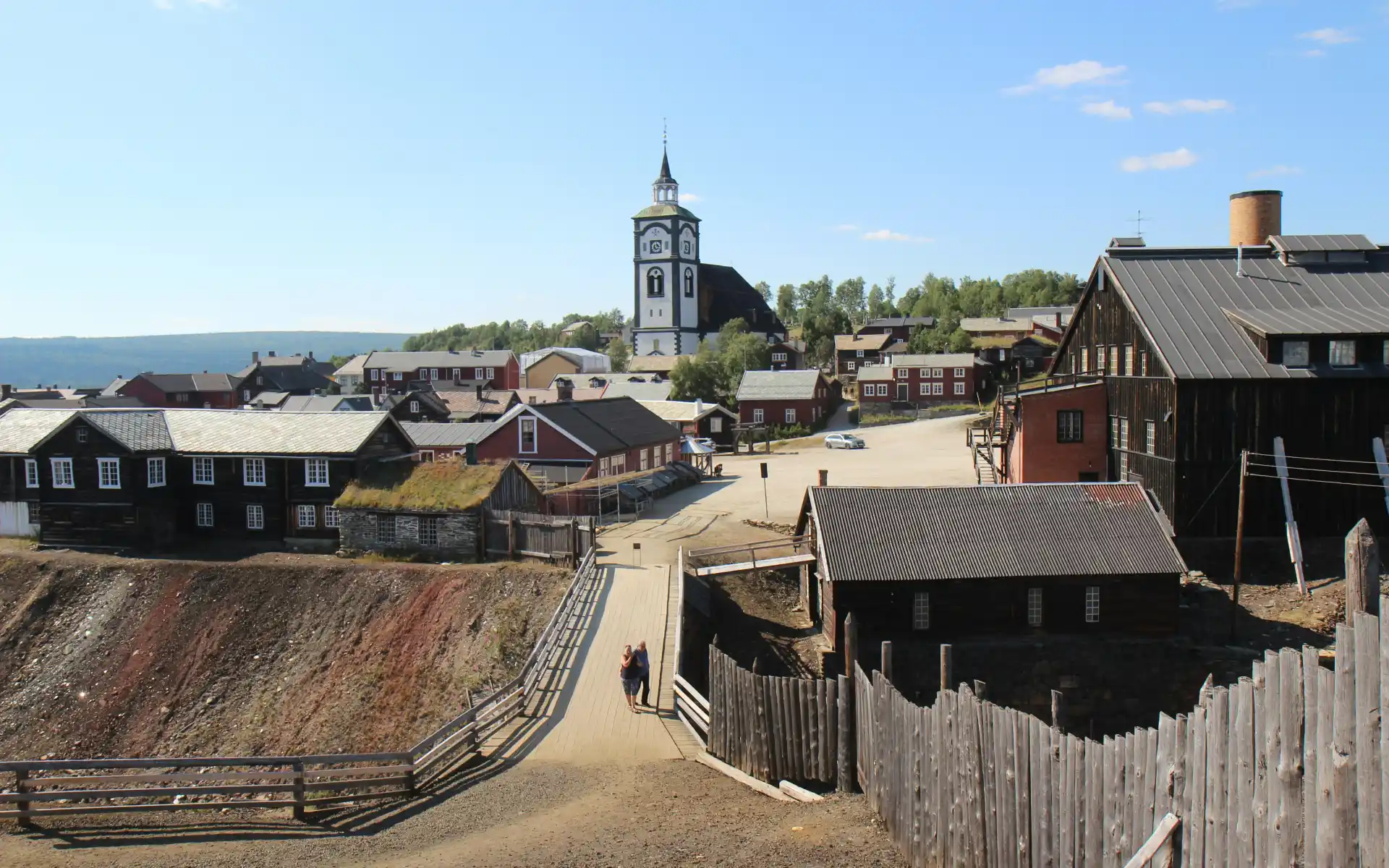
A copper mining town founded in the 1640s, Røros has been extraordinarily well-preserved. The wooden townhouses, the smelter works, and the Baroque church are all essentially intact, and the whole city center is on the UNESCO World Heritage List.
In winter, Røros transforms into a living museum of traditional Norwegian life, with horse-drawn sleds and the famous Rørosmartnan market held in February. In summer, it’s quieter and equally charming. It’s accessible by train from Oslo (about four hours) and pairs well with a stop in Trondheim.
Helgeland: The scenic coastal route less traveled
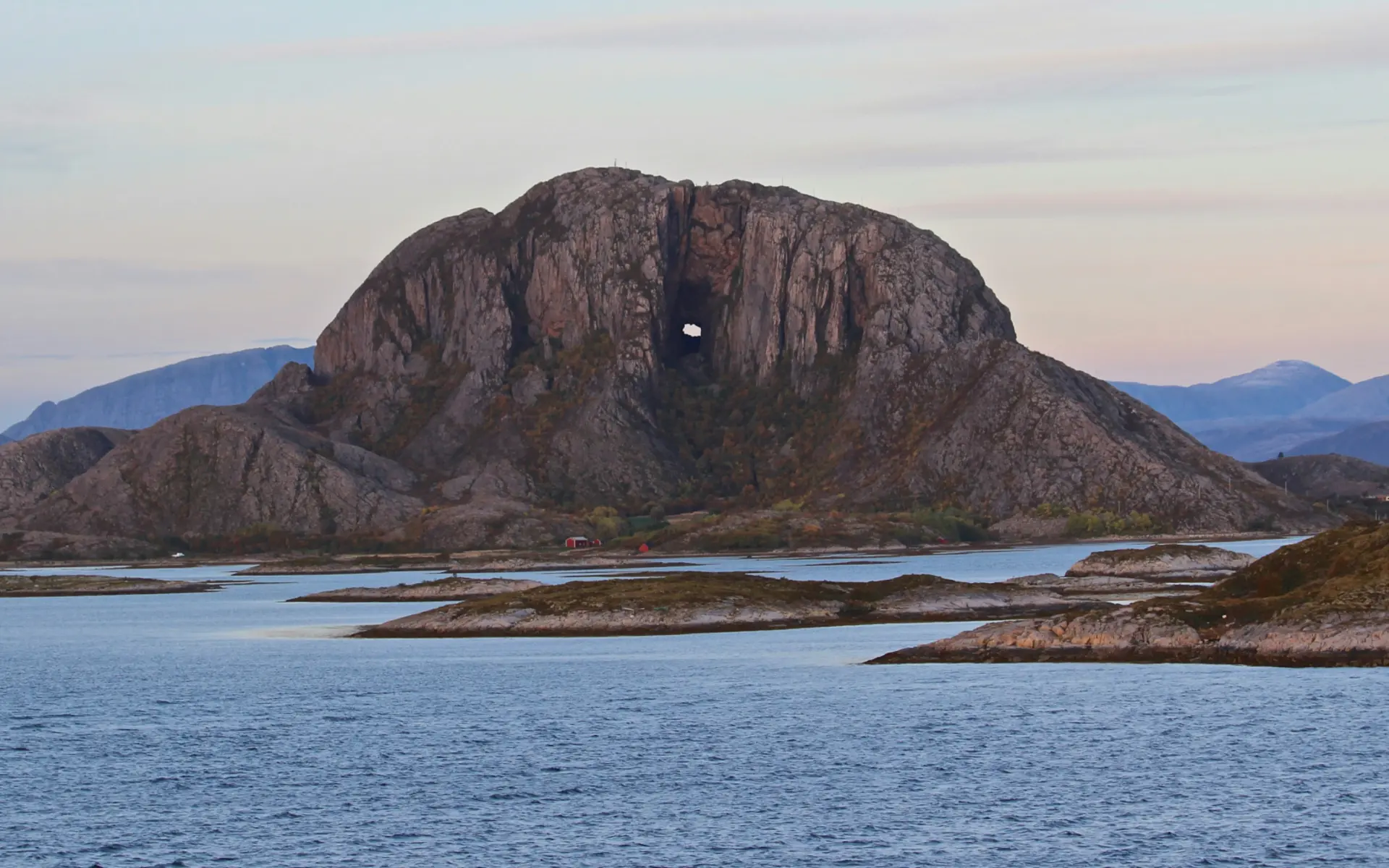
The Helgeland coast stretches along central Norway and is one of the most scenic sections of the Norwegian Scenic Routes, a network of designated driving routes chosen for their outstanding landscape. The Helgeland Coastal Route takes you past the Syv Søstre (Seven Sisters) mountain range, the Torghatten mountain with its naturally formed tunnel hole, and a sequence of small fishing communities connected by ferries.
This is Norway travel at its most unhurried: no specific sights to tick off, just a remarkable landscape unfolding at whatever pace you choose.
Svalbard: Polar bears, glaciers, and the high Arctic
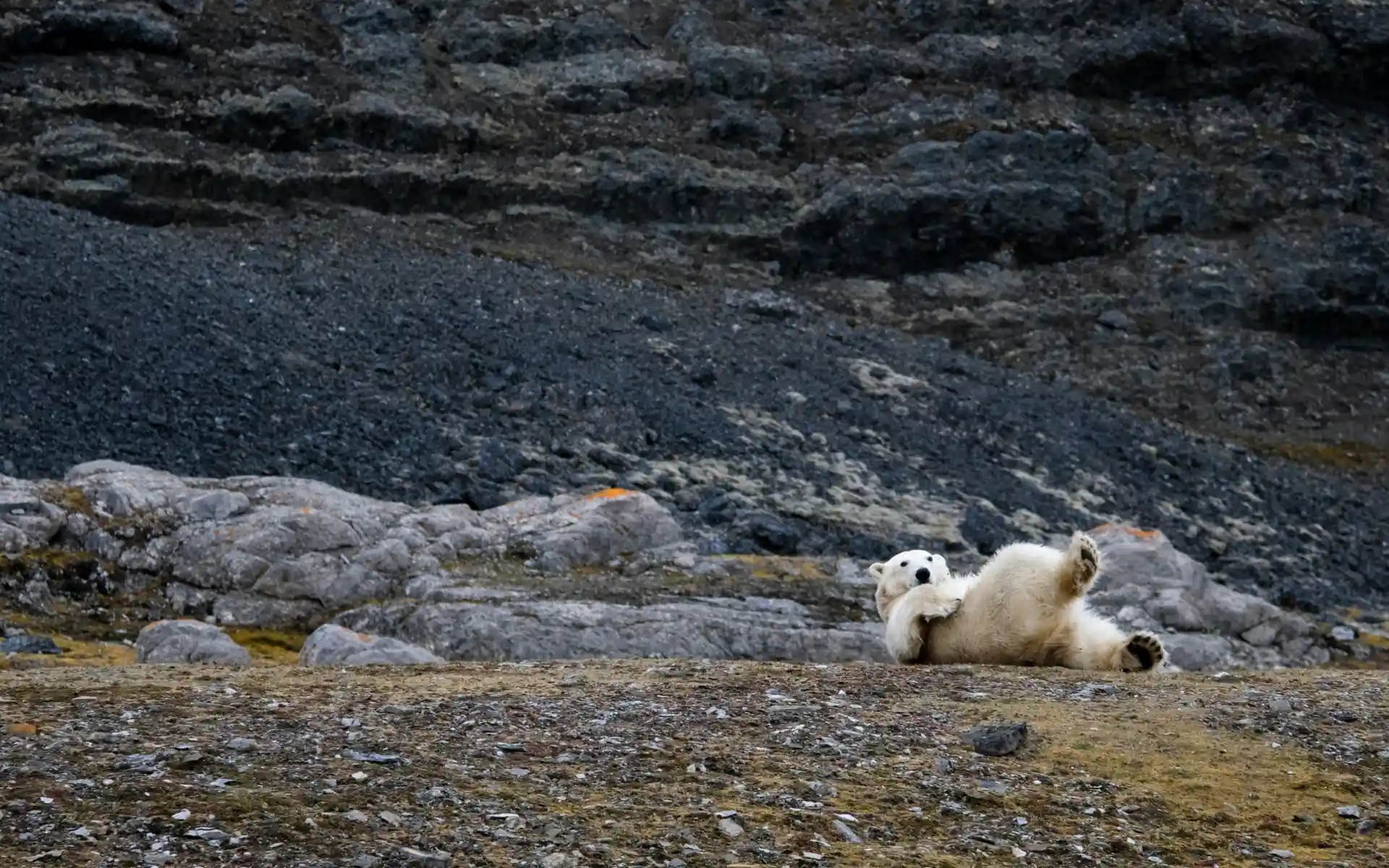
Svalbard is as remote as Norway gets. An archipelago halfway between mainland Norway and the North Pole, it’s home to more polar bears than people and offers a frontier experience, with glacier hikes, snowmobile tours, and extreme remoteness.
The main settlement, Longyearbyen, is more visitor-friendly than its location might suggest, with good hotels and restaurants. Fly direct from Oslo on Norwegian or SAS. It’s not cheap, but for a bucket-list Arctic experience, it’s hard to beat.
How to choose the right time to visit Norway
Norway looks and behaves very differently depending on when you visit, and the best month for your trip depends entirely on what you’re after.
Summer (June to August): Midnight Sun, hiking, and peak season
Summer is when Norway is at its most accessible and most visited. Temperatures in southern Norway reach the low-to-mid 70s Fahrenheit, the fjords are navigable and spectacular, and virtually every hiking trail is open. Also, the landscape is lush and green, the ferry routes are running full schedules, and the long daylight hours mean you can pack an enormous amount into each day.
The trade-off: Summer is more expensive and crowded. Popular sites like Preikestolen can feel like a line at a theme park in July and August. Book accommodation well in advance, and expect to pay peak-season prices across the board.
Winter (November to March): Northern Lights, skiing, and dog sledding
Winter in Norway is an entirely different experience, and for the right traveler, it can feel like magic. The Northern Lights are the main draw, but there’s much more, including world-class downhill skiing (Hemsedal and Myrkdalen are the resorts most popular with international visitors), cross-country trails, reindeer feeding experiences with Sami communities, and dog sledding through the Arctic wilderness.
Norwegian cities in winter are cozy and atmospheric. Oslo lights up with Christmas markets in December, and Bergen’s colored houses look especially vivid against a snowy backdrop. Just come prepared: Temperatures regularly drop below 14°F in the north.
Shoulder seasons: Fewer crowds, lower prices, and surprising beauty
May and September are worth serious consideration. May brings spring wildflowers and the start of fjord season, without the summer crowds. Prices are lower, accommodation is easier to find, and you’ll share the trails that are open with far fewer people.
September offers the first Northern Lights opportunities of the season in the north, while southern Norway is still warm enough for comfortable travel. Autumn colors turn the valleys and hillsides gold and rust, and the ferry networks are still running on generous schedules.
Practical tips for visiting Norway
Norway rewards a little advance planning. Here’s what you need to know before you go.
Getting to Norway from the US: Flights and entry requirements
Most US travelers fly into Oslo Gardermoen (OSL), the country’s main international hub, with nonstop service available from New York (JFK) and Newark (EWR), as well as connecting flights through major European hubs. Bergen (BGO) and Stavanger (SVG) are also served with connecting flights, which can save time if the fjords or west Norway are your primary destination.
Americans do not need a visa to visit Norway for stays of up to 90 days. Norway is part of the Schengen Area, so your 90-day allowance is shared with other Schengen countries, and there are no specific entry requirements beyond a valid US passport.
Getting around: Trains, ferries, scenic routes, and road trips
Norway has excellent infrastructure, but its geography means getting between destinations often takes longer than you’d expect from looking at a map. A few key options:
- Train: NSB (now Vy) connects Oslo to Bergen (the scenic Bergen Railway), Stavanger, Trondheim, and Bodø. The Bergen Railway is one of the most beautiful train journeys in Europe.
- Hurtigruten: The famous coastal ferry route runs the entire length of Norway from Bergen to Kirkenes, stopping at 34 ports. You can book individual segments or the full voyage.
- Domestic flights: Wideroe operates an extensive regional network, making otherwise difficult connections (like Oslo to Lofoten or Svalbard) fast and manageable.
- Car rental: For the fjord region and the Norwegian Scenic Routes, a rental car gives you maximum flexibility. Just be ready for tunnel tolls and occasional single-lane mountain roads.
How to manage Norway’s costs without sacrificing the experience
Norway can be expensive, there’s no getting around it. A sit-down dinner for two can easily run $100 or more, and hotel rates in Oslo or Bergen during summer rival London or Paris. A few ways to manage:
- Visit in shoulder season (May or September) when rates are lower.
- Book accommodation early, especially in the fjord region in summer.
- Take advantage of supermarkets (Rema 1000, KIWI) for lunch picnics rather than eating every meal at a restaurant.
- Look into Norwegian Mountain Touring Association (DNT) huts for overnight hiking trips. They offer surprisingly comfortable accommodation at a fraction of hotel prices.
- The Oslo Pass covers public transportation and entry to major museums—worth it if you’re spending two or more full days in the city.
How to find cheap flights to Norway with Going
Flights to Norway from the US aren’t always cheap, but they go on sale more often than most people realize. The trick is knowing when deals are live before they disappear.
That’s exactly what Going is built for. Going monitors fares 24/7 and sends members alerts when prices to Oslo, Bergen, or other Norwegian airports drop significantly, sometimes to less than half the typical price. Members on the Premium and Elite get access to expert-sourced deals and flight alerts, so you can feel confident that you’re getting the lowest price given your preferences every time. If Norway’s price tag has been the thing holding you back, this is the most practical way to change that.

Plan your trip to Norway with Going
Norway has a way of getting under your skin. You come for the fjords and stay for everything else: the cities, the landscapes, the pace of life that takes both nature and quality of daily life seriously.
The hardest part is usually getting there affordably. Going makes that easier. Members get flight deal alerts for Norwegian destinations, like Oslo, Bergen, Stavanger, Trondheim, and more, at prices that make the trip accessible rather than a once-in-a-decade splurge.
Start by learning how to find cheap flights, then set up your Going alerts and let the deals come to you. When the price on Oslo drops to something that makes you stop scrolling, you’ll be ready to book.
Here are sample Norway deals that Going members have seen recently:
- NYC to Oslo for $360 roundtrip
- Washington, DC, to Bergen for $375 roundtrip
- Seattle to Oslo for $407 roundtrip
- Atlanta to Stavanger for $431 roundtrip
- Los Angeles to Trondheim for $433 roundtrip
Frequently asked questions
What is the prettiest place in Norway?
What should you not miss in Norway?
Which month is best to visit Norway?
Last updated April 22, 2026