Edinburgh: The Scottish Capital Built on an Extinct Volcano and World-Renowned Arts Scene



February 18, 2026
6 min read
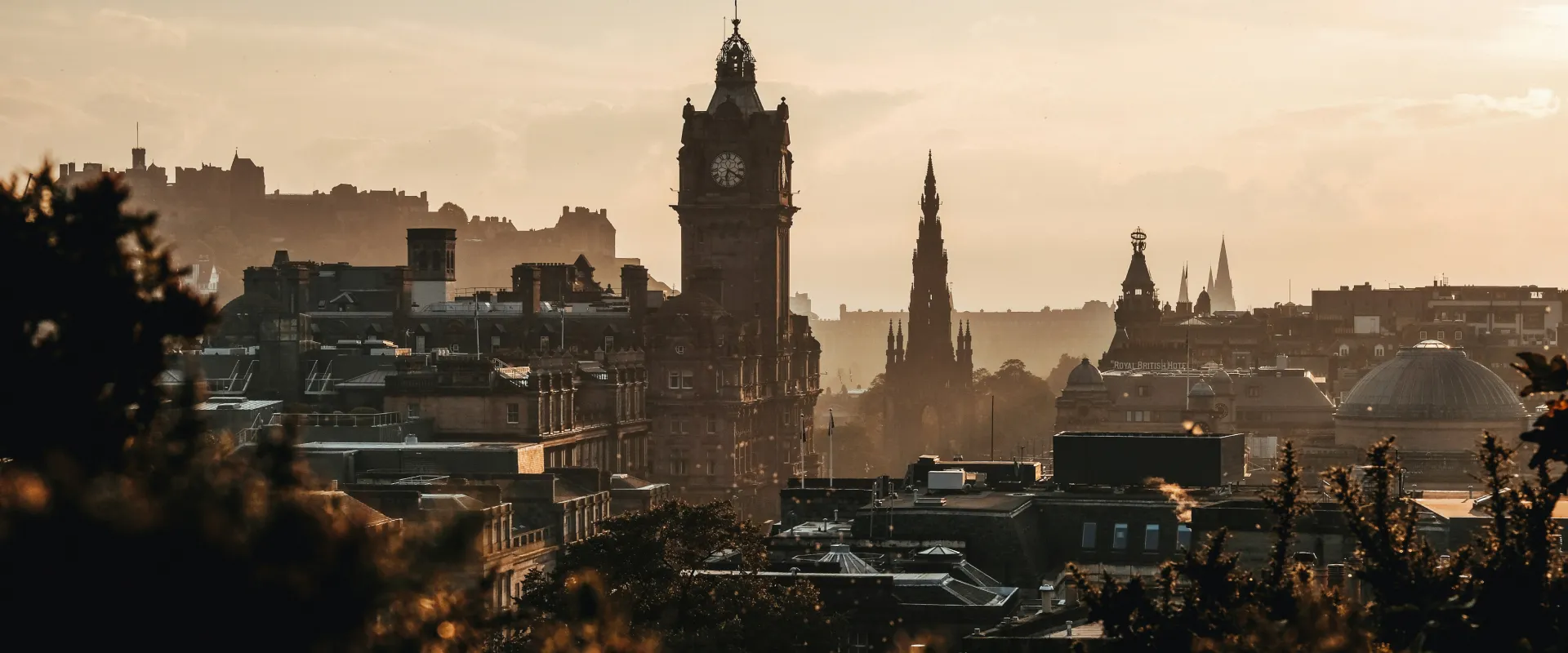
Edinburgh, the capital of Scotland, rises from ancient volcanic rock and seamlessly merges medieval streets with Georgian terraces. Situated between sea and hills, it grew from a fortified settlement into a capital shaped as much by geology as by design. Periods of intellectual progress, medical innovation, and literary achievements left their marks not only in institutions but in the streets, pubs, and passageways that fill the city.
The result is a city shaped by intentional contrasts: castle-topped cliffs beside neoclassical streets, riverside paths just minutes from festival stages, and bookshops that are tucked into lanes that predate many modern countries. Compact enough to cross on foot yet dense with viewpoints and cultural undercurrents, Edinburgh rewards curiosity over speed. Visiting is less about checking off landmarks and more about learning how the city fits together.

A city built on lava
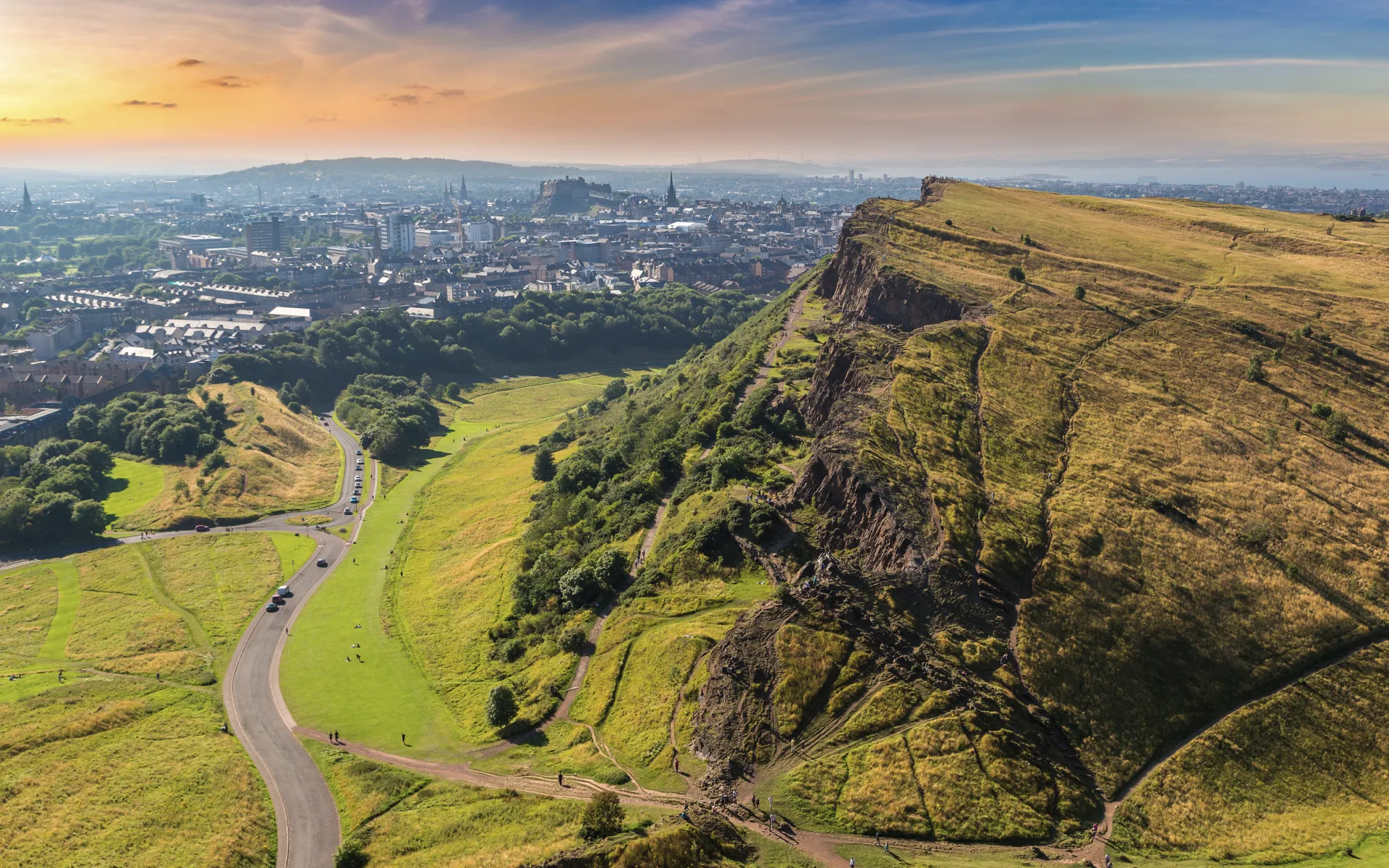
Few capitals owe their skyline to an extinct volcano, but Edinburgh quite literally rises from ancient lava flows. Crags and hills make for a cinematic setting, with namesake Edinburgh Castle perched high above streets that dip and curve all around. The same topography that once offered defense now rewards visitors with views. Climb Arthur’s Seat, wander up Calton Hill, or peer up from the Royal Mile, and you’ll see how dramatically the landscape defines the city.
What’s even wilder is the timescale. The extinct volcano Arthur’s Seat is around 350 million years old, but the bedrock beneath Edinburgh is older still at roughly 430–470 million years old, formed when Scotland was once physically joined to North America. The same mountain-building forces that shaped Scotland’s Highlands also created the Appalachian Mountains in the United States, long before the Atlantic Ocean existed. In other words, Edinburgh’s landscape is not just historic, it is prehistoric.
For travelers, this comes with a practical note: Pack comfortable shoes. Steep inclines and cobblestones are part of the charm, but they’re also a workout, and many of the best views require at least a short uphill climb (even when taking the tram or Lothian buses around).
Old Town vs. New Town
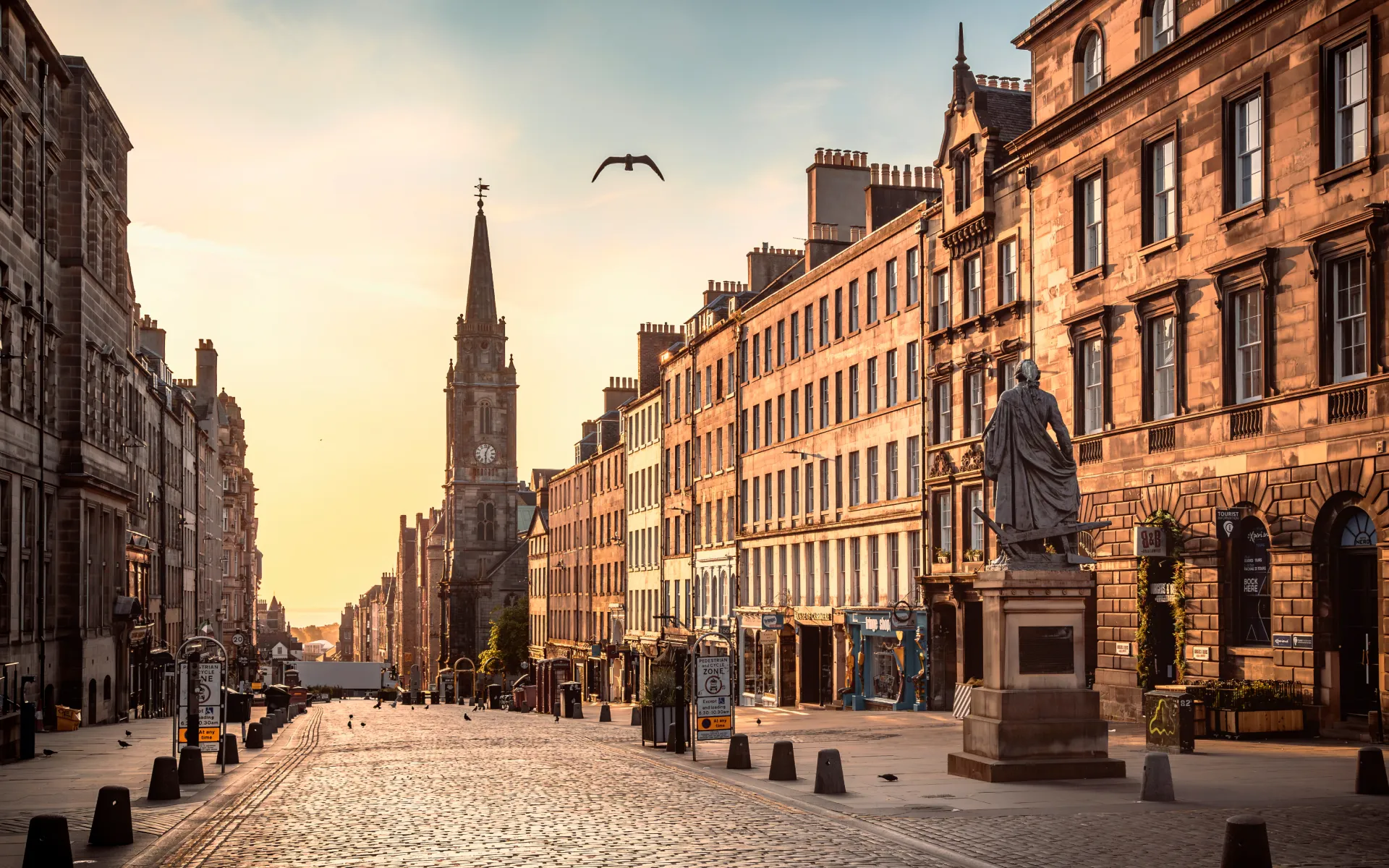
Edinburgh is often described as two cities stitched together, and the divide is both visible and walkable. The Old Town, largely shaped in the 16th and 17th centuries, winds through medieval closes, narrow passageways branching off the main streets that were originally built to pack housing and workshops within the city walls. Despite how they may seem, closes aren’t always dead ends. Many open into hidden courtyards, staircases, or unexpected viewpoints. Look up, and you’ll often notice another layer of windows stacked above street level. What feels like the ground floor may actually be several stories up, a reminder that Old Town is as vertical as it is winding.
By contrast, the New Town unfolds in orderly Georgian crescents and wide boulevards. Mapped out in the 18th century, it introduced a rational grid of broad streets, stone terraces, and green squares designed to counter the crowding and darkness of the Old Town in the rapidly expanding capital. In spring, head to the Meadows, where rows of cherry blossoms turn everyday walks into pink-canopied corridors for a few fleeting weeks. Crossing between them, often via Princes Street (or the almost-renovated North Bridge), feels as much like changing neighborhoods as it does stepping between eras, where Gothic stone suddenly gives way to neoclassical facades and open sky.
Markets, makers, and local crafts
Beyond castles and cathedrals, Edinburgh reveals itself in shop windows, weekend markets, and studios tucked down side streets. Independent booksellers, printmakers, knitwear designers, and tartan weavers keep long-standing crafts alive while giving them modern flair. Souvenirs here tend to be less mass-produced and more handmade—think items with stories attached. It’s a city where browsing can easily turn into a conversation with the person who made what you’re holding.
To become even more acquainted with the art scene, head to the foot of Leith Walk, where the atmosphere leans creative yet scrappier, with record shops, vintage storefronts, and ceramics studios often sharing the same block. Near Dean Village and along the West End, the mood softens into quieter galleries, design shops, and hidden boutiques that reward those who wander. Stockbridge, by contrast, feels more polished, especially on Sunday mornings when its market draws both residents and visitors to the Water of Leith.
A word to the wise: Visit in August, and you might spot ripe brambles along the Water of Leith. At other times of the year, the same paths yield seasonal finds, from blaeberries and wild strawberries to herbs like wild garlic and, for experienced foragers, mushrooms and gorse (a yellow-flowered shrub common in the UK).
The Gothic underside
Beneath Edinburgh runs a darker narrative of vaults, epidemics, and infamous figures who blur the line between history and legend. Underground chambers and shadowed alleyways are not just atmospheric curiosities; many became overcrowded living quarters and informal workspaces where poor ventilation, limited sunlight, and inadequate sanitation helped disease spread and deepened class divides. Later abandoned or built over as the city expanded, these damp, maze-like spaces lingered beneath the streets, feeding stories of hauntings and unease. Over time, neglected infrastructure became an underworld intertwining folklore and fact, which now anchors many of Edinburgh’s most popular historical tours.
Around the same time, the city was emerging as a center of medical innovation, drawing students and surgeons from across Europe. The rapid growth of its medical schools created intense demand for anatomical study, and for many of the city’s poorest residents, body snatching became a desperate means of income. The underground did not create the practice, but it formed part of the dense urban landscape that allowed such grim trades to flourish unseen.
Today, institutions like the Surgeons' Hall Museums show how Edinburgh’s medical schools rose to global prominence, while episodes such as the Burke and Hare murders continue to shape collective memory and reform, including the Anatomy Act of 1832. Preserved vaults and closes provide a tangible backdrop for these darker chapters. Walking tours and small exhibitions are not simply ghost stories—they reflect Edinburgh’s habit of examining its difficulties alongside its achievements.
The mood isn’t all macabre, though. Beyond the kirkyards stand small rituals of good fortune, from rubbing the nose of Greyfriars Bobby’s bronze statue to touching the polished toes of philosopher David Hume in Old Town. It’s an atmosphere where folklore and fact comfortably coexist, and where even the most picturesque streets carry echoes of both scientific progress and the shadows it casts.
Festival city
Each August, Edinburgh transforms from stately capital into global stage, as the Edinburgh Festival Fringe overtakes streets, theaters, and public squares. Comedians, musicians, and other performers spill onto sidewalks, pop-up venues appear overnight, and the population seems to double in energy if not in size. Comedy, theater, music, and art blur together into a month-long celebration that turns everyday corners, like coffee shops, bars, and college classrooms, into performance spaces. No place is safe from becoming a venue in August. Even outside festival season, that creative pulse never fully disappears.
If you visit during August, a little patience goes a long way. The Fringe is an enormous undertaking for a relatively small city, and the influx of visitors can stretch everything from restaurant wait times to public services. Locals adjust routines, favorite spots get crowded, and the city runs at full capacity for weeks. As fun and energetic as it is, it can also be exhausting. Being mindful of waste (using bins when you can and carrying out what you bring in) also makes a difference. The energy is unforgettable, but flexibility and consideration go a long way toward keeping it exhilarating rather than overwhelming.
Pubs, ceilidhs, and the culture of gathering
In Edinburgh, social life isn’t just about where you go out, it’s how you come together. Pubs function as living rooms (or third spaces, distinct from the home and workplace), and ceilidh (pronounced “KAY-lee”) dances—lively, group folk dances set to fiddle-led music with a caller who talks everyone through the steps—pull strangers into a circle within minutes. Music drifts through doorways most nights of the week, and it’s not unusual to see visitors and locals alike attempting spins and reels with equal enthusiasm and uneven coordination to both traditional tunes and recent, local hits.
You might also overhear a friendly debate about how to pronounce Gaelic (“Gah-lik” in Scotland, rather than the Irish “Gay-lik”), or notice bilingual signs where Gàidhlig (Scottish Gaelic) shares space with English. The city carries centuries of cultural push and pull with its southern neighbor, yet there remains a strong sense of identity expressed through humor, storytelling, and hospitality.
When visiting, you’ll spot tartan at weddings and festivals, hear bagpipes echo across plazas, and notice that conversation itself is treated as an art form. There’s also the distinctly Scottish idea of coorie: a word rooted in the Scots language meaning to snuggle or settle in. It captures the national affection for warmth, comfort, and good company when the weather turns gray. Heritage here isn’t preserved behind glass. It’s carried forward in shared tables, shared songs, and shared evenings, where history feels less like something to study and more like something you’re invited to join.

Beyond haggis: Scotland’s modern food scene
While haggis earns its reputation (and you should try it along with pizza crunch and a chip butty or two), Edinburgh’s dining scene stretches far beyond a single national dish. Traditional flavors are found in comforting staples, such as crumbly shortbread, buttery squares of tablet (a grainier, sweeter cousin of fudge), and a pint paired with Cullen skink, the city’s beloved smoked-haddock soup. Even whisky finds its way into desserts and sauces, and menus often incorporate Scottish mainstays and local seasonal produce in new, innovative ways.
Mornings might start with pastries and towering cake slices at Lovecrumbs, a Swedish bun from Söderberg, or naturally leavened loaves from Twelve Triangles, followed by a wander through the cheese counters at I. J. Mellis Cheesemonger, where staff happily offer tastes and pairing tips (be sure to try their Auld Reekie cheese, named after Edinburgh’s nickname!).
Evenings lean toward intimate small plates at Noto, handmade pasta and candlelit tables at Tipo (with handmade gluten-free bread and pasta options), neighborhood energy at Little Fitzroy or Rafiki, refined Japanese bakery and drink flavors at Lucky Yu, or a more theatrical night out at one of the city’s skyline restaurants such as Chaophraya. If you’re looking for a tasty dessert, hit up Mary’s Milk Bar, a retro ice cream parlor for homemade gelato and eccentric dishes like dessert spaghetti (check Instagram for their rotating menu and hours, as they close occasionally for holidays and other events).
For those planning their evenings around drinks, whisky tastings at The Scotch Whisky Experience, relaxed wine flights at Smith & Gertrude, and thoughtfully crafted non-alcoholic cocktails at The Boozy Cow’s sober menu or Panda & Sons’ alcohol-free selections round out the spectrum. The city balances comfort food with culinary experimentation, making it just as easy to find a hearty pub meal as a refined tasting menu. Tradition sets the foundation, but creativity keeps the table interesting.
A city of stories: legends, writers, and midnight tales
Edinburgh lives and breathes storytelling, whether through its literary legacy or tales woven through its streets. Writers have long drawn inspiration from the city’s stone facades and shifting light, while local history turns ordinary landmarks into narrative settings. The city has been home to generations of authors, from Sir Walter Scott and Robert Louis Stevenson to contemporary voices. Its book culture shows in the sheer number of independent shops, secondhand shelves, and late-night readings scattered across both the Old and New towns.
Corners of Edinburgh may seem familiar thanks to appearances in shows like “Outlander” and “Good Omens” and films such as “Trainspotting,” but the city’s literary identity stretches far beyond the screen, intentionally championing a wider and more diverse community of voices. Bookshops (such as Topping & Company or Typewronger Books) stay open late into the evenings, and walking tours trace fictional worlds.

As you’re walking around town, keep an eye out for tiny free-book libraries tucked into railings and stone walls. And remember: Look down as often as you look up. There are quotes and plaques woven into the pavement and building facades throughout the city. After the day’s sightseeing ends, Edinburgh’s story continues to unfold around every corner.

Last updated February 18, 2026
Articles you might like
View All