How To Get Unsold Business Class Flights (and Actually Pay Less)


)


July 30, 2026
8 min read
Table of Contents
Key takeaways
- Airlines use revenue management to maximize profit, which means most of the time they'd rather fly with empty seats than discount them too early.
- Upgrade bids, miles and points, Going alerts, premium economy bookings, and off-peak routes are all ways to score business class seats for less.
- Getting the cheapest business class seats if you’re paying in cash aligns with the traditional Goldilocks Window: 1–3 months before departure for domestic, 2–8 months ahead for international.
- If you’re paying in points, the sweet spot is 2–3 weeks before departure, when airlines release unsold seats, though some discounted fares also appear very early, up to 11–12 months out.
- Going, ExpertFlyer, Seats.aero, and airline upgrade bid emails are useful resources to have in your corner.
- Savings of 50–70% off retail are possible, especially on transatlantic and transpacific routes during shoulder season.
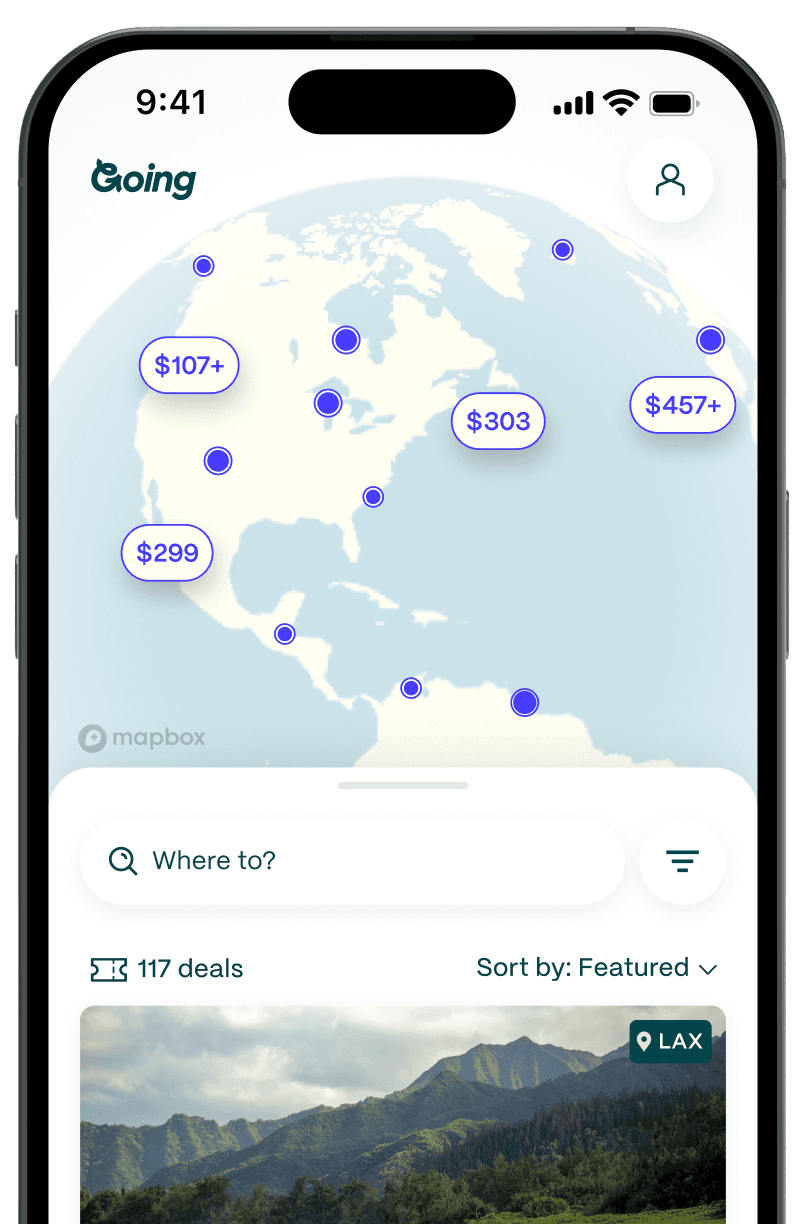
- Going monitors business-class fares around the clock and sends alerts when prices drop, so you don't have to hunt for deals yourself.

Why airlines have unsold business class seats
How airlines price and fill premium cabins
Airlines use a system called revenue management. This means prices shift constantly based on demand, booking pace, and competitive pressure. The goal is to extract as much value as possible from every seat. The short explanation is that they'd rather fly with a few empty seats than fill them at a price that undercuts their premium brand.
The longer explanation is that airlines weigh two competing risks when pricing business-class seats: spoilage versus dilution.
- Spoilage: an empty seat that generates zero revenue
- Dilution: discounting a fare so much that it changes traveler behavior, pushing people to wait for a cheap fare instead of paying full price
For business class, the dilution risk is especially high. Full-fare business tickets carry a whole lot of revenue potential, and spoilage risk is comparatively low since there are only a handful of premium seats per plane and business travelers often buy last-minute regardless of price. So, the math tends to favor holding prices high. Late in the booking window, the traveler pool skews toward people with fixed dates and low price sensitivity, which reinforces the airlines’ bet.
Also, corporate contracts fill a large share of business class seats on business-heavy routes. The high business-class rates you see online are often more of a placeholder, released to non-contract flyers only when the price makes it worthwhile. Best case scenario, the airline sells the ticket to someone willing to pay the high price tag; worst case scenario it’s going to a corporate account at a steep, negotiated discount.
When empty seats become your opportunity
If departure approaches and those seats still aren't sold, airlines face a choice: fly them empty or find ways to fill them. That's where you can swoop in. Upgrade bid programs, last-minute discounted fares, consolidator inventory, and award seat releases tend to spike when airlines realize a flight is going out with empty premium seats. Knowing when and where to look means you can be in the right place when prices drop or seats open up.
How to get unsold business class flights: 7 strategies that work
Bid for an upgrade after booking economy
Many airlines now run upgrade auction systems where economy passengers submit a bid for a business class seat in the days before departure. Airlines like Delta, United, Lufthansa, Emirates, and Qatar Airways all have formal programs. After booking, you'll receive an email inviting you to bid. The airline reviews bids closer to departure and accepts those that fill empty seats most profitably.
A few tips to improve your odds:
- Bid near the higher end of the suggested range, but not the maximum.
- Check in early, as some airlines process upgrades at check-in if seats are still available.
Use miles and points, especially close to departure
Award seats in business class are typically released in two waves: far in advance (we’re talking 10 months prior) and again less than a month before departure, when airlines release unsold inventory.
Even if you're not a hardcore points collector, transferable currencies like Chase Ultimate Rewards, American Express Membership Rewards, and Capital One miles give you the flexibility to move points to whichever partner airline has open seats.
Ask at check-in or the gate
This strategy doesn't work as often as it used to, but it's still worth a shot, especially on longer international routes. When you check in, ask politely if complimentary upgrades are available.
Here are a few things that help:
- Being a loyalty program member, even at a low tier, puts you higher in the upgrade queue.
- Traveling solo makes you easier to accommodate than a group.
- Being friendly and well-dressed doesn't hurt.
Book through a consolidator or discount broker
Consolidators are travel agencies that buy blocks of airline tickets at negotiated wholesale prices and resell them, often at 20–50% off the published fare. These fares may come with restrictions, like no mileage accrual or limited refundability, but if your priority is getting into business class for less, they're worth checking.
Note that, similar to booking through an OTA, booking through a consolidator comes with some trade-offs, like weaker customer service, less flexibility, and the occasional too-good-to-be-true price that turns out not to actually be ticketed.
However, there's a bigger risk here than with a typical OTA: Some sellers use hacked or fraudulently obtained miles to issue these discounted tickets, and if an airline catches it, the ticket can be canceled outright, sometimes even after you’ve gotten to the airport. Do your homework on any consolidator before booking (e.g., read reviews, how long they've been in business, payment protections, etc) rather than choosing on price alone.
Use Going to get alerts on discounted business class fares
This is the simplest and most reliable approach. Going tracks flight prices across every major airline and alerts members when fares drop significantly, including in business and premium economy, and not just for last-minute tickets. Members have scored transatlantic business class fares in the $1,000 range and transpacific deals in the $2,000s. These deals don't last long, so setting up push notifications in the Going app ensures you get the alert before the deal is gone.

Book premium economy to increase your upgrade chances
Many airlines prioritize premium economy passengers for complimentary or discounted upgrades over economy passengers when seats remain unsold close to departure. You're essentially starting one rung higher on the upgrade ladder.
Search less popular and off-peak flights
Business class load factors vary by route and season. When airlines know they're likely to fly with empty seats, they're more willing to discount, release awards, or accept upgrade bids. Overall, they consistently have the hardest time filling premium seats on:
- Secondary routes and less-traveled international corridors
- Shoulder season travel (spring and fall, outside holiday peaks)
- Midweek flights, especially Tuesday and Wednesday departures
- Red-eye or early morning departures
The best time to find unsold business class seats
Last-minute windows: weeks before departure
One of the more reliable windows is roughly 14–21 days before a flight. By this point, airlines have a clear picture of how full the cabin will be. Upgrade bids get accepted and award seats get re-released. If you have flexibility in your schedule, this is the window to watch most closely.
Note that waiting for an unsold business seat this late in the game can also be a gamble, as all of the business seats on your chosen flight could already be filled, and cash fares will have also spiked to target last-minute and business bookings.
Very early bookings: when airlines release limited discounted fares
Some airlines release a limited number of discounted business-class fares when flights first go on sale (sometimes 11 to 12 months out). These are especially common on international routes where airlines compete aggressively. The inventory is limited and goes fast, but the savings can be substantial.
That’s why setting up fare alerts through Going well in advance helps you catch these as soon as they drop.
Days and routes with the most availability
As a general rule:
- Tuesdays and Wednesdays are the departure days with the most unsold business-class seats on domestic routes.
- Shoulder seasons (generally April–May and September–October) are consistently better for international routes.
- Flights with a stop in a less-popular hub tend to have more available seats than direct options.
Tools to track business class deals and availability
Flight deal services (Going, Secret Flying)
Going is the best tool for catching discounted business class fares you'd never find on your own. The team monitors prices around the clock and sends alerts when they drop significantly, including for premium cabins.
Secret Flying is a free alternative that posts deals publicly, though there isn’t a way to select your home airport, so it lacks in personalization.
Award seat trackers (ExpertFlyer, Seats.aero, Point.me)
If you're planning to redeem miles, these tools save hours of manual searching:
- ExpertFlyer is the most comprehensive tool for checking award availability across multiple airlines.
- Seats.aero is a clean, modern interface great for Star Alliance and Aeroplan availability.
- Point.me is ideal for travelers with points in multiple programs who want to see which transfers make the most sense.
Airline apps and upgrade bid emails
Most major airlines send upgrade bid invitations via email after booking. Make sure your airline accounts have a current email address and that airline emails aren't going to spam. Turn on mobile notifications for your airline's app to see last-minute upgrade offers before other passengers do.
What to realistically expect
Routes and airlines where this works best
You'll have the best luck finding discounted or unsold business class seats on transatlantic routes (especially to secondary cities), transpacific itineraries with a stop, US to South America on competitive routes, and airlines with large business class cabins relative to demand. It's harder on short domestic routes, peak holiday travel, and nonstops between major hubs.
How much you can actually save
- Upgrade bids save you typically $200–$600 for domestic long-haul and $500–$1,500 for transatlantic.
- Award redemptions for transatlantic business class can start around 50,000–70,000 miles each way.
- Discounted fares via Going go from $600–$800 on domestic and short-haul international routes and $2,000–$3,000 for transatlantic flights (vs. $5,000–$6,000 retail).
Overall, on premium international routes, you can realistically save $2,000–$4,000 compared to booking at full price.
Stop chasing business class: Let the deals come to you with Going
These strategies are great, but they require you to be in the right place at the right time. Monitoring award availability, checking upgrade bid windows, watching consolidator prices: All of it can be a lot to keep up with.
Fortunately, Going does the hard work for you. When a business class fare drops, you get an alert. Simple as that. Going Elite members get access to business-class deals alongside economy alerts, so you're covered whether you're looking to splurge or stretch your budget as far as it'll go.

Frequently asked questions
Are unsold business class tickets actually cheaper?
What is the best way to get a business class upgrade?
Do airlines sell unsold business class seats last minute?
Is it worth bidding for a business class upgrade?
Can I get a business class flight for the price of economy?
Last updated July 30, 2026
Articles you might like
View All
How To Get Cheap First Class Tickets in 2026 (Even Without Miles)
Sep 8, 2026
7 min read

Qatar Airways Business Class (Qsuites): Is It Worth It?
Sep 2, 2026
7 min read
Aer Lingus Business Class Review: Our Experience
Aug 13, 2026
10 min read