Kerala: The Lush Indian State With the World’s Richest Temple



September 29, 2026
9 min read
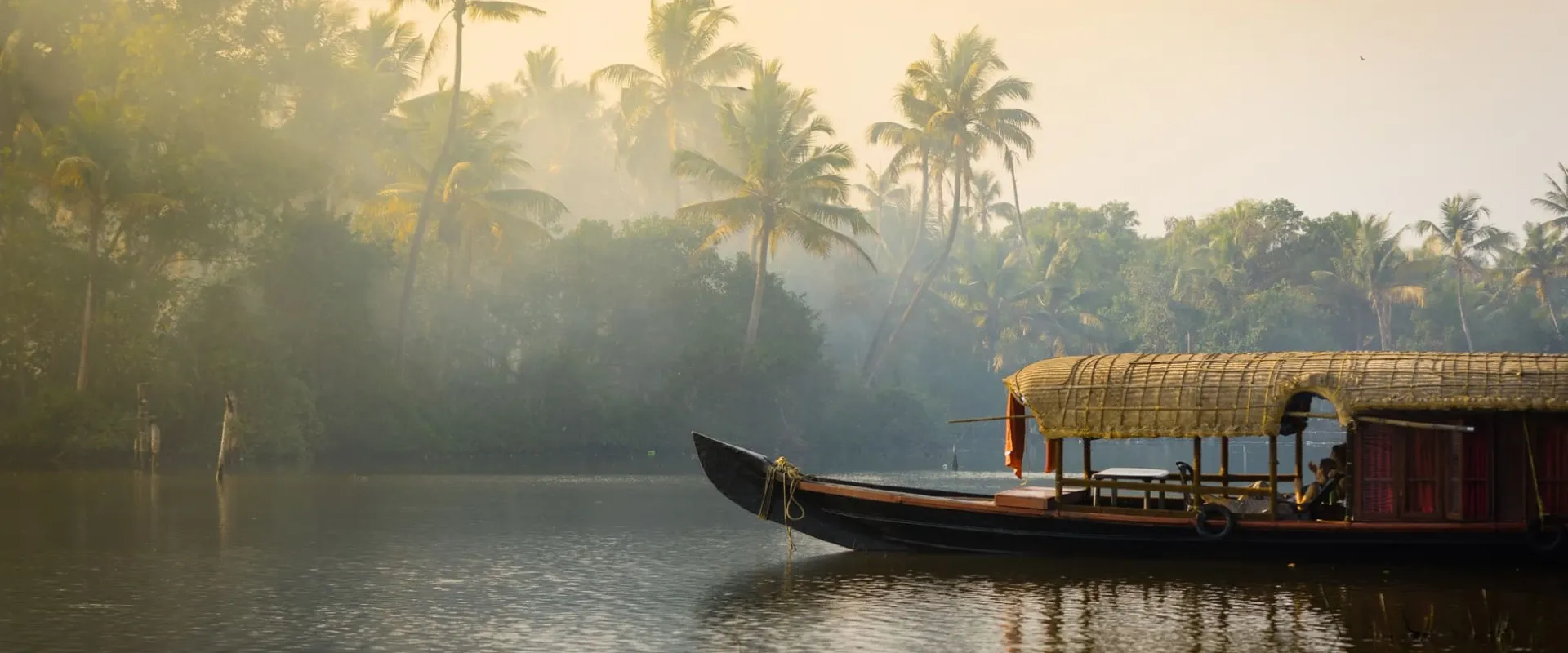
Kerala, the name of the lush, coastal state in southwest India, is often said to mean “land of the coconut trees.” It bursts with life and aromatic spices, and everything revolves around water, both the sea and the backwaters, a 560-mile labyrinth of lakes, canals, lagoons, and inlets that are used for trade, travel, and tourism. Houseboats cruise these waters, children frolic in them, and people buy and sell fish, produce, and household items through boat markets.
The state also happens to be a land of superlatives, holding the highest life expectancy and human development index in the country and ranking near the top for literacy rate. With curious, friendly locals who love talking to foreigners and a balmy tropical climate, Kerala is bound to get your blood pressure down and pleasure neurons popping.
Spice of life

In Kerala, the saying goes: Throw anything into its red earth, and it will grow. The tropical land overflows with oils and spices that have been traded for millennia with Arab, Greek, and Roman traders. Kerala’s spice markets sell aromatic sandalwood oil, cloves, cinnamon, cardamom, nutmeg, turmeric, pepper, and more, earning it the moniker spice capital of India. The flavors suffuse traditional dishes like Malabar biriyani and vegetarian avial, but the use of spices extends well beyond cooking.
Traditional spice markets, typically found in the old towns of most cities, are the best places to buy wholesale spices and oils. In central, coastal Kochi, visit the Mattancherry Market or Broadway Market. Farther south in Thiruvananthapuram, Kerala’s capital city, go to Chalai. Popular picks include Wayanad turmeric, which Kerala women rub all over their faces before a bath, along with virgin coconut oil (available at most grocery stores across the state) that Keralites use on their hair. If you missed the big markets, you can always pick up packaged spices and oils from the airport shops on your way home.
Healing in the month of Karkidakam

Ask Keralites who’ve settled all over the world what they miss about their home state, and the sound and smell of the Kerala monsoon would be right up there along with the taste of home. The southwest monsoon arrives in June and tapers off in the Malayalam month of Karkidakam (mid-July to mid-August).
During this month, Keralites believe the body is most receptive to restorative ayurvedic treatments, which derive from an ancient Indian medical system that favors a natural, holistic, and seasonal approach to health. Ayurveda incorporates a special diet, herbal remedies, and treatments, such as massages. While Karkidakam is thought to be the optimal time for healing, locals practice ayurveda year-round, as it's a way of life for the people of Kerala.
Kerala Tourism provides a list of accredited ayurvedic centers, searchable by region. CGH Earth, with resorts all over Kerala, is considered top-tier, as it borders on luxury while maintaining the authenticity of ayurvedic practices. You can always start with a conservative approach to ayurvedic healing. For instance, abhyanga, or an oil massage, is offered at most clinics or resorts. You can also dabble in an ayurvedic diet, which includes kanji, a rice porridge that contains minerals, probiotics, and medicinal herbs great for gut health and digestion. Both abhyanga and kanji can be replicated after you’ve returned home as well.
Spectacular festivals

Kerala is replete with performing arts and exhibitions that marry the traditional with the contemporary. Koodiyattam (also spelled Kutiyattam), UNESCO-listed and one of India’s oldest forms of theater, mixes contemporary political references with ancient Hindu epics. The Kathakali dance performances, described by scholars as an art “where gods and demons come to play,” comprise painted performers in elaborate costumes who reenact Hindu myths. Most hotels can help you get tickets to a show, while luxury hotels often host performances themselves. The Kerala Kathakali Centre in Fort Kochi also hosts shows.
Theyyam, another ritualistic dance performance, involves elaborately painted performers who bring forth ancient spirits through a combination of shamanistic drumming and fire-walking. During its peak season (December–March), theyyam rituals attract photographers from all over the world (go in late January to see a great show and escape the crowds).
Other performances in Kerala include kalaripayattu, a 3,000-year-old martial art form with jumps and sword fights. There are kalari centers in most regions where visitors can make appointments to watch classes. The Vallam Kali snake boat races also happen during the harvest festival Onam (typically falling in August or September). The city of Alappuzha (sometimes referred to as Alleppey in tourist contexts) is a great place to catch a boat race. And India’s largest art exhibition, the Kochi Muziris Biennale, brings together spectacular contemporary art from around India and the world. The next one is slated for 2027–2028.
Keeping the faith

While Kerala’s population is predominantly Hindu, the state is home to an array of faiths. Kerala's Syrian Christians trace their origins to St. Thomas, one of the apostles who landed on Kerala’s shores to preach the gospel. There was also a wave of Muslim conversion, with Arabs who came to trade spices. And Kerala has a small but strong population of Jewish people, particularly in Kochi, where synagogues still attract the faithful. In addition to organized religion, Kerala is home to animistic faiths (the belief that all objects, places, and creatures are animated by a spiritual presence) and folk traditions, including worship of ancestors and sacred groves called kavus.
Accessing Kerala’s centers for faith can either be very simple or very complicated. Larger Hindu temples, for instance, may not allow non-Hindus to enter the premises. In Thiruvananthapuram, the Sree Padmanabhaswamy Temple, whose origins are lost to time, made headlines in 2011 when underground vaults were found holding gold, silver, and gems. Estimates put the treasure's value at about $20 billion—many call it the world's richest temple. The vaults are closed to the public, and entry to the temple itself is restricted by custom to Hindus. Temple authorities have at times allowed non-Hindus to enter after signing a declaration of faith, but this isn't guaranteed. Visitors who can't enter can still take in the temple's towering gopuram and the surrounding Fort area from outside.
Smaller temples, of which there are thousands, are more welcoming to visitors. In Kottayam, you can visit one of the many churches and listen to the sing-song sermons in the local language, Malayalam. In Kochi, visit the 16th-century Paradesi Synagogue, the oldest active synagogue in India, as well as the entire British Commonwealth, and one of only a handful of synagogues in Kochi’s Jew Town still in operation.
When visiting holy spaces in Kerala, dress modestly and be prepared to follow house rules, which vary from place to place. Always remove your shoes before entering a temple. Many temples, especially the larger and more traditional ones, ask men to wear a dhoti sarong, easy to buy or often available to rent at the entrance, and to go shirtless as a sign of respect. Smaller temples may be more relaxed about trousers and shirts, but shorts are rarely acceptable. Women should cover their shoulders and legs. A saree, set mundu, or salwar kameez is usually the safest choice. Churches, mosques, and synagogues have their own customs, so modest clothing is a good default everywhere. Because rules differ, and some temples are strict about them, it's worth checking a specific temple's requirements before you go, either on its official website, through Kerala Tourism, or by asking your hotel or guide.
From coconut palms to kallu

No matter where you go in Kerala, you’ll see shacks with the sign “Toddy Shop.” Kerala’s toddy, known as kallu, is made from coconut palms. Most towns have toddy tappers, who climb up tall coconut trees in a matter of minutes and tap the flowers for neera, or sap. The fresh sap is non-alcoholic and refreshing, but it begins fermenting within hours and becomes the whitish liquid—kallu—that Keralites love.
Visit a toddy shop in the evening for a fresh bottle along with spicy mutton, chicken, and fish curries. Vegetarians can opt for fried tapioca. While luxury hotels sell toddy in cans and bottles, fresh toddy is best enjoyed in roadside shops that often border the coconut plantations from which the toddy is harvested.
The dance between fresh fish and coconut milk

Since Kerala is in the tropics, the land is fertile, and most culinary ingredients are available throughout the year. Each city or region, however, has certain specialties. Inland Kerala, for instance, relies on produce—yams, tubers, and gourds are popular—while coastal Kerala enjoys seafood.
Kochi is a good place to start for coastal cuisine. Try the classic karimeen pollichathu, pearl spot fish marinated in a paste of ginger, shallots, coconut, and spices, then cooked in a banana leaf. Meen moily, a mildly spiced fish stew tempered with curry leaves and coconut milk and served with lacy appam pancakes, is also popular.
During the Onam festival, most restaurants offer the Kerala sadhya (a vegetarian feast) served on a banana leaf with small portions of 26–28 dishes in a choreographed fashion. Each dish has its place on the leaf, and healthy red rice is the main grain used to soak up the curries and gravies.
Luxury hotel chains, such as the Taj Group, Leela Palaces, and CGH Earth hotels, are good places to start for all of these dishes.
Gold standard

India, on the whole, is a land of extremes: a maximalist, more-is-more culture where colors and chaos are embraced rather than subdued. Kerala, however, is different. Its aesthetic, at least with respect to everyday fashion and home decor, veers toward minimalism, largely because of Kerala’s hot weather. Clothes are not saturated with color. Men wear a simple white mundu, similar to a sarong, while women wear kasavu sarees, also in shades of white with a simple gold border. And homes, thanks to culture and climate, are sparsely furnished.
When it comes to jewelry, however, Kerala leans more toward excess. Kerala tops the country in gold consumption, evident in traditional Kerala brides’ trousseau (wedding ensemble), which includes layers of gold necklaces. Here, jewelry brands abound: Joyalukkas, Jos Alukkas, Malabar Gold & Diamonds, and Bhima, to name a few. All have retail outlets throughout Kerala.
Even if you don’t make a purchase, gold shopping in Kerala is an experience. There are classic designs unique to Kerala, most inspired by natural elements, like leaves and flowers. The kasu-mala, a traditional coin necklace, is an exception. Bargaining for jewelry, like most things in India, is customary. If you kindly ask for a discount, chances are the salesman will “round things off” for you.
Magnificent mural paintings

Mural paintings bring legends to life. They exist in different parts of India, mostly painted on the walls and ceilings of Hindu temples, depicting stories from myth and faith particular to the specific region. Kerala murals sport a certain look and style, characterized by beatifically smiling gods with circular faces, voluptuous bodies, and dynamic postures. Since natural pigments are used, most Indian murals have just a few colors—white, green, ochre, and red.
While Kerala murals are not as old as those of the Ajanta and Ellora caves of Maharashtra, some of the oldest Kerala murals date back to the 8th century CE. The oldest is at the Thirunandikkara cave temple, now ceded to the neighboring state of Tamil Nadu. In 1989, the Institute of Mural Painting was established in Kerala’s holy town of Guruvayur. Since then, several mural schools have opened, primarily around Kerala’s large temples, where visitors can watch artists paint murals on canvas, which are usually then put up for sale.
Good to know
Is Kerala expensive?
Kerala is generally a cheap place to visit. A three-star hotel will run around $80 per night, while you can snag a hostel for about $20. For a sit-down dinner in a mid-range restaurant, you can expect to pay about $7 for an entrée. For cheaper meals, like street food, you can fill up for under $5. Tour guides typically run $5–$50, depending on the tour company. The priciest activities, like a half-day private tour, will cost about $70, but if you skip that, you can generally have a great time for under $15 per day (not inclusive of accommodation).
Best time to visit Kerala
The best time to visit Kerala is from October to March. The months of December and January have the best weather (warm but not hot). However, they also see the most tourists. October–November and February–March offer a happy medium since the weather is cool and there aren’t too many tourists.
What languages are spoken in Kerala?
The main language in Kerala is Malayalam. Since Kerala is among India’s most literate states, most people have a working knowledge of English. In the main cities, most young people speak English, but in more rural areas, many people, especially the older generations, do not.
Kerala with kids
Kerala is an extremely family-friendly destination. Most resorts have activities for kids. There are hikes in every part of the state, and even the fanciest restaurants are generally welcoming toward babies. Water sports are a great way to keep the little ones busy. Visit the Alappuzha backwaters, the Banasura dam in Wayanad, and Kovalam Beach near the capital for off-shore activities.
Kerala public transportation
While public transit tends to work well for locals in Kerala, most tourists opt for private, chauffeured cars, as they are inexpensive, safer, more convenient, and have English-speaking drivers.
Is Kerala safe?
India ranks #127 out of 163, according to Vision of Humanity’s Global Peace Index. Kerala is generally safe, especially if you travel in groups or as a couple. Women traveling solo should be cautious, especially when traveling alone at night.
India also ranks #61 with a score of 52/100 for LGBTQ+ equality, according to Equaldex's LGBT Equality Index. See specifics on Kerala's handling of same-sex relationships, marriages, censorship, and more here.
Getting to Kerala
- Main airports: COK, TRV
- Average Going deal price for cheap flights to Kerala: $663 roundtrip
More India destinations:

Last updated September 29, 2026