
Ottawa: The Canadian City Layered in History and Shawarma



September 23, 2026
8 min read
You know Ottawa. Or, at least, you probably think you do.
Ottawa has always been more layered than its capital-city reputation lets on. Before it was a capital, it was a meeting place. Then a canal project. Then a rough lumber town. Each version didn’t disappear when the next one arrived. They piled atop one another like sedimentary rock, and you can see this history openly if you know where to look.
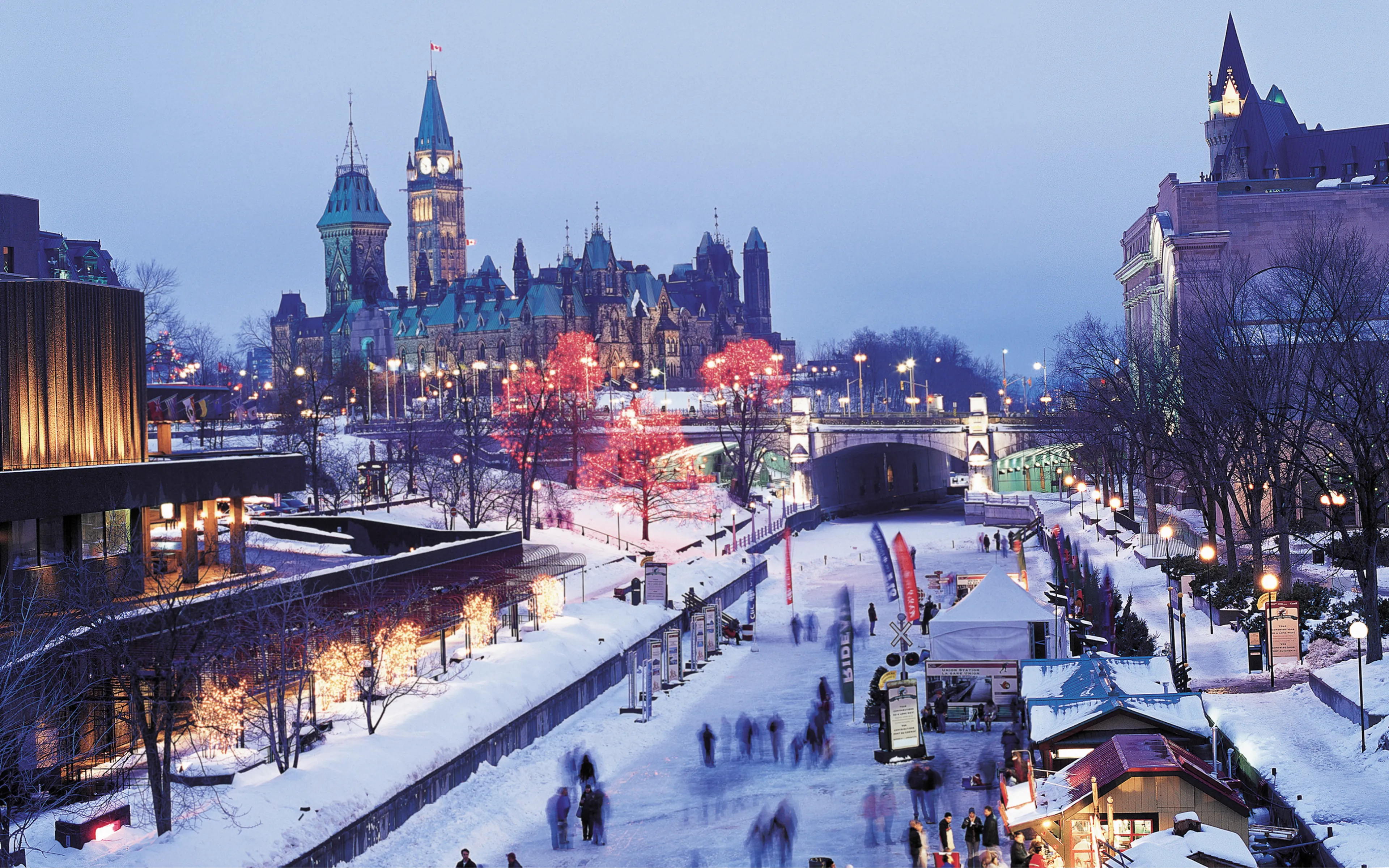
The river that carried timber through the region is now lined with paths where people bike to work and walk for leisure. The canal built as a military supply route becomes, when winter is kind, a nearly five-mile skating rink through the middle of the city.
Ottawa is a government town surrounded by a staggering amount of wilderness. It’s where generations of Lebanese immigrants have made shawarma both a necessary food group and a love language—and helped create Ottawa-style pizza that folks will happily debate. It has spent years presenting itself on screen as New York, Philly, and other cities, but is now getting attention for playing itself. The Ottawa you recognize is there. It’s just a slice of the whole pie.
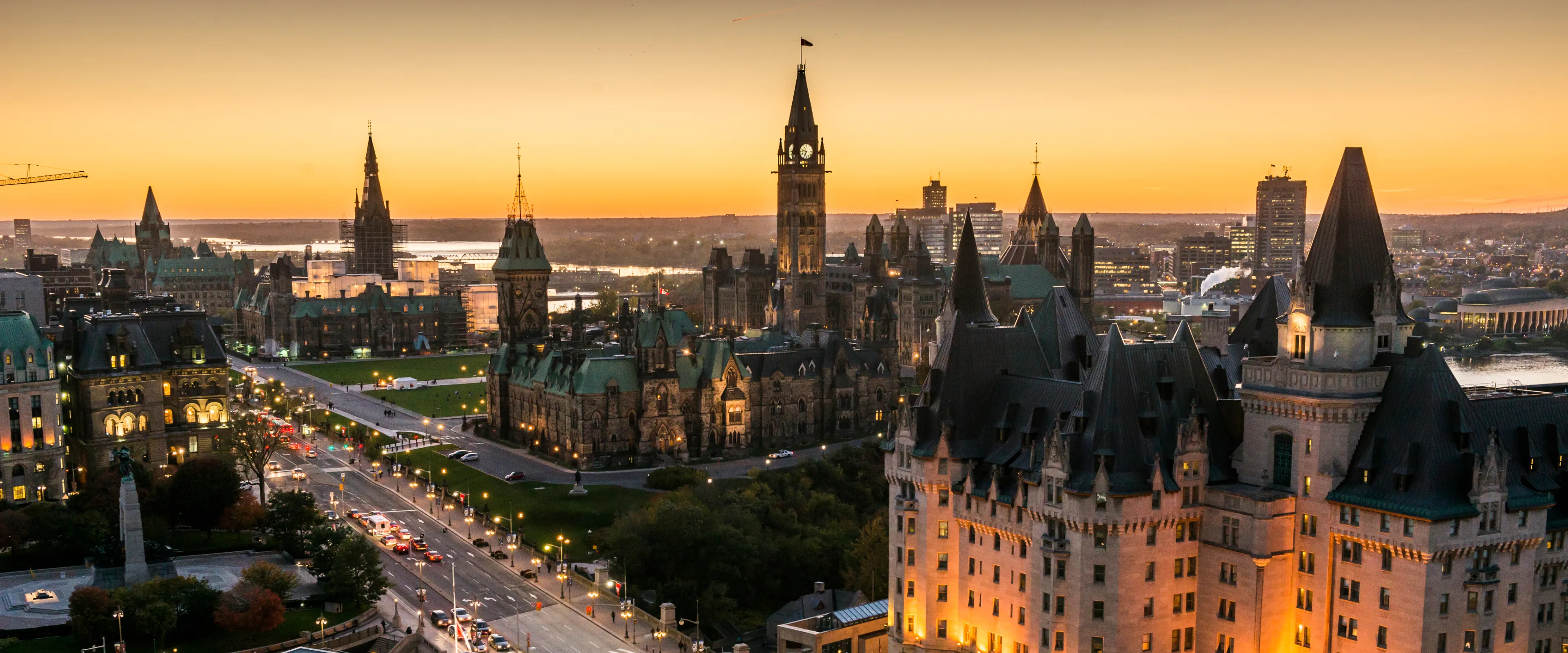
2026 is a particularly good time to visit, as Ottawa is celebrating 200 years since the founding of Bytown, the name of the settlement before it became Ottawa. It’s not the beginning of the story, but one chapter in a history that far predates 1826. So, see Parliament. Take the photo. But then, keep exploring. Whether you know Ottawa well or you’re meeting it for the first time, there’s a lot more city hiding behind the face of this capital.

Before there was Ottawa, there was Kichi Sibi
Predating Ottawa, the waterways here were gathering spots, transportation routes, and trade corridors for the Anishinaabeg Algonquin Peoples. Ottawa sits on their traditional, unceded territory, where the Ottawa, Rideau, and Gatineau waterways intertwine. The Ottawa River is Kichi Sibi, and even the name—Ottawa—comes from the Algonquin word adawe, meaning “to trade.”
One does not have to experience that history exclusively indoors within a museum, either. Indigenous Walks reframes familiar downtown monuments and landmarks through an Indigenous perspective, while Mādahòkì Farm hosts cultural programming, seasonal events, Indigenous artisans, and rare Ojibwe Spirit Horses.
An intriguing place to see past and present meet is Kìwekì Point behind the National Gallery. The lookout rises above the Ottawa River with Parliament across the water, but it’s more than merely another scenic viewpoint. Its redevelopment was shaped in collaboration with the Indigenous communities of Algonquins of Pikwàkanagàn and Kitigan Zibi, with Algonquin art and interpretation in English, French, and Anishinaabemowin woven throughout the space.
It may seem intuitive, but go around sunrise or sunset. You’ll get one of the best views of the Ottawa that people think they know, while standing in a place that asks you to look at it with a different perspective.
The trades that built the city
The Ottawa of the present has a reputation for being orderly. Bytown, by contrast, was not. The settlement grew around the construction of the Rideau Canal, which began in 1826 as Britain sought a safer military supply route between Montréal and Kingston after the War of 1812. Workers arrived to dig, blast, and build their way through the wilderness, quickly followed by lumbermen, merchants, boarding houses, and a slew of taverns. The timber trade boomed, with the Ottawa River carrying enormous logging rafts downstream and drawing Irish, French-Canadian, Scottish, and English workers into the region.
By the 1830s, competition and ethnic tensions among groups of lumbermen became violent enough to earn the period its own name: the Shiners’ War. Intimidation, political interference, riots, and sometimes outright fighting became staples of settlement life. It’s a wonderfully juxtaposed origin story for a place now synonymous with parliamentary procedure.
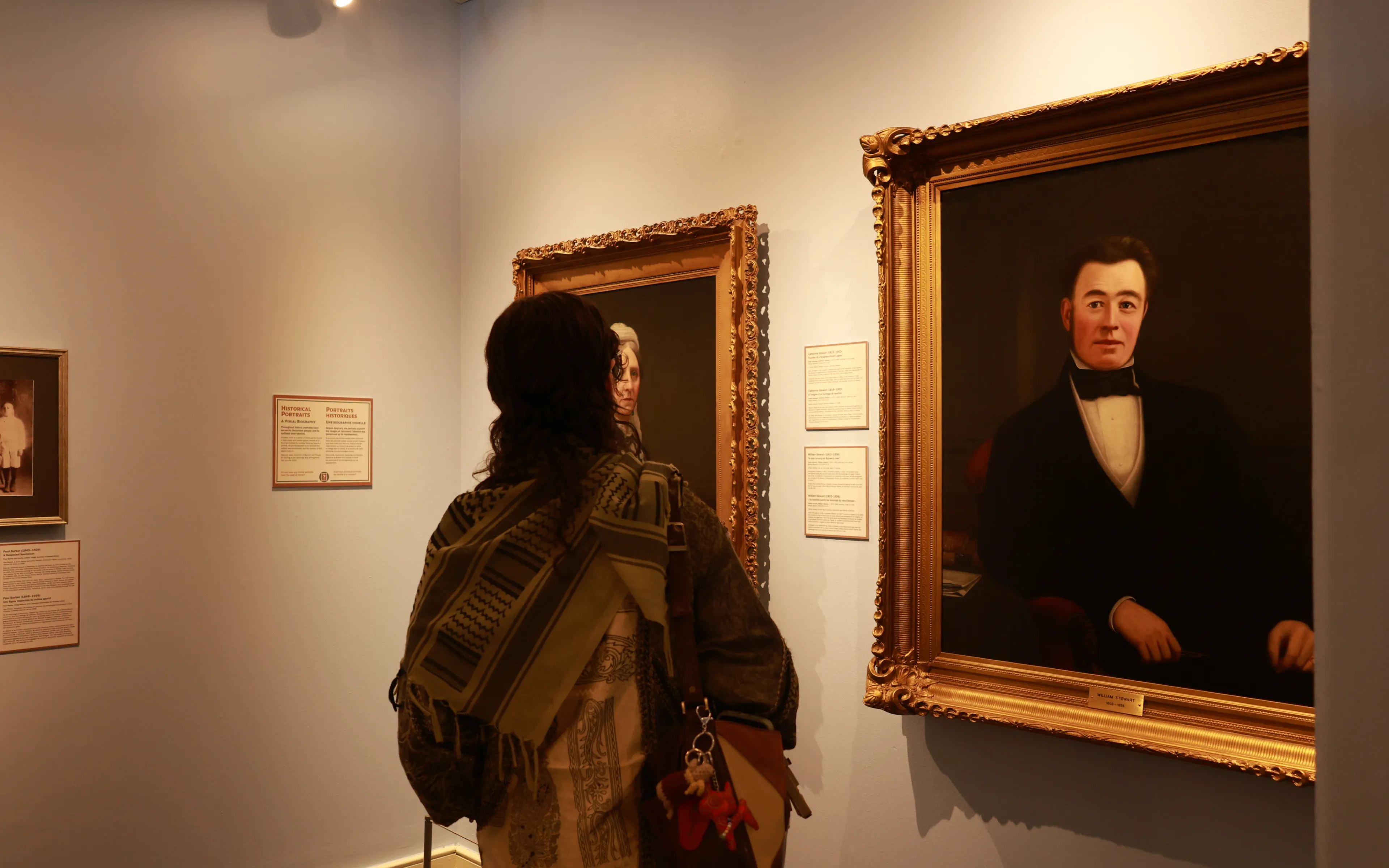
You can still get remarkably close to that history at the Bytown Museum, housed in the 1827 Commissariat Building beside the canal locks, where provisions for canal workers were once stored. Rather than preserve Bytown in amber, the museum is actively reconsidering how the city’s history is told. Its permanent gallery was renewed in collaboration with Kitigan Zibi Anishinabeg and the Algonquins of Pikwàkanagàn, while the bicentennial exhibition "What’s in a Frame? 200+ Years of Community Portraits" uses a variety of portrait types from a diverse group of people to reveal local stories of community, resilience, and diversity, from Ottawa’s beginnings to the present.
It makes the museum feel less like a place displaying old trades and more like a conversation about who built the city, as well as how those stories continue to be told. Fittingly, the canal that started the whole thing still runs past the front door.
In 1855, Bytown became Ottawa, and two years later Queen Victoria selected it as the capital of the Province of Canada. It remained the capital when Canada became a country in 1867.
Ottawa takes root in wilderness
For a national capital, Ottawa has a startling amount of wilderness. Part of that is deliberate. The National Capital Greenbelt forms a band of more than 20,000 hectares of farms, forests, wetlands, streams, and other protected green space around the urban center. Created in the 1950s to protect rural land from city sprawl, it’s now one of the largest publicly owned greenbelts in the world.
Within it is Mer Bleue, a roughly 7,700-year-old bog due southeast of Parliament Hill. Its ecosystem is more typical of landscapes considerably farther north, and a boardwalk enables you to escape into an environment that seems, on its face, wildly disconnected from the rest of the city.
Then, there’s the farm. Nestled practically in the middle of the city, the Central Experimental Farm was established in 1886 to support agricultural research across the young country, and remains a working research landscape to this day. It boasts crop fields, historic buildings, gardens, and an arboretum winding across hundreds of acres. Perhaps most popularly, it houses two barns of adorable farm animals. Be sure to visit in spring when you can see the newborn calves, piglets, and other animals up close.
Add it all together—the Ottawa River, Rideau Canal, beaches, pathways, and Gatineau Park across the water—and something becomes clear: Getting outside in Ottawa doesn’t require leaving town. Nature here isn’t something one "drives out to see." It’s enmeshed in the way the capital was planned and how people utilize it.

Ottawa, off the clock
Parliament is worth seeing—hands down. You just shouldn’t spend your entire trip staring at it. Like most cities, Ottawa’s best conversations, art, food, and people-watching aren’t concentrated around its official buildings. They happen further afield: where a Saturday morning can easily turn into coffee, a bookstore crawl, a market visit, and dinner somewhere you hadn’t planned on going.
Start in the Glebe, where Bank Street gives you plenty of reasons to stop: independent shops and bookstores, old homes on the side streets, and Lansdowne Park, where the year-round Ottawa Farmers’ Market brings local growers and producers into the city. From there, you can walk toward the canal or follow Bank into Old Ottawa South, home of the century-old Mayfair Theatre and House of TARG (an underground arcade/live music venue whose house speciality is pierogies).
Head west, but go hungry, as Hintonburg and Wellington West are the kind of place you want to visit on an empty stomach. Bakeries, restaurants, coffee shops, galleries, and small businesses cluster along Wellington, while converted industrial buildings and murals tie in the working-class past. On Somerset Street, Chinatown tells another part of Ottawa’s immigration story. Pass beneath the Royal Arch, and you’ll find rich Vietnamese pho and bánh mì alongside Chinese, Korean, Thai, and other cuisines. Walk west into Little Italy, and Preston Street will beckon you to stay and sit for a while, especially during patio season.
Then, there’s ByWard Market. Go. It’s historic, central, busy, and worth wandering at least once. It’s where you’ll find nightlife, new restaurants, and enough visitors and hubbub to remind you that you’re in a capital city. Just don’t get it twisted with the entirety of Ottawa.
The most common party line you’ll hear about the city is some variation of, “Oh, Ottawa is boring.” It’s not. Ottawa has indie cinemas and pinball bars, farmers’ markets and gallery crawls, Vietnamese restaurants and neighborhood festivals, live music tucked into old taverns. The trick isn’t finding something to do. It’s knowing where to look.
The food that shaped Ottawa
Ask Ottawa residents what food defines their city, and prepare to hear about shawarma. Lebanese immigration has shaped how the city eats for generations, and the proof is in the shawarma: Ottawa Tourism says the city has more shawarma shops than anywhere else in Canada, not to mention the city boasts the world record for the longest line of shawarma. Garlic sauce and potatoes are taken seriously, and you’ll even find shawarma poutine. Chat with anyone about which shop is best, and you may receive several completely different—and passionately defended—answers.
However, shawarma isn’t the only mark Lebanese immigration left on Ottawa. The city has developed its own pizza style, too. The basic formula is a thicker crust, plenty of toppings, and, crucially, a formidable layer of cheese placed over those toppings. Residents have opinions about the result. Some will tell you it’s criminally underrated while others consider burying toppings under cheese sacrilege. Try it, and choose your side.
Then, there’s Golden Palace, Ottawa’s oldest Chinese restaurant and another example of an immigrant-owned business becoming part of the city’s culinary shorthand. The third-generation family restaurant has been around for over sixty years, and its open-ended egg rolls and plum sauce have developed the kind of following that transcends “good takeout” and puts them into the institution territory, so much so that the Golden Palace ships the egg rolls by the dozen around Ontario.
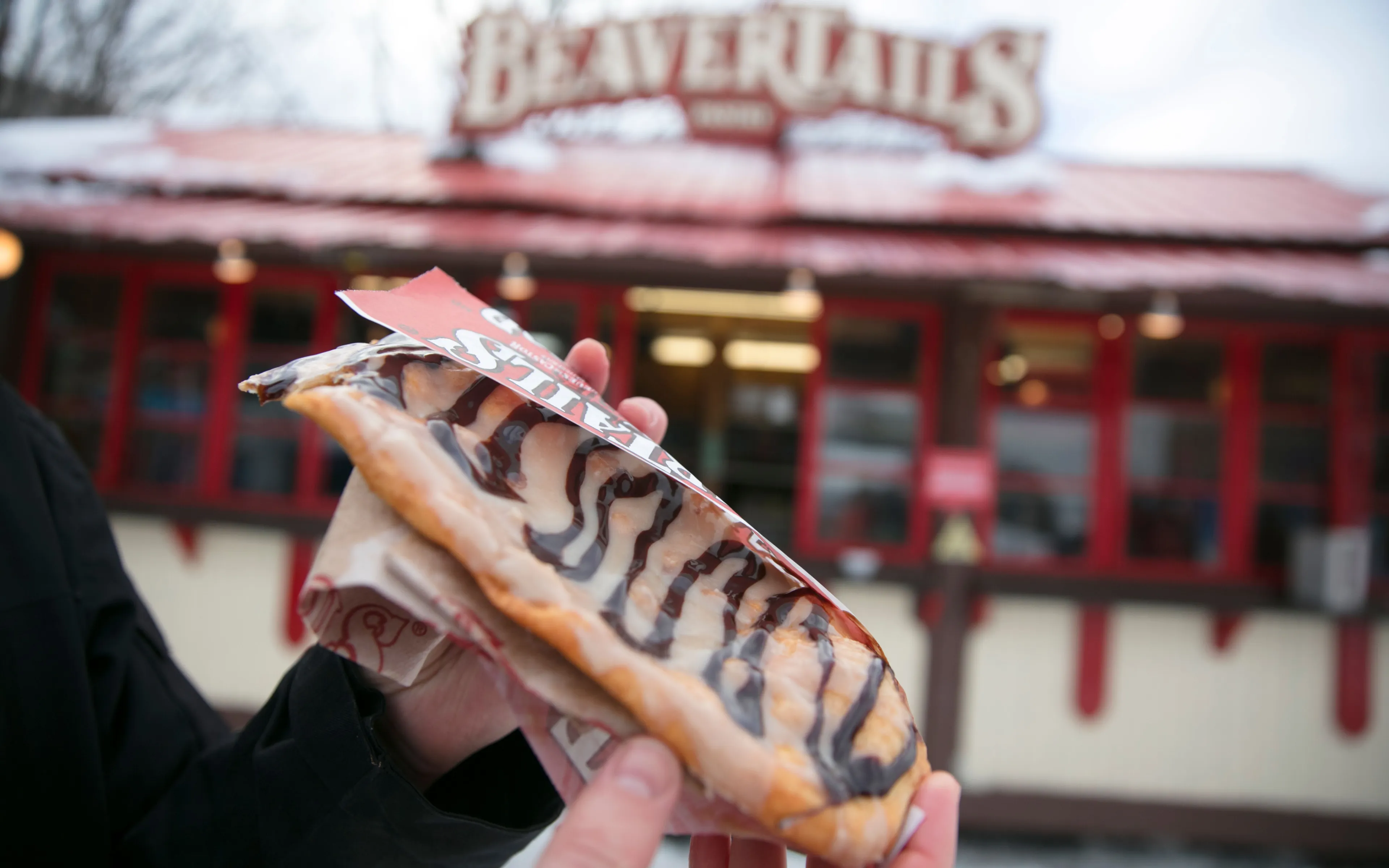
Keep eating your way around Ottawa, and more local tells appear: chip wagons, old-school sandwiches, and pierogies served alongside pinball machines. BeaverTails may be the Ottawa food visitors recognize, but its day-to-day food culture tells a much bigger story. Generations of people arrived here, opened restaurants, adapted recipes, and created food the city now argues about as its own.
Exit stage left, pursued by Ottawa
There’s a decent chance you’ve already seen Ottawa. You just thought it was somewhere else. The city has long been a shapeshifter for film and television: Sparks Street has played New York, ByWard Market has posed as Los Angeles, Philly, 19th-century New England, and Europe. Not to mention an Ottawa apartment building became Brooklyn in "Penthouse North", with a few extra floors digitally added for good measure. Ottawa’s cinematic passport is well stamped.
Lately, though, the city is getting more credit for playing itself. Live-action production generated more than $60 million in local economic activity during a record 2025, and Ottawa Tourism even produced its own holiday movie, "Magic on Set", after years of watching the city masquerade as other Christmas destinations.
Then came "Heated Rivalry". The hockey romance made ginger-ale lover Shane Hollander an Ottawa native (and, eventually, the city a future home for sports-car enthusiast Ilya Rozanov). Ottawa Tourism ran with it, joining fan conversations, building travel content around the show, and earning industry accolades for the campaign. What could have been a one-off pop-culture moment instead fits neatly into something already happening: Ottawa is increasingly becoming part of the story rather than simply its backdrop.
A capital city worth getting acquainted with
The 2026 bicentennial is a good reason to look at Ottawa again, not because it suddenly has become interesting at 200, but because there’s much more happening here than its capital-city reputation suggests. Some of it has been here for thousands of years. Some arrived with the people who made Ottawa home. And some is being created, reinterpreted, filmed, cooked, performed, and argued about at this very moment.
So, go see Parliament. Skate the canal if the weather allows. Do the Ottawa things you came to Ottawa to do. Then give yourself the time and curiosity to wander a little further. Figure out which Ottawa you want to meet, or which part you haven’t met yet.
Things to do, where to eat, and how to get around
Getting around
- Skip the rental downtown. Central Ottawa is pedestrian-friendly. Save the car for excursions farther afield.
- Take the O-Train and buses. OC Transpo operates Ottawa's bus and light-rail network, including connections between YOW and downtown.
- Bike if you're staying more than a day. Pathways connect downtown with the canal, rivers, parks, and Gatineau. You can even bike across the river into Québec.
- Think in two transit systems. OC Transpo serves Ottawa, and STO serves Gatineau, with connections between the two. One useful wrinkle: Uber and Lyft can drop you in Québec but can't pick you up there.
- Rent a car for farther afield. It's most useful for places like Carp, Chelsea, Wakefield, and deeper exploration outside the urban core.
Neighborhoods to wander
- The Glebe for independent shops, older residential streets, Lansdowne, and canal access.
- Old Ottawa South for a quieter, quirkier stretch of Bank Street with a strong independent streak.
- Hintonburg and Wellington West for bakeries, galleries, restaurants, and small businesses.
- Chinatown for Vietnamese food, Asian markets, murals, and Somerset Street.
- Little Italy for Preston Street, patios, and an easy wander toward Dow's Lake.
- Centretown for the lived-in side of central Ottawa: restaurants, coffee, old homes, and fewer tour groups.
- ByWard Market for history, nightlife, and bustle. Go, but don't mistake it for the entirety of Ottawa.
History, culture, and things worth doing
- Tour Parliament. Guided visits are free. Centre Block is currently closed for rehabilitation, with the House of Commons temporarily sitting in West Block.
- Time the Ottawa Locks for a boat. Eight locks connect the Rideau Canal with the Ottawa River beside Parliament, a particularly good stop when you can see the working infrastructure in action.
- Go to a museum on Thursday evening. The National Gallery, Museum of History, War Museum, and Museum of Nature currently offer free admission to their permanent exhibitions on Thursday evenings.
- Hold a gold bar. At the Royal Canadian Mint, the boutique is free to visit and includes the chance to hold a solid-gold bar. Guided tours are ticketed.
- Swim in the Ottawa River. The restored NCC River House has floating swimming docks and seasonal programming, connected to downtown by walking and cycling paths.
- Browse 613flea. 613flea brings 150 makers, bakers, artists, vintage sellers, and other vendors to Aberdeen Pavilion on select Saturdays. Admission is free.
Markets and makers
- Lansdowne Farmers' Market, open Sundays year-round. More than 85 local vendors; outside in warmer months and inside Aberdeen Pavilion in winter.
- 613flea, select Saturdays at Lansdowne for vintage, records, antiques, art, handmade goods, and miscellaneous treasures.
- Parkdale Market, daily from May through October in Wellington West, with produce, flowers, and other local goods. It's been around since 1924.
Where to eat
- Shawarma Palace for an introduction to the Ottawa shawarma debate. A local institution since 1997. Get the garlic potatoes.
- Aladdin Bakery for Lebanese meat, cheese, or za'atar pies. An inexpensive look at the city's Lebanese food culture beyond shawarma.
- Cô Châm in Chinatown for bánh mì and Vietnamese comfort food on Somerset Street.
- Pho Tuan for bún chả Hà Nội, a Hanoi-style dish of grilled pork, vermicelli, herbs, and dipping sauce.
- Wilf & Ada's for brunch. It's a small Centretown scratch diner and doesn't take reservations.
- Bread By Us in Hintonburg for naturally leavened bread, focaccia, pastries, and coffee.
- Supply and Demand for a nicer dinner: raw-bar dishes, housemade pasta, and vegetable-forward seasonal plates.
- Corner Peach for something more casual: a small Somerset Street neighborhood bistro built around seasonal cooking.
- And leave room for Golden Palace, Ottawa-style pizza, and a BeaverTail elsewhere in the trip. You've already been briefed.
When to go
- Winter for Winterlude, snow sports, hockey, and (when conditions allow) the Rideau Canal Skateway, the world’s longest skating rink.
- Spring for the Canadian Tulip Festival. The number of tulips in bloom usually exceeds 1 million, especially taking into account the rural tulip fields one can visit (not affiliated with the official festival, but they bloom concurrently during the season).
- Summer for patios, paddling, cycling, swimming, markets, and festivals.
- Fall for cooler days and fall color, including remarkable views in and around Gatineau Park. It is also prime for hiking, not only in Gatineau Park, but in the Ottawa Valley as well.
Pro tips
- Thursday is museum night. The Bytown Museum, National Gallery of Canada, Canadian Museum of Nature, Canadian War Museum, and Canadian Museum of History offer free permanent-exhibition admission for designated hours (entry times depend on the museum).
- Don't assume the canal will be skateable. The Rideau Canal Skateway is weather-dependent, so check conditions close to your trip.
- Check the event calendar before you arrive. Festivals, exhibitions, markets, and Ottawa's 2026 bicentennial programming can materially change what there is to do on your travel dates. Ottawa Tourism recommends confirming event details with organizers.
- Live here? Use your library card. Ottawa Public Library members can borrow Access Passes for free entry to participating museums and parks, as well as skiing. Availability is limited.
- Don't spend your whole trip around Parliament. The headline attractions are close together. See them, then give yourself time for the neighborhoods and the rest of the National Capital Region.

Related guides
Last updated September 23, 2026
Articles you might like
View All
Boston: The New England City Built on a Filled Marsh and Fierce Loyalty
Sep 17, 2026
8 min read
What To Do in Los Angeles: The Ultimate Bucket List for 2026
Sep 8, 2026
6 min read

Rio de Janeiro: The Brazilian City That Beats to the Rhythm of Samba
Aug 20, 2026
6 min read