Things To Do in Costa Rica: Volcanoes, Beaches, and Rainforests



March 11, 2026
6 min read
Table of Contents
For a country smaller than West Virginia, Costa Rica punches well above its weight. It contains roughly 5% of the world's biodiversity, two coastlines, a dozen microclimates, and an unofficial national philosophy—pura vida—that translates loosely to "pure life." More accurately, it's a reminder to slow down and enjoy life. Whether you're here for adrenaline, wildlife, wellness, or just a beach with impossibly blue water, Costa Rica delivers.
Key takeaways
Costa Rica's highlights include volcanoes, cloud forests, and two distinct coastlines. Here's a snapshot of what to expect.
The classic route: La Fortuna, Monteverde, and Manuel Antonio
- La Fortuna and Arenal: Hike around an active volcano, soak in natural hot springs, chase a 230-foot-plus waterfall, and white-water raft a world-renowned river—all within the same region.
- Monteverde: Walk hanging bridges through a cloud forest, zipline over the canopy, and join a night hike to spot wildlife that only comes out after dark.
- Manuel Antonio: Combine beach days with some of the best wildlife watching in the country—sloths, monkeys, and toucans, all within a compact and beautiful national park.
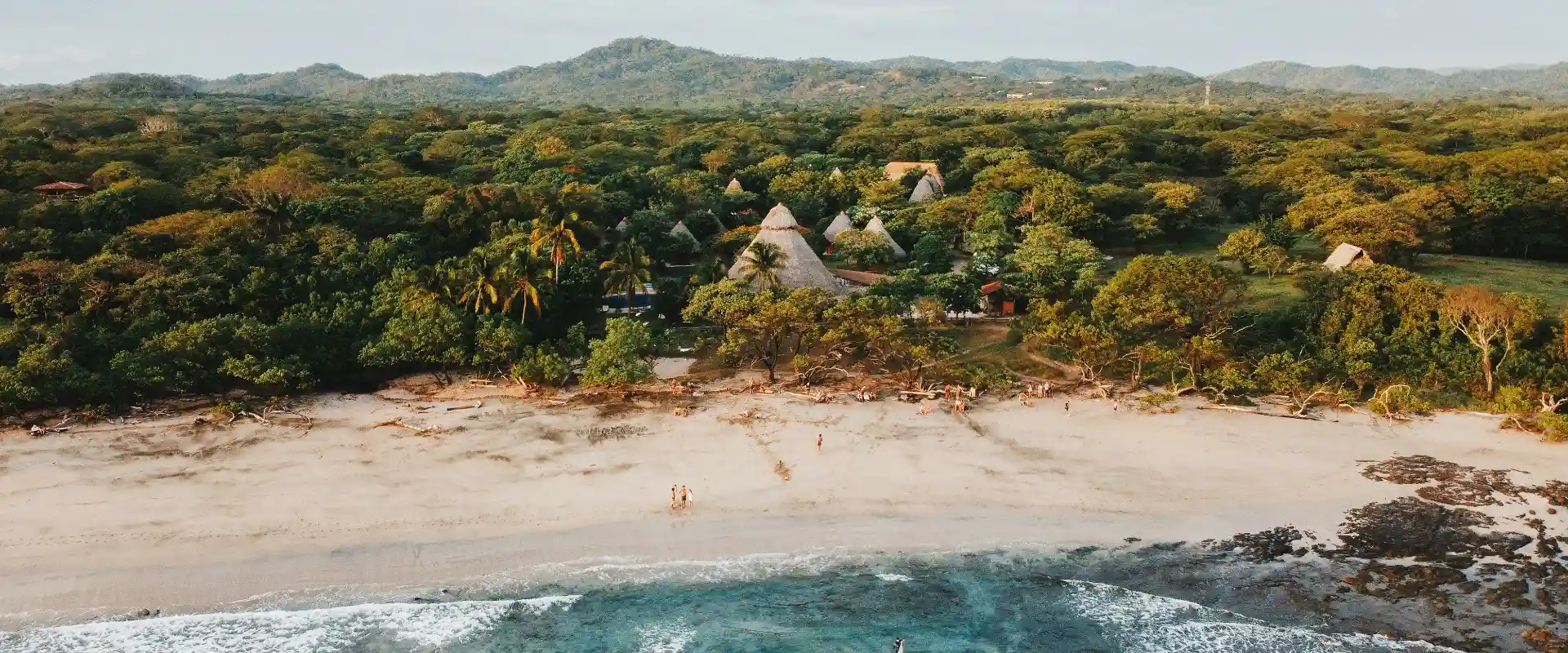
Sun, surf, and pura vida: Guanacaste
- Surf world-class waves in Tamarindo, snorkel and dive the Papagayo Peninsula, and hike the volcanic landscape of Rincón de la Vieja.
- For a quieter beach experience, nearby Playa Grande and Sámara are worth the drive.
Wellness and nature: The Nicoya Peninsula
- One of only five Blue Zones in the world—areas where people regularly live past 100—the Nicoya Peninsula is the go-to destination for yoga retreats, surf camps, and slowing way down.
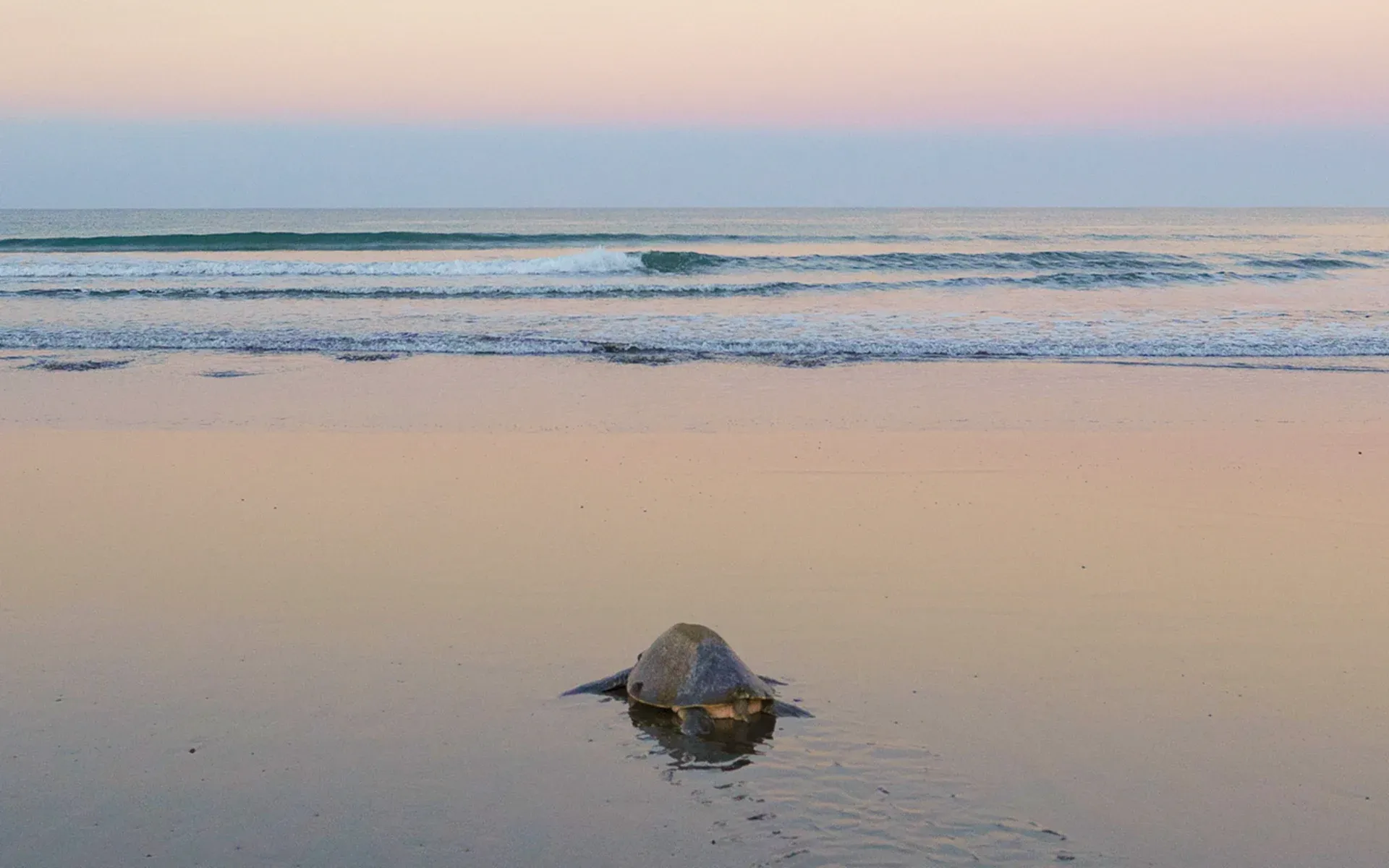
- Watch Olive Ridley sea turtles nest at Ostional Wildlife Refuge during one of nature's great mass events, the arribada.

The wild side: The Osa Peninsula
- Hike Corcovado National Park, one of the most biodiverse places on Earth, watch whales and dolphins in Drake Bay, and visit a cacao farm for a bean-to-bar experience.
The Caribbean side
- A different side to Costa Rica: Afro-Caribbean culture, jungle-lined canals in Tortuguero, vibrant reef snorkeling, and some of the world's most important sea turtle nesting beaches.
Cultural and culinary highlights
- Coffee and chocolate tours reveal the story behind two of Costa Rica's most important exports—and they're fascinating.
- The country's farm-to-table food scene is rooted in fresh, local ingredients. Look for casados (the traditional rice-and-beans plate) at local sodas rather than tourist-facing restaurants.
- Craft beer and locally distilled spirits are a growing part of Costa Rica's food culture, especially in San José.
The classic Costa Rica trip: volcanoes, cloud forests, and adventure
Things to do in La Fortuna and Arenal
La Fortuna is Costa Rica's adventure capital, built around the base of the Arenal Volcano and blessed with natural riches. It's the kind of place where you can pack five extraordinary experiences into a single day, though slowing way down will make them all the more enjoyable.
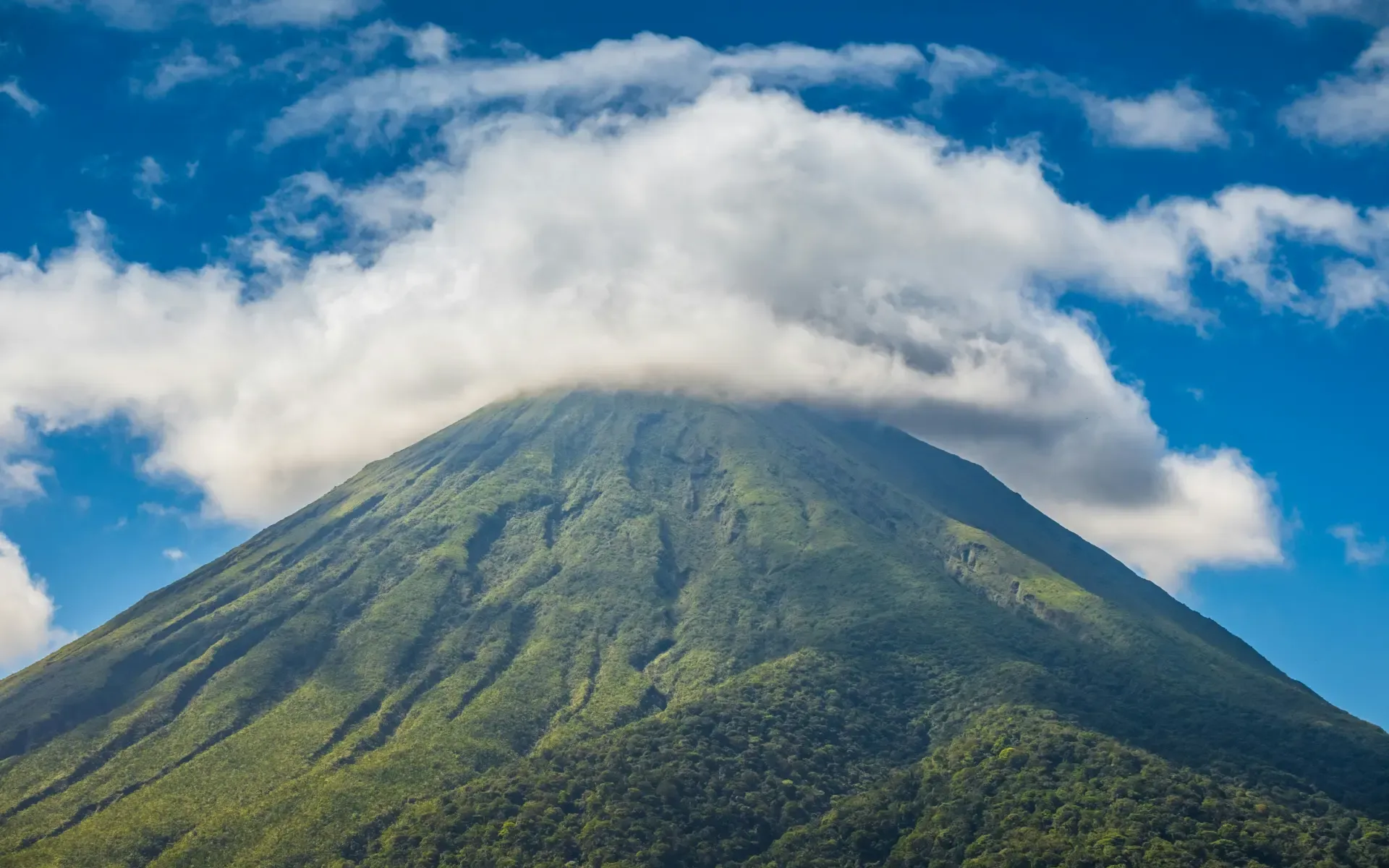
Hike around Arenal Volcano
- Arenal Volcano National Park offers well-maintained trails through lava fields and rainforest, with the volcano's near-perfect cone looming above.
- The volcano has been largely dormant since 2010, but the landscape it left behind—hardened lava flows, steaming vents, and dense regenerating jungle—is dramatic and fascinating.
- The Arenal 1968 Trail follows the path of the volcano's most destructive eruption and is one of the most popular routes in the park.
Soak in hot springs
- La Fortuna is surrounded by geothermally heated hot springs fed by the volcano, ranging from free natural pools to high-end resort experiences.
- The free hot springs along the Río Arenal are a favorite among locals and budget travelers—a lovely experience without the resort price tag.
- For a more polished experience, Baldi Hot Springs and Ecotermales are well-regarded paid options with multiple pools at different temperatures.
Note: Hot springs vary wildly in quality and price. The free ones along Río Arenal are a local favorite. Skip the overpriced resort pools if you're on a budget.
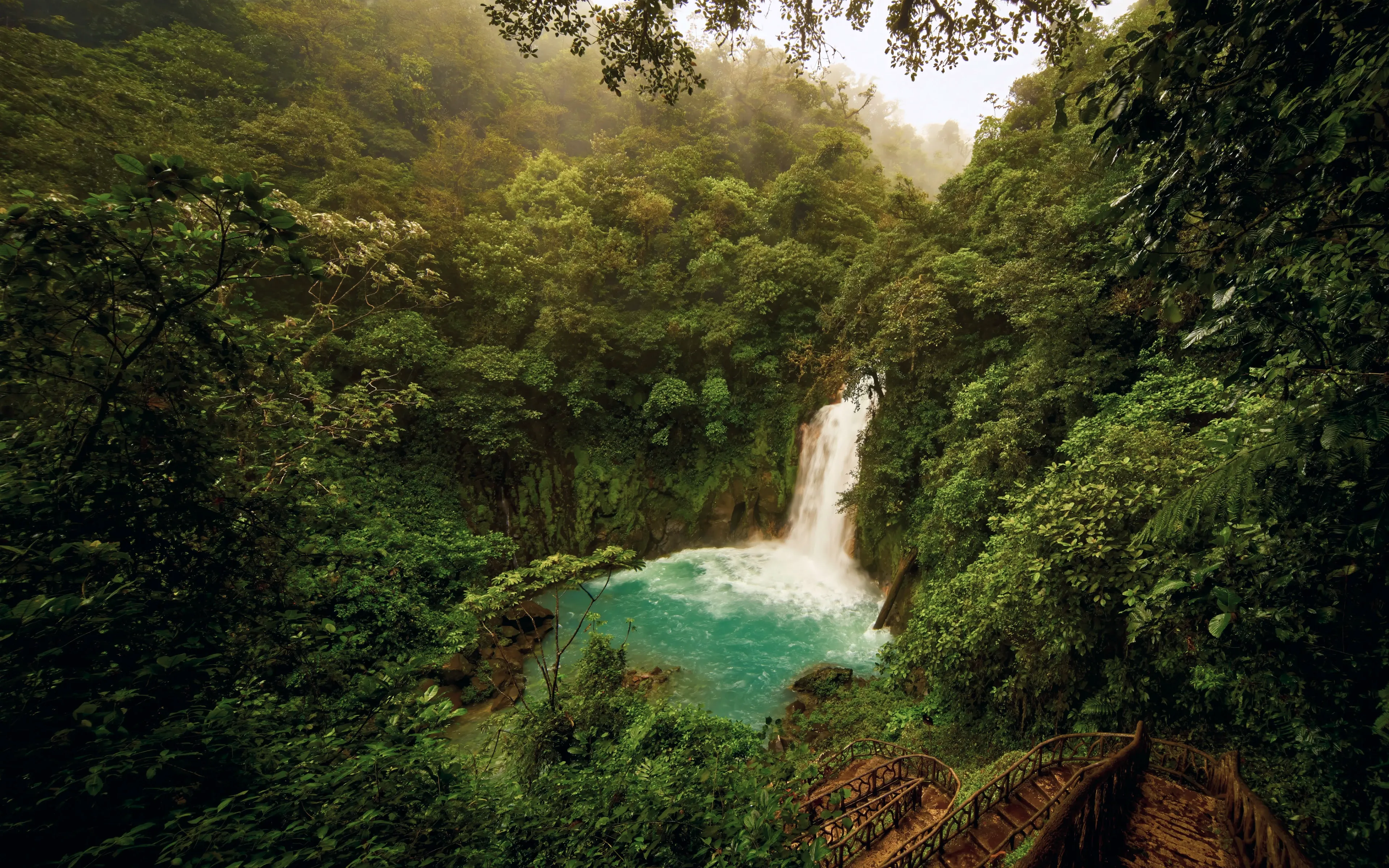
La Fortuna Waterfall
- The Catarata La Fortuna is a 230-foot-plus waterfall that plunges into a turquoise pool at the base of a lush gorge, one of the most beautiful natural sights in Costa Rica.
- It's about a 500-step descent to the base, steep but manageable for active travelers. The swim at the bottom is worth every step.
- Arrive early to beat the crowds and get the best light for photos.
White-water rafting on the Pacuare River
- The Río Pacuare is widely regarded as one of the top white-water rafting rivers in the world, with a spectacular jungle gorge, wildlife sightings mid-river, and rapids ranging from Class III to Class IV.
- Most operators run full-day trips from La Fortuna or San José, including lunch on the riverbank.
Note: The Pacuare runs faster and rougher between June and December. Beginners should stick to the lower section or visit during the dry season.
Ziplining and hanging bridges
- The forest canopy around La Fortuna is home to some of Costa Rica's best zipline operations, including multi-line circuits with volcano views.
- Hanging bridge walks through the rainforest offer a slower, quieter alternative—excellent for birdwatching and spotting wildlife from above the forest floor.
El Salto rope swing
- One of La Fortuna's best-kept local secrets: a natural rope swing over a swimming hole in the forest, used by locals for generations.
- It's free, it's exhilarating, and it's the kind of experience that doesn't make it into most guidebooks, which is exactly what makes it worth seeking out.
Things to do in Monteverde
Monteverde is perched high in the Tilarán Mountains, wrapped in cloud forest, and home to an extraordinary concentration of biodiversity. It's also the birthplace of Costa Rica's eco-tourism movement, showing just how thoughtfully the area is managed.
Monteverde Cloud Forest Reserve
- One of the most biodiverse ecosystems on Earth, the Monteverde Cloud Forest Biological Reserve protects over 26,000 acres of forest. It is also home to more than 400 bird species, including the resplendent quetzal.
- Guided tours are highly recommended—a good naturalist guide will spot wildlife you'd walk right past on your own.
Note: Afternoon clouds are almost guaranteed in Monteverde. Book your hike for the morning to maximize visibility.
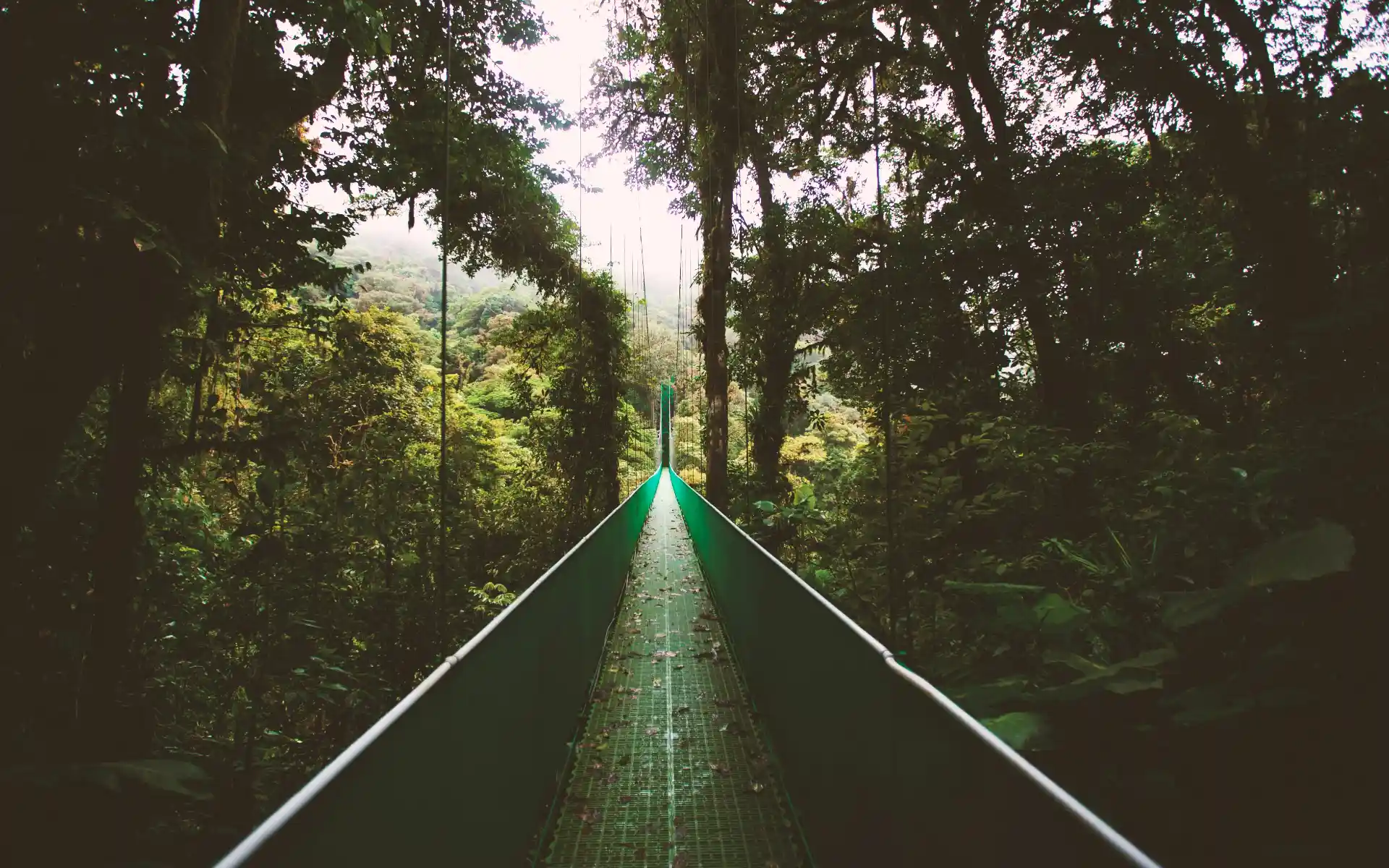
Sky Walk hanging bridges
- The Sky Walk is a circuit of hanging bridges through the cloud forest canopy, offering extraordinary views and excellent wildlife spotting opportunities.
- Unlike ziplining, this is a slow, peaceful experience—perfect for those who want the canopy perspective without the adrenaline.
Ziplining over the cloud forest
- Monteverde is one of the best places in the world to zipline, with lines stretching over the forest canopy and down into the valley below.
- Selvatura Park and Sky Trek are two reputable operators, with well-maintained equipment and trained guides, but always do your research to choose the operator that's best for you and your needs.
Night hikes and wildlife spotting
- The cloud forest comes alive after dark. Night hikes led by naturalist guides are one of Monteverde's most memorable experiences. Expect to see tree frogs, tarantulas, kinkajous, and sleeping birds up close.
- Several reserves and lodges offer organized night hike experiences. Book in advance during high season.
Things to do in Manuel Antonio
Manuel Antonio is Costa Rica's most visited national park, and it earns the attention. A compact stretch of Pacific coastline with pristine beaches, dense jungle, and wildlife so accustomed to humans that spotting a sloth or a family of squirrel monkeys is virtually guaranteed.
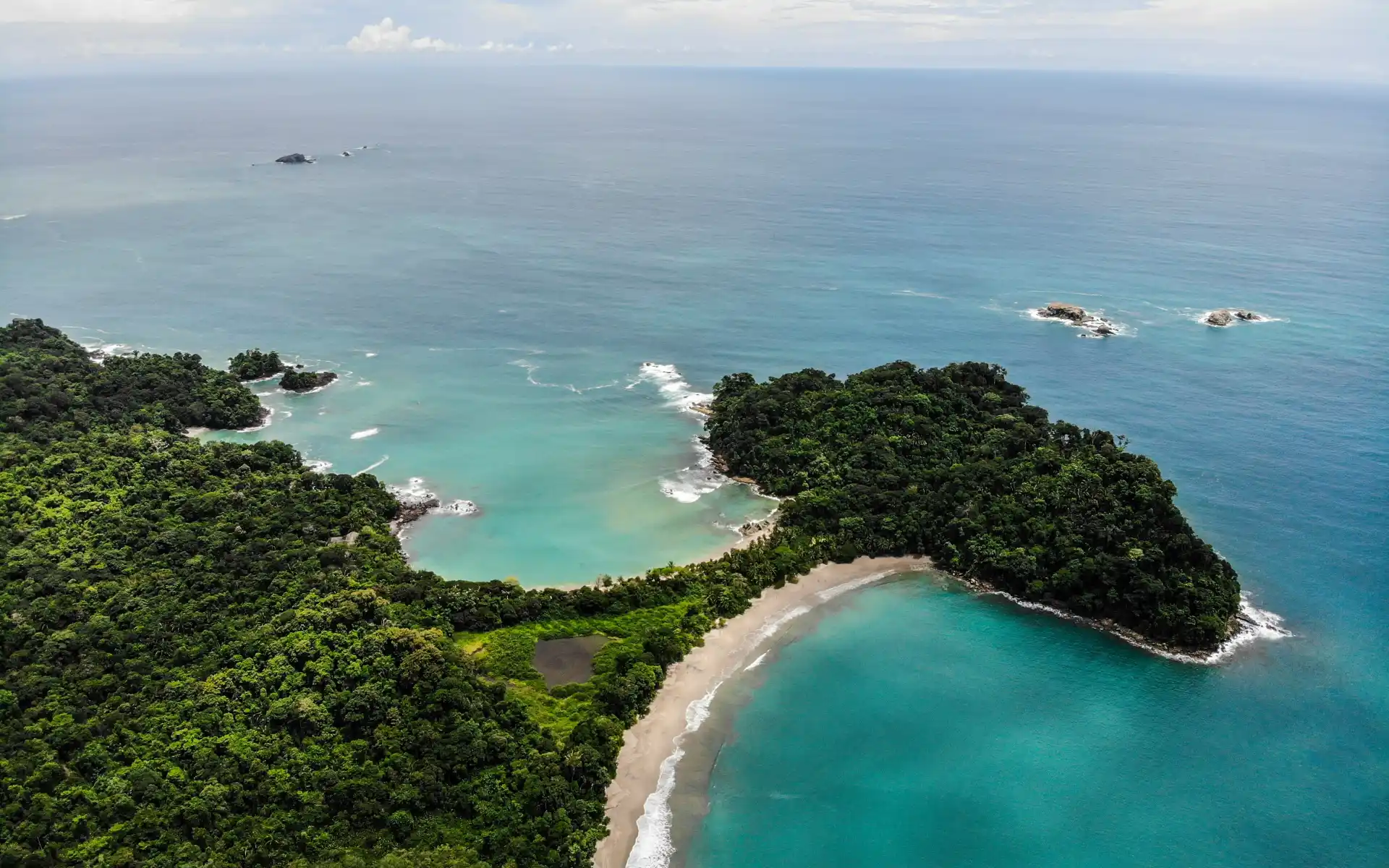
Manuel Antonio National Park
- The park combines white sand beaches, coral reefs, and primary rainforest in a remarkably small area. You can hike to a lookout, spot a sloth, and be swimming within an hour.
- Wildlife regularly spotted includes: white-faced capuchin monkeys, three-toed sloths, scarlet macaws, toucans, and raccoons.
Note: The park has a daily visitor cap and sells out frequently during high season, so book your tickets online in advance.
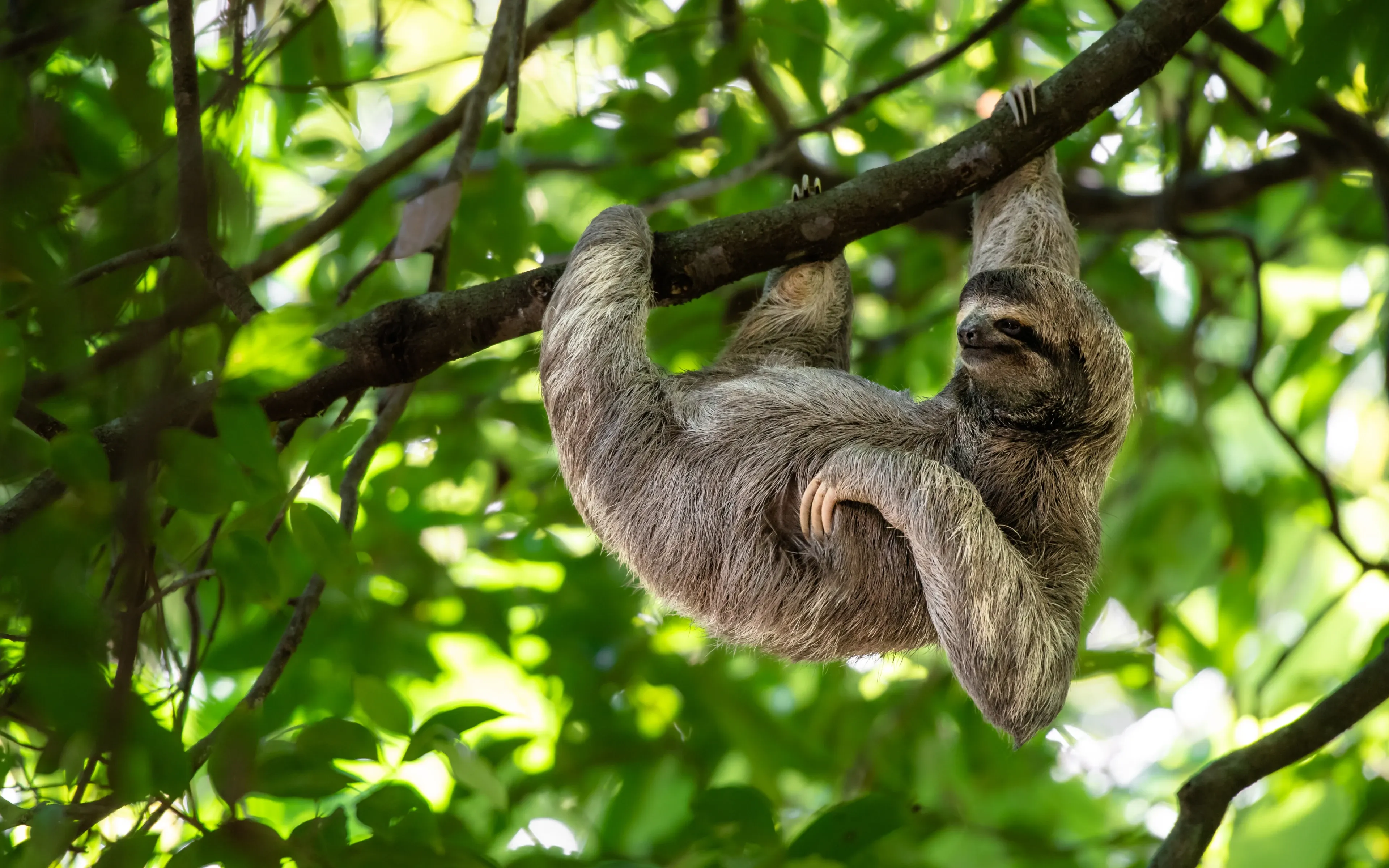
Wildlife watching (sloths, monkeys, toucans)
- Three-toed sloths are almost always visible in the cecropia trees along the park's main trail—look up.
- Hiring a local guide with a spotting scope is money well spent. They'll show you wildlife you'd never find on your own, and the close-up views of birds and reptiles are extraordinary.
- The squirrel monkeys in Manuel Antonio are one of Costa Rica's most endangered species and are found almost nowhere else in the country.
Playa Manuel Antonio and Playa Biesanz
- Playa Manuel Antonio inside the park is consistently ranked among Costa Rica's most beautiful beaches—calm, clear, and fringed with jungle.
- Playa Biesanz, just outside the park, is quieter and less visited, with excellent snorkeling right off the shore.
Kayaking and snorkeling tours
- Several operators offer kayaking tours around the park's rocky headlands and sea caves, with good chances of spotting dolphins and marine wildlife.
- Snorkeling tours around the offshore rocks reveal reef fish, rays, and the occasional sea turtle.
Sun, surf, and pura vida: Things to do in Guanacaste
Guanacaste is Costa Rica's driest and sunniest province—the Pacific beach destination of choice for those who want reliable sunshine, world-class surf, and easy resort access.
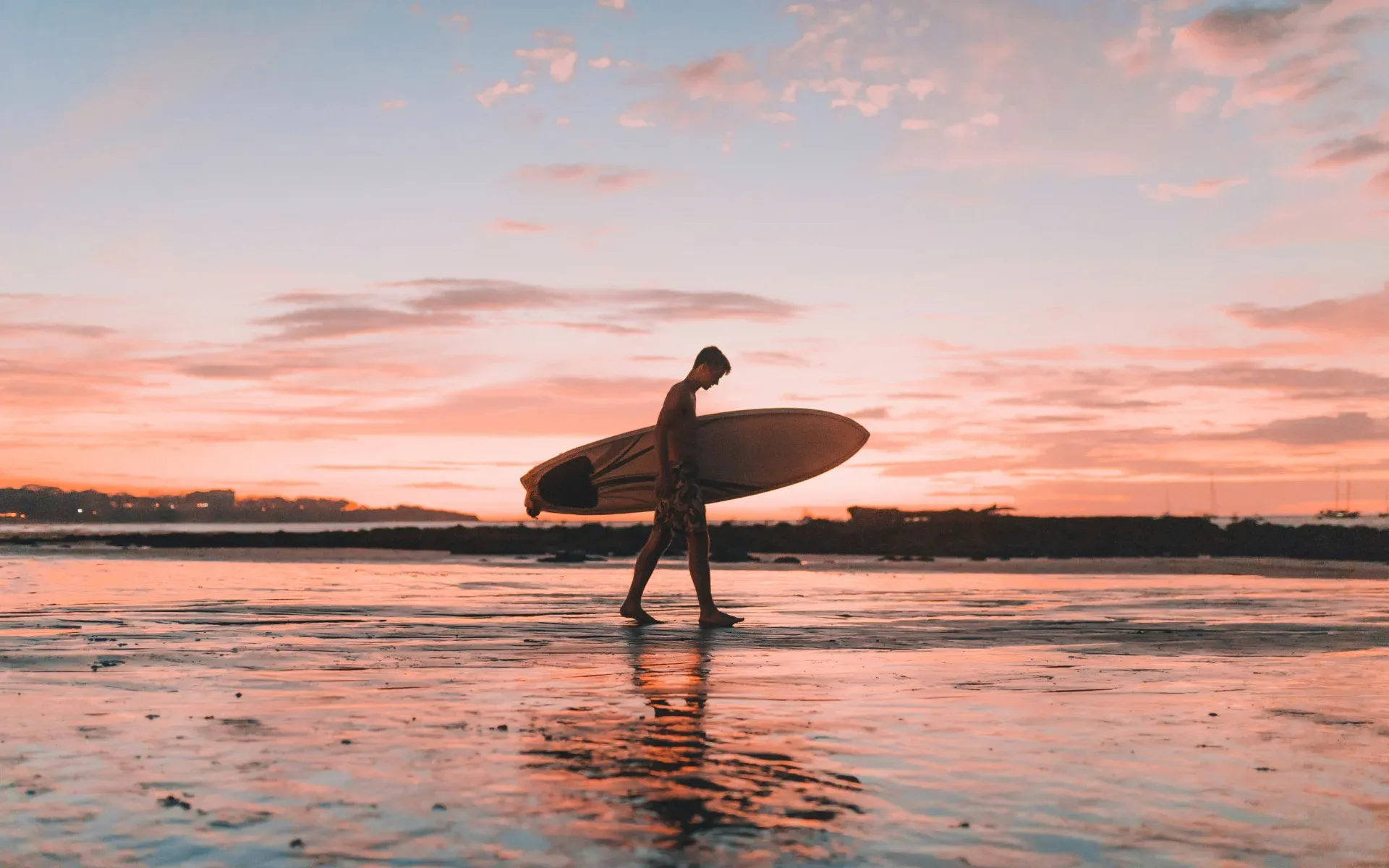
Surfing in Tamarindo
- Tamarindo is one of Costa Rica's most developed surf towns, with consistent beach breaks suitable for beginners and a lively, international atmosphere.
- Surf schools and board rentals are everywhere—it's one of the best places in the country to learn.
Note: Tamarindo is one of the most developed beach towns in Costa Rica, great for amenities. But if you're looking for a quieter vibe, nearby Playa Grande or Sámara are worth the drive.
Playa Conchal and Flamingo Beach
- Playa Conchal is famous for its unique shoreline of crushed shells, which gives the water an extraordinary turquoise color. One of the most beautiful beaches in the country.
- Flamingo Beach is calmer and more upscale, with excellent sport fishing and a well-equipped marina.
Scuba diving in the Papagayo Peninsula
- The Papagayo Peninsula offers some of the best diving on Costa Rica's Pacific coast, with healthy reef systems, large pelagic fish, and good visibility in the dry season.
- Bat Islands (Islas Murciélagos), accessible from Playa del Coco, are famous for bull shark encounters (for experienced divers only).
Rincón de la Vieja: volcanic hikes and canyoneering
- Rincón de la Vieja National Park is a wildly underrated destination: active volcanic craters, bubbling mud pots, hot springs, waterfalls, and excellent wildlife watching—all in one park.
- Canyoneering (waterfall rappelling) tours operate out of the park and surrounding area, and are among the most thrilling adventure activities in Guanacaste.
The wellness capital of Costa Rica: Things to do on the Nicoya Peninsula
The Nicoya Peninsula is one of only five Blue Zones in the world—regions where people consistently live longer, healthier lives than almost anywhere else on Earth. It draws wellness seekers, surfers, and anyone looking to disconnect.
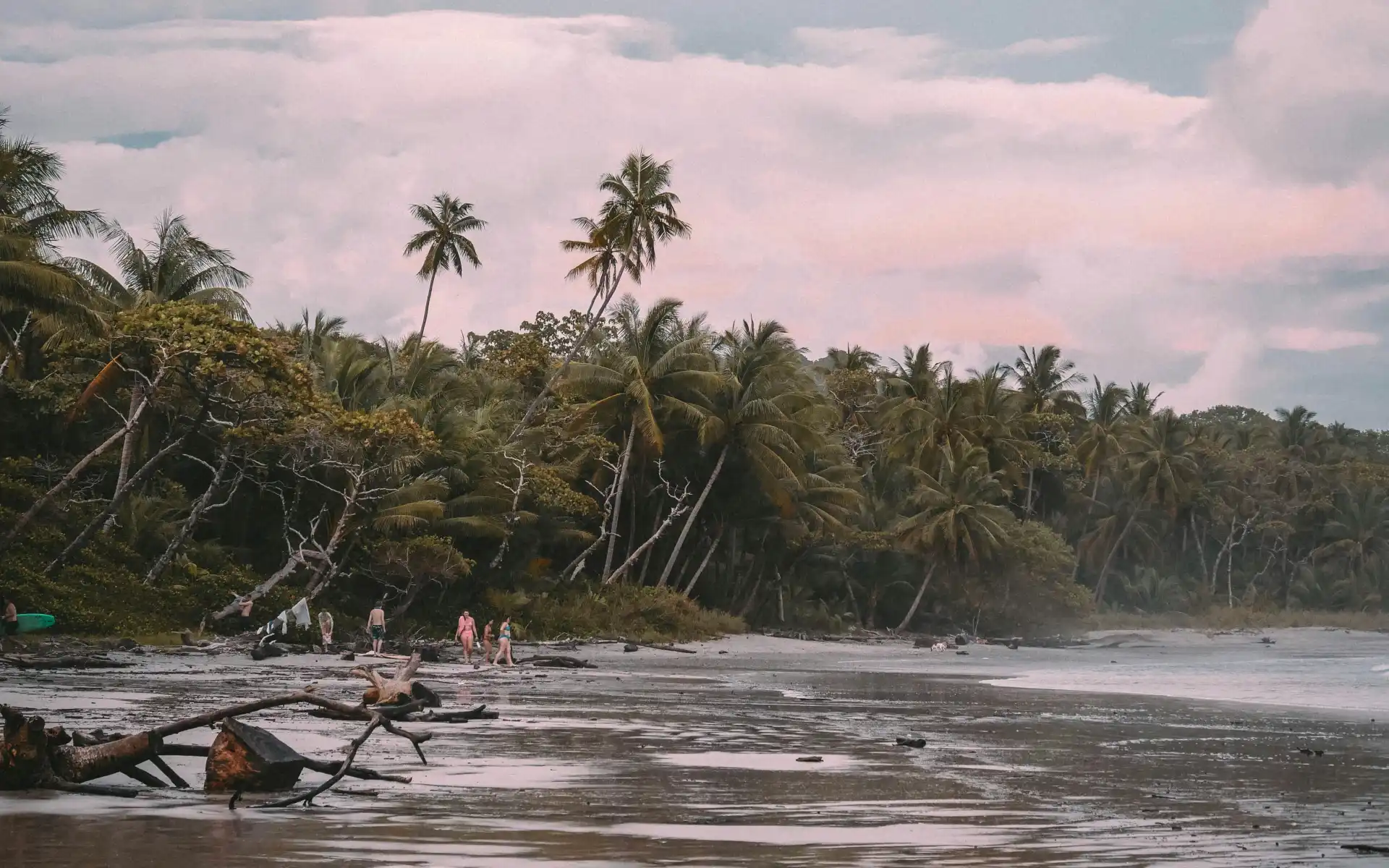
Surfing in Santa Teresa and Nosara
- Santa Teresa has some of Costa Rica's most consistent and powerful surf, best suited for intermediate and experienced surfers.
- Nosara is home to Playa Guiones, one of the most beloved surf breaks in the country, with a laid-back, wellness-oriented town built around it.
Yoga retreats in a Blue Zone
- The Nicoya Peninsula has one of the highest concentrations of yoga retreats and wellness centers in Central America, from budget-friendly drop-in classes to week-long immersive programs.
- The Blue Zone lifestyle—plant-heavy diet, strong community, daily movement—is woven into the culture of the region.
Note: The Nicoya Peninsula is one of only five Blue Zones in the world—areas where people regularly live past 100. It's a great angle if you're looking for a wellness-focused trip.
Olive Ridley turtle nesting at Ostional Wildlife Refuge
- Ostional is the site of one of the world's most spectacular natural events: the arribada, a mass nesting event where tens of thousands of Olive Ridley sea turtles come ashore simultaneously to lay eggs.
- The peak arribada season runs from September to November, though smaller nesting events occur year-round.
Note: The mass nesting events (called arribadas) are one of the most spectacular natural events in the world. They peak between September and November, but a guide is required to access the beach.
Montezuma Waterfalls
- The Montezuma Waterfalls are a series of three cascades in the jungle above the town of Montezuma, culminating in a deep pool perfect for swimming.
- The hike in is about 20 minutes and involves some scrambling over rocks—but it's worth every step.
Bioluminescent plankton tours in Paquera
- On dark, moonless nights, the waters around Paquera light up with bioluminescent plankton—one of the most otherworldly natural phenomena you'll ever witness.
- Kayak tours are the best way to experience it, allowing you to move through the glowing water at your own pace.
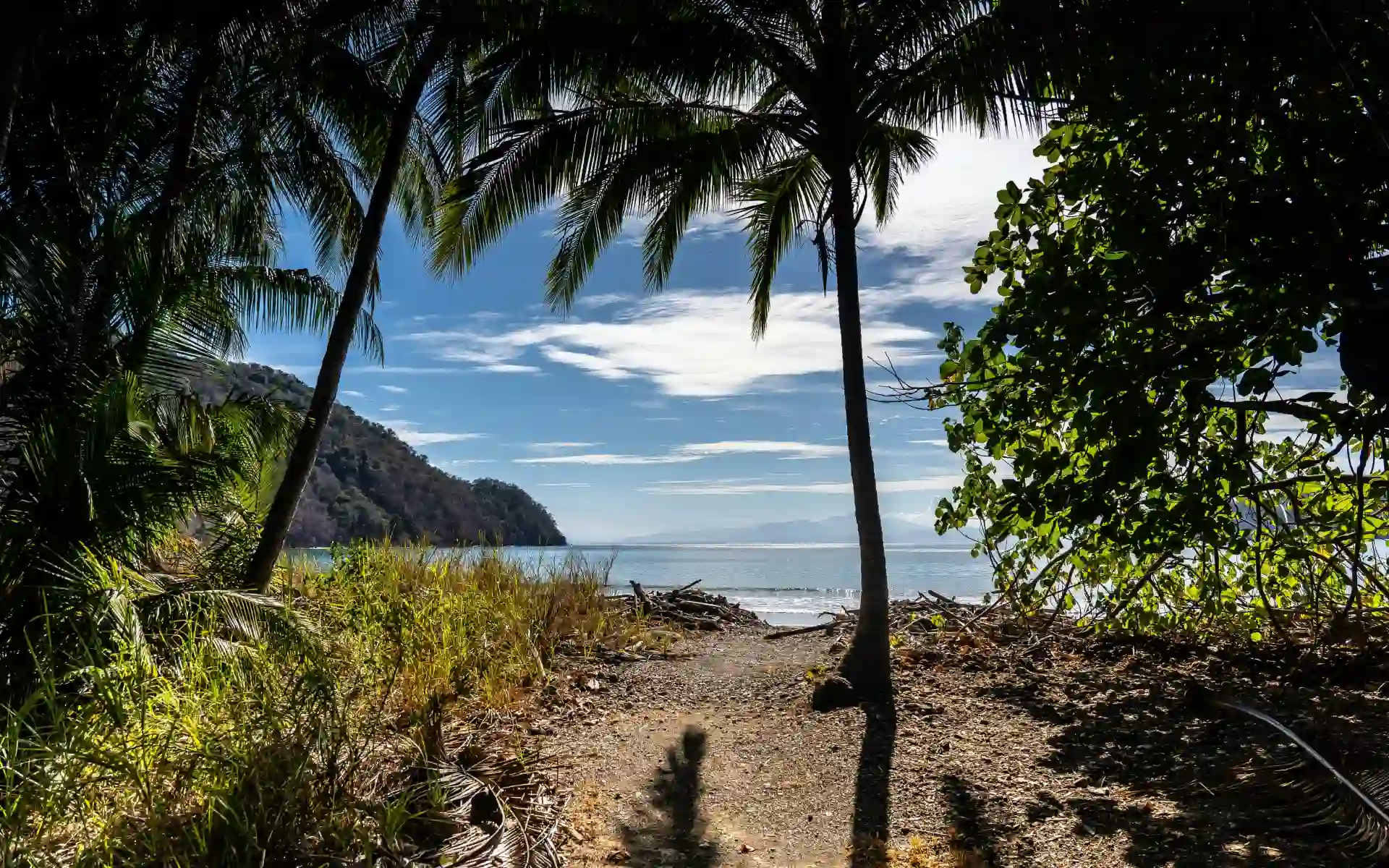
The wild side: Things to do in the Osa Peninsula
The Osa Peninsula is for serious nature travelers. Remote, rugged, and extraordinarily biodiverse, it's home to one of the last remaining lowland tropical rainforests in Central America.
Hiking Corcovado National Park
- Corcovado is widely regarded as one of the most biodiverse places on Earth. National Geographic once called it "the most biologically intense place on the planet."
- The park's interior is accessible only with a licensed guide. Solo entry is not permitted beyond certain zones.
Note: Corcovado is one of the most biodiverse places on Earth, but guided tours are mandatory for deeper exploration. Book well in advance, as spots fill up fast.
Whale and dolphin watching in Drake Bay
- Drake Bay is one of the best whale-watching destinations in the Americas, sitting along the migratory routes of humpback whales from both hemispheres—meaning there's almost no bad time to visit.
- Bottlenose and spotted dolphins are regular year-round companions on any boat trip in the area.
Snorkeling in the Golfo Dulce
- The Golfo Dulce (Sweet Gulf) is one of only four tropical fjords in the world, with calm, warm water and excellent snorkeling along its mangrove-fringed shores.
- Whale sharks, sea turtles, and rays are regularly spotted here.
Cacao farm tour (bean to bar)
- The Osa Peninsula and surrounding Talamanca region are home to small-scale cacao farms producing some of Central America's finest chocolate.
- Farm tours walk you through the entire process, from harvesting pods to fermenting, drying, and making chocolate. Bonus: The tours almost always end with a tasting.
Scarlet macaw and wildlife spotting
- The Osa Peninsula has one of the largest populations of scarlet macaws in Costa Rica. Seeing them in pairs, flying low over the jungle canopy, is one of the greatest wildlife moments you'll have in the country.
- The area is also home to all four of Costa Rica's monkey species, giant anteaters, tapirs, and jaguars (very rarely spotted, but present).
The Caribbean side of Costa Rica
Costa Rica's Caribbean coast is a completely different world from the Pacific—lusher, wetter, more layered, and far less visited by international tourists. That's a big part of its appeal.
Sea turtle nesting tours in Tortuguero
- Tortuguero National Park is one of the most important nesting sites for green sea turtles in the Western Hemisphere. Nesting season runs from July to October.
- The park is accessible only by boat or small plane. Factor this into your logistics, and embrace the adventure of getting there.
Note: Tortuguero is only accessible by boat or plane. Factor this into your logistics. The effort is absolutely worth it.
Exploring Cahuita National Park
- Cahuita protects the largest coral reef system on Costa Rica's Caribbean coast, along with a beautiful stretch of beach lined with coconut palms.
- Entry to the beach section of the park is free (donations welcome), making it one of the best value natural experiences in the country.
Snorkeling and diving off the Caribbean reef
- The reef off Cahuita and nearby Manzanillo offers colorful reef fish, lobsters, nurse sharks, and the occasional sea turtle.
- Visibility is best between September and October and February to April, when the Caribbean is at its calmest.
Puerto Viejo de Talamanca: beach towns and Afro-Caribbean culture
- Puerto Viejo is the cultural heart of Costa Rica's Caribbean coast—a laid-back, colorful town with strong Afro-Caribbean and Indigenous Bribri influences.
- The food here is different from the rest of Costa Rica: jerk chicken, rice and beans cooked in coconut milk, and fresh seafood prepared Caribbean-style.
- The road south from Puerto Viejo to Manzanillo is one of the most beautiful coastal drives in the country.
Rafting the Pacuare River from Turrialba
- The upper section of the Pacuare River is accessible from the Caribbean slope via Turrialba and is arguably even more spectacular than the La Fortuna route—deeper gorges, denser jungle, and more remote.
- Some operators offer overnight trips with a jungle lodge stay mid-river, one of Costa Rica's most unique experiences.
Cacao and chocolate tours in the Talamanca region
- The Talamanca region is home to Indigenous Bribri communities who have been growing cacao for centuries and offer remarkable cultural tours that connect chocolate-making to the broader story of their land and traditions.
- These tours are some of the most culturally rich experiences available in Costa Rica.
Wildlife spotting: sloths, poison dart frogs, and howler monkeys
- The Caribbean lowlands are excellent for spotting two-toed sloths (more nocturnal and harder to see than their Pacific counterparts), brilliantly colored poison dart frogs, and howler monkeys whose calls carry for miles through the jungle.
- The dawn chorus in the Caribbean rainforest—a layered wall of sound from birds, frogs, and monkeys—is unforgettable.

Make the most of your trip to Costa Rica with Going
Flights to Costa Rica from the US aren't difficult to find, but scoring a deal to get there can make the experience even sweeter. Going tracks deals to San José and Liberia, so you spend less time searching and more time planning the fun stuff. Join Going, and let us handle the flight hunting, saving you on average 40–50% on flights to Costa Rica and beyond.
Last updated March 11, 2026
Articles you might like
View All