Skyscanner vs. Kayak: Which Travel Search Engine Finds You Cheaper Flights?
Table of Contents
Skyscanner and Kayak are two of the biggest names in the flight-search world, and if you've spent any time trying to book a trip, you've probably had both tabs open at once. Both are free metasearch engines that scan airlines, online travel agencies, and other sites to surface the cheapest fares, but they go about it in different ways. Skyscanner leans on breadth, pulling in budget carriers and obscure routes that other engines miss, while Kayak leans on depth, layering in filters, price forecasting, and a "buy or wait" recommendation you won't find anywhere else.
This guide breaks down how each tool actually works, where they overlap, where they diverge, and how pairing either one (or both) with a flight-deal alert service like Going can help you book smarter and skip the tedious searching altogether.
Key takeaways
Skyscanner's "Everywhere" search lets you type in a departure airport and see the cheapest destinations worldwide, making it the better starting point when you're flexible on where you're going rather than fixed on one route.
Kayak's Price Forecast tool analyzes historical pricing data from more than a billion searches a year to tell you whether to "buy now" or "wait" on a specific route, a feature Skyscanner doesn't offer in the same form.
Neither Skyscanner nor Kayak charges a booking fee to search or compare. Both are metasearch engines that redirect you to the airline or OTA to complete your purchase.
Kayak's Hacker Fares tool automatically pairs two one-way tickets, sometimes from different airlines, into a cheaper "roundtrip" than a standard fare, a trick that used to require manual research.
Skyscanner's multi-city search can mix up to six flight legs across different carriers into a single itinerary, which often beats booking each leg separately.
Independent comparisons generally rate Skyscanner stronger for budget-airline and international coverage, while Kayak is often rated stronger for filtering, price tracking, and combining flights, hotels, and cars in one dashboard.
Skyscanner vs. Kayak at a glance
If you only have thirty seconds: Skyscanner is the better tool for casting the widest possible net, especially when you're chasing budget airlines, international routes, or you have no fixed destination in mind. Kayak is the better tool once you have a route narrowed down and want to filter aggressively, track a price over time, or book flights, hotels, and rental cars from a single dashboard.
Both are completely free, both are owned by larger travel conglomerates (Skyscanner by Trip.com Group, Kayak by Booking Holdings), and both ultimately hand off the actual purchase to an airline or OTA rather than selling you the ticket directly.
Neither is objectively "better" for every trip. The right pick depends on whether you're in the exploration phase or the booking phase of your trip planning.
Why compare Skyscanner and Kayak?
Skyscanner and Kayak are usually among the first tools mentioned any time someone asks how to find a cheap flight, so it's natural to wonder whether you actually need both or whether one makes the other redundant. They pull from overlapping but not identical sets of airlines and travel agencies, which means the "cheapest" fare on Skyscanner isn't always the cheapest fare on Kayak for the exact same route and dates.
On top of that, each platform has invested in a different signature feature: Skyscanner built its reputation on flexible, destination-agnostic search, while Kayak built its reputation on data-driven price prediction and filtering depth. Comparing them side by side helps you figure out which one matches how you actually plan trips, and, just as importantly, how to use their strengths together instead of picking one and ignoring the other.
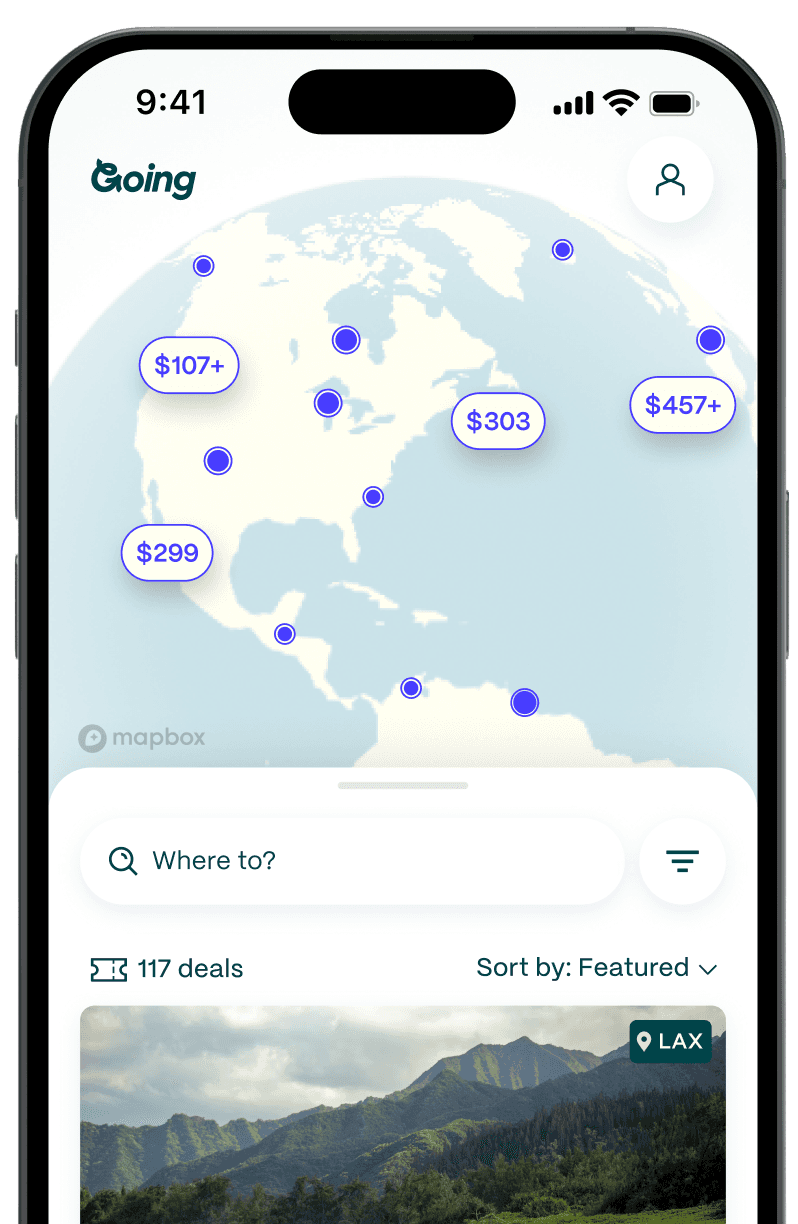
Searching two flight engines is smart, but you still have to remember to check them. Going sends deal alerts directly to your inbox or phone, so you don’t have to chase fares yourself.

What is Skyscanner?
Skyscanner is a flight, hotel, and car rental metasearch engine that scans hundreds of airlines and travel agencies and then redirects you to whichever provider you choose to complete the booking, rather than selling tickets itself.
Founded in Scotland and owned by Trip.com Group, which acquired it in 2016 for roughly £1.4 billion, Skyscanner operates in dozens of languages and countries and has become one of the most widely used flight search tools in the world, particularly outside the US.
How Skyscanner works
You start a search the same way you would on any flight engine, by entering an origin, destination, and dates, but Skyscanner's advantage shows up once you start experimenting with flexibility. Leaving the destination or travel dates open is where the tool's strengths kick in.
Key features and benefits
Skyscanner's most distinctive tools are built around flexibility rather than speed on a single fixed itinerary.
"Everywhere" search
Instead of entering a destination, you can search "Everywhere" from your home airport and browse a ranked list of the cheapest places to fly, which is ideal when the question is "where can I go for $400?" rather than "how much is it to get to Lisbon?"
Cheapest month view
Skyscanner's whole-month calendar shows you the cheapest day to fly within a given month, so you can shift your trip by a few days and save without manually checking dozens of date combinations.
Price alerts
You can track a specific route and date range and get an email when fares move, though this feature requires a free Skyscanner account to activate.
Mix-and-match airline routing
Skyscanner's multi-city tool can string together up to six flight legs, each potentially on a different airline, and surface the cheapest combination automatically, which often beats pricing out each leg separately. Also, Skyscanner isn't just for flights. It also compares hotel rates and rental cars from more than 100 providers within the same interface.
Skyscanner pros and cons
Skyscanner's biggest strength is coverage. It's especially good at surfacing budget and ultra-low-cost carriers that some competitors miss, and its multilingual, multi-currency interface makes it a favorite for international travelers. It charges no booking fees itself and shows a star rating for each third-party site it sends you to, which adds a layer of trust when you're booking through an OTA you don't recognize.
On the downside, its filtering options are generally considered less granular than Kayak's, its price-alert feature is gated behind an account login, and because it aggregates so many third-party sellers, the price you see isn't always the price you get once you click through to book.
What is Kayak?
Kayak is a travel metasearch engine, founded in 2004 by Steve Hafner and Paul English, that compares flights, hotels, rental cars, and cruises in a single dashboard, pulling fares directly from airlines and comparing them against third-party sites like Expedia and Priceline. Priceline (now Booking Holdings) acquired Kayak in 2013 for about $1.8 billion, and the platform now operates in more than 60 international markets under that parent company alongside sibling brands like Booking.com and Momondo.
How Kayak works
Like Skyscanner, Kayak doesn't sell tickets directly for most bookings. When you find a fare, Kayak typically redirects you to the airline's own site to finish the purchase, though the company has been gradually expanding in-app "Kayak Direct" booking for select airlines and hotels.
Key features and benefits
Kayak's standout features tend to focus on data and consolidation rather than destination discovery.
Advanced filters
Kayak lets you narrow results by specific airline, alliance, aircraft type, layover airport, number of stops, and more, a level of granularity that goes beyond most competing search engines.
Price trends and "buy or wait" forecasts
Kayak analyzes historical pricing data drawn from more than a billion searches annually to predict whether fares on your route are likely to rise or fall over the next several days. It then tells you whether to book now or wait, along with a confidence level for that prediction. Kayak's Hacker Fares tool also automatically finds and pairs two one-way tickets, sometimes from two different airlines, when that combination is cheaper than a standard roundtrip fare.
Kayak Explore
This is an interactive map tool where you plug in a home airport and budget and browse destinations worldwide by price, similar to Skyscanner's "Everywhere" search.
Flights, hotels, and car rentals in one dashboard
Kayak lets you search and bundle flights, hotels, and rental cars together, with package deals that Kayak claims can save travelers a significant amount versus booking each piece separately.
Kayak pros and cons
Kayak's filtering depth and price-trend data make it a favorite for travelers who already know their route and want to optimize the details, and its unlimited price alerts across flights, hotels, and cars can all be managed from one dashboard at kayak.com/alerts.
Trustpilot reviewers rate Kayak "Great" at roughly 3.9 out of 5, reflecting generally strong satisfaction, though some users report that advertised prices don't always hold once you're redirected to a partner site to book. Kayak's international and budget-carrier coverage, while solid, is generally considered a notch below Skyscanner's, particularly for regional low-cost airlines outside North America and Europe.
Skyscanner vs. Kayak: head-to-head comparison
| Category | Skyscanner | Kayak |
| Search speed and UX | Fast, minimalist interface; scans hundreds of airlines and agencies in seconds | Slightly denser UI with more on-screen filters and upfront data |
| Flight pricing and availability | Strong at surfacing budget and ultra-low-cost carriers and regional routes | Pulls fares directly from airlines plus OTAs like Expedia and Priceline for broad comparison |
| Filters and flexible search | "Everywhere" search and cheapest-month calendar for flexible travelers | Granular filters (airline, alliance, aircraft, layover airport), plus Kayak Explore and Price Forecast |
| Booking process | No booking fees; redirects to OTA or airline with a star rating shown for each seller | No search fees; redirects to airline/OTA, with growing "Kayak Direct" booking for select airlines and hotels |
| Hotels and car rentals | Full hotel and car-hire comparison across 100+ providers within the same site | Flights, hotels, cars, and cruises in one dashboard, with bundled package pricing |
| Coverage and OTA reach | Operates in 50+ countries/regions and dozens of languages; strong global/budget-carrier reach | Active in 60+ international markets under Booking Holdings; strong North American OTA depth |
Search speed and user experience
Both tools return results in seconds, but they feel different to use. Skyscanner's interface is built to get you from "no idea where to go" to a ranked list of cheap destinations as quickly as possible, while Kayak front-loads more filters and price-trend data on the same screen, which rewards travelers who already know roughly what they're looking for.
Flight pricing and availability
Skyscanner's reputation is built on catching fares that other engines miss, especially from budget and regional carriers, while Kayak pulls fares directly from airlines and layers in OTA pricing from sites like Expedia and Priceline for a broader side-by-side comparison. In practice, the "cheapest" result for the same exact search can differ between the two, which is part of why comparing both is worthwhile.
Filters and flexible date/destination search
This is where the two tools diverge most clearly. Skyscanner's "Everywhere" search and cheapest-month view are built for travelers who are flexible on destination or dates and want inspiration first, price second.
Kayak's strength is different: Once you have a route, its filters let you slice results by specific airline, alliance, aircraft, and layover airport, and its Price Forecast tool adds a data-backed "buy now or wait" recommendation that Skyscanner doesn't replicate in the same way.
Booking process
Neither site charges you to search, and neither is technically a merchant of record for most bookings. Both redirect you to the airline or OTA to pay. Skyscanner adds a trust signal by showing star ratings for each third-party seller, while Kayak has been expanding its in-platform booking option, branded Kayak Direct, for a growing list of airlines and hotels rather than always redirecting away from the site.
Hotels and car rentals
Both platforms go well beyond flights. Skyscanner's hotel and car-hire tabs compare rates from more than 100 providers, and Kayak folds flights, hotels, rental cars, and cruises into one dashboard, with the option to bundle a flight and hotel into a package for a larger discount.
Coverage and OTA reach
Skyscanner, owned by Trip.com Group, operates across more than 50 countries and dozens of languages and currencies, which shows up in its strength with international and regional carriers.
Kayak, owned by Booking Holdings, is active in more than 60 international markets and benefits from its parent company's deep OTA relationships through sibling brands like Booking.com, Priceline, and Momondo.
Which should you choose?
Choose Skyscanner if
You're still deciding where to go, you want to browse budget and ultra-low-cost carriers, you're planning a multi-city trip and want the site to automatically mix and match airlines for the cheapest combination, or you're traveling internationally and want a search engine built with a global, multilingual audience in mind.
Choose Kayak if
You already know your route and want to slice the results by specific airline, alliance, or layover airport, you want a data-backed signal on whether to book now or wait, you're combining flights with a hotel or rental car and want one dashboard for all three, or you want to try automated Hacker Fares that might beat a standard round-trip price.
Comparing two search engines for every trip gets old fast. Going delivers deals right to your inbox or phone, so you don’t have to constantly refresh the tabs.

How to use Skyscanner and Kayak together
Good news: You don't have to choose just one. In fact, the smartest approach uses each tool for what it's best at.
Start broad with Skyscanner
Use the "Everywhere" search or cheapest-month calendar to figure out where and when you can travel for the least money, especially if your dates or destination are flexible.
Confirm pricing on Kayak
Once you've narrowed down a specific route and date range, run the same search on Kayak to cross-check the fare, apply its more granular filters, and check the Price Forecast tool to see whether the data suggests booking now or waiting a few more days.
Book directly with the airline
Finally, book directly with the airline when possible. Both Skyscanner and Kayak are metasearch engines that typically redirect you to the airline or an OTA to complete the purchase, so once you've confirmed the lowest price across both sites, it's often worth finishing the transaction on the airline's own website, where changes, cancellations, and customer service tend to be more straightforward than going through a third party.
Add Going to the equation to never miss a deal
Skyscanner and Kayak are both excellent at helping you search for a deal, but they still require you to do the searching. Going takes a different approach. Instead of you checking prices every day, Going's team of flight experts scans fares around the clock and sends an alert straight to your inbox when a deal from your home airport is worth booking, including mistake fares and deep discounts you'd be unlikely to stumble upon if you searched yourself.
Why keep three tabs open when one app can do the searching for you? Sign up for Going, and let flight deals come to you instead of chasing them across Skyscanner and Kayak.

Frequently asked questions
Is Kayak better than Skyscanner?
Can I book directly on Skyscanner or Kayak?
Are Skyscanner and Kayak free?
Which is best for international travel?
How do I set up price alerts on each platform?
Last updated July 31, 2026