Google Flights vs KAYAK: Which Platform Actually Finds You Cheaper Flights?



February 24, 2026
5 min read
Table of Contents
Along with Skyscanner, Priceline, and Momondo, Google Flights and Kayak are two of the flight search engines we most often send members to when they’re ready to find and book airfare. Both are powerful tools, both are widely trusted, and both can help uncover great deals—but they work differently.
Some travelers swear by Google Flights. Others won’t book anything without checking Kayak first. The truth is: Neither platform is perfect on its own. Each has strengths the other lacks, and the smartest approach isn’t choosing one over the other. It’s knowing how and when to use them together.

Google Flights is lightning-fast and excellent for flexible searches across dates and destinations. The trade-off? It doesn’t search many smaller online travel agencies (OTAs), which is where some of the cheapest fares and mistake fares occasionally hide. That’s where Kayak comes in.
In this Kayak vs Google Flights breakdown, we’ll walk through what each platform does best, where each falls short, and how to use them together to consistently find the best possible flight deals.
Why compare Google Flights and KAYAK?
At a glance, Google Flights and Kayak seem to do the same thing: search flights and show you prices. But beneath the surface, they take different approaches to airfare discovery.
Google Flights is designed for speed, flexibility, and clarity. It helps you answer questions like:
- When is the cheapest time to travel?
- When is the best time to book?
- Which nearby airports offer better prices?
- Is this fare low, typical, or high for these dates?
Kayak, on the other hand, is built to answer a different question:
- Where can I actually book this flight for the lowest possible price?
That distinction matters. Google Flights is often the best place to start a search, while Kayak is often better suited for double-checking pricing, especially once your dates and route are locked in.
This is why the Google Flights vs Kayak debate isn’t really about which one is better. It’s about how each fits into the same search process.
What is Google Flights?
Google Flights is a flight search tool powered by Google that pulls pricing directly from airlines and select booking partners. It doesn’t sell tickets itself. Instead, it sends you to airlines or approved OTAs to complete your booking.
How Google Flights works
Google Flights pulls near–real-time pricing data from airlines and a limited set of OTAs. It prioritizes accuracy, speed, and transparency over sheer volume of sources.
When you search, Google Flights:
- Instantly loads results
- Continuously updates prices as you adjust dates
- Highlights price trends based on historical data
- Breaks down class features (e.g., basic economy vs. economy) and booking quirks, like self-transfers
It’s designed to help travelers explore options quickly and make informed decisions, not necessarily to surface every possible price on the internet.
Key features and benefits
Google Flights excels at the search phase of booking. Here’s where it stands out.
Speed
Google Flights is incredibly fast. Results load almost instantly, and filters apply in real time. When you’re scrolling through dates or changing airports, prices update immediately—something most other platforms can’t match.
Multiple date search
The calendar view is one of Google Flights’ strongest features. You can:
- View two months of prices at once
- Instantly see the cheapest days highlighted
- Adjust trip length and watch prices update live
Compared to Kayak—which can take 15+ seconds to refresh—this speed streamlines the process.
Multiple location search
Google Flights lets you search up to:
- Seven origin airports
- Seven destination airports
You can also use the Explore map to see the cheapest destinations in a region (like Europe or Asia) for your travel window. This makes it ideal for travelers with flexible plans.
Deal indicators
Google Flights shows deal insights that tell you:
- Whether a fare is low, typical, or high
- The average price for your specific route and dates
This context helps travelers avoid overpaying and reduces second-guessing.
Pros and cons of Google Flights
Pros
- Extremely fast and clean interface
- Best-in-class date and destination flexibility
- Excellent price transparency and context
- Easy to compare multiple airports and airlines
- Offers price guarantee on select routes
- Features seamless integrations, such as Legrooms for Google Flights
Cons
- Limited OTA coverage
- Often misses smaller agencies and rare mistake fares
- Occasional “ghost fares” that disappear at checkout
Google Flights is outstanding for discovery but not always for finding the absolute lowest bookable price.
What Is KAYAK?
Kayak is a metasearch engine that scans hundreds of airlines, booking sites, and OTAs to surface available fares. Like Google Flights, it doesn’t sell tickets directly—it sends you elsewhere to book.
How KAYAK Works
Kayak casts a much wider net than Google Flights. In addition to airlines, it searches:
- Major OTAs
- Smaller, lesser-known agencies
- International booking platforms
This broader scope is why Kayak sometimes finds prices Google Flights can’t.
Key features and benefits
While Kayak lacks some of Google Flights’ flexibility, it shines in other ways.
Finding a lower price
Once you’ve identified the cheapest dates and routes, Kayak is often better at answering: Where is this flight cheapest to book?
Because it searches smaller OTAs, Kayak sometimes surfaces:
- Lower base fares
- OTA-exclusive pricing
- Deals not visible on airline websites
This is one of the biggest advantages in the Google Flights vs Kayak comparison.
Offering advice on when to buy
Kayak uses historical data to offer “buy or wait” recommendations and short-term price forecasts. While not perfect, these signals can be helpful when deciding whether to book now or hold off for a few days.
Pros and cons of KAYAK
Pros
- Wider OTA coverage
- Occasionally finds cheaper bookable fares
- Helpful short-term price trend guidance
Cons
- Slower search speed
- Heavier ads and clutter
- Weaker tools for flexible or open-ended searches
Kayak is best used once your search is already focused.
Google Flights vs KAYAK: Head-to-head comparison
Search speed and user experience
Google Flights wins decisively here. It’s faster, cleaner, and easier to use, especially when adjusting dates, airports, or trip length.
Kayak works, but it’s slower and more cluttered, particularly when refreshing results.
Pricing and availability
This is where Kayak often pulls ahead. Because it searches more OTAs, it sometimes finds cheaper bookable prices—especially on international routes or less common itineraries.
That said, cheaper doesn’t always mean better. Smaller OTAs may have stricter rules or limited customer service.
Flexibility for date and destination searches
Google Flights dominates flexible searches. The calendar, map view, and multi-airport options make it far superior for:
- Open-ended trips
- Flexible dates
- Destination inspiration
Kayak is better suited for narrow, specific searches.
How to use Google Flights and KAYAK together
This is where most travelers get the best results.
Start with Google Flights
Begin your search on Google Flights to:
- Explore destinations
- Identify the cheapest travel dates
- Compare multiple airports
- Understand typical pricing
Use the Explore map if your destination is flexible, or the calendar view if your dates are.
Refine your search on KAYAK
Once you know your dates, route, and the baseline price, head to Kayak and run the same search. Look closely at:
- Which OTAs are offering lower prices
- Baggage and fare rules
- Total cost after fees
Sometimes the price will be identical. Other times, Kayak will undercut Google Flights by a meaningful amount.
Compare and book
If the savings are small, booking directly with the airline (via Google Flights) is often the safer choice. If the savings are significant, a reputable OTA found through Kayak may be worth considering.
Remember: Always read the fine print.
Which platform should you choose?
If you’re forced to pick just one, Google Flights is usually the better all-around tool. It’s faster, clearer, and far better for flexible planning.
But if your goal is to pay the lowest possible price, stopping at Google Flights can mean leaving money on the table. That’s why we recommend pairing it with Kayak—or another OTA-focused search engine—before booking.

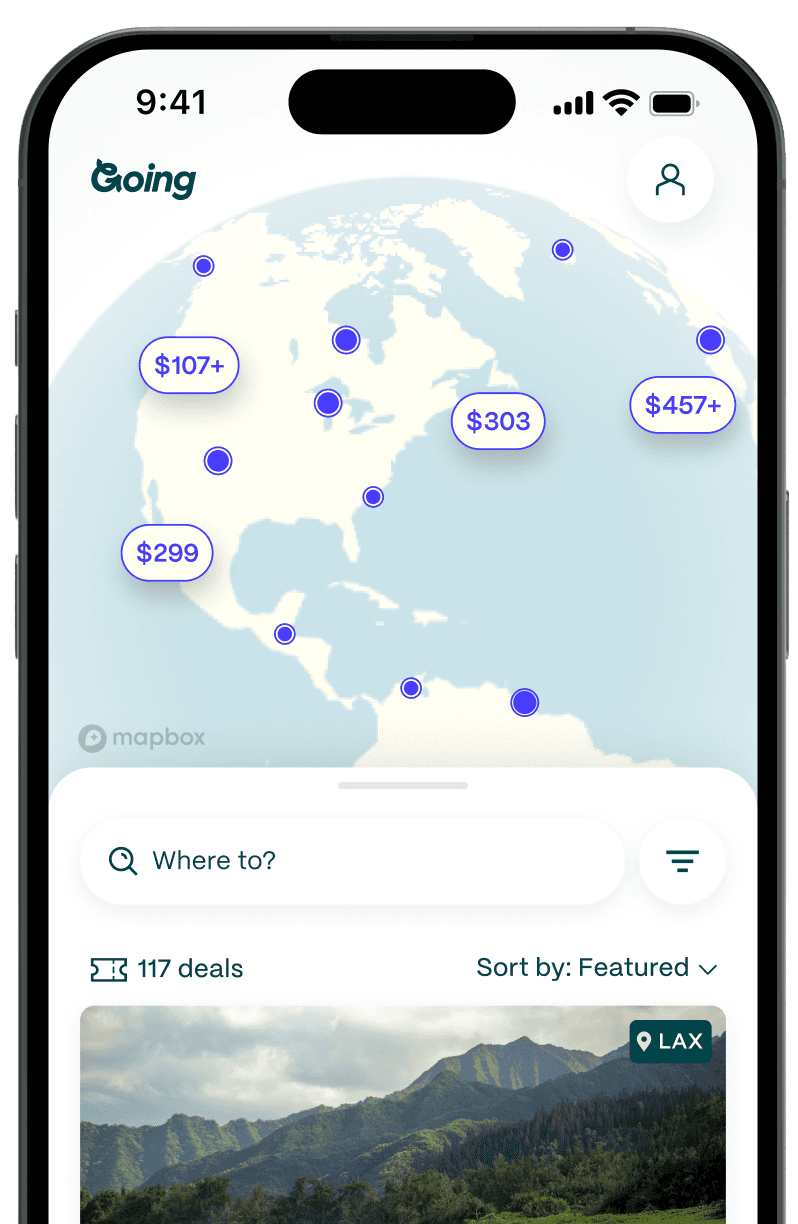
The real winner in the Kayak vs Google Flights debate is the traveler who uses both strategically. And for travelers who want to take things a step further, adding Going into the mix helps refine the process even more. While Google Flights and Kayak both rely on you knowing what to search for, Going focuses on discovery—surfacing mistake fares, flash sales, and major price drops you’d never think to look up manually.
Many travelers use Going to find deals worth jumping on, Google Flights to compare dates and routes, and Kayak to double-check pricing before booking. Used together, all three tools cover far more ground than any single platform alone.
Related reading:
Frequently asked questions
Is Kayak better than Google Flights?
Is anything better than Google Flights?
What site is better than Kayak?
What is the best site to check flight prices?

Last updated February 24, 2026