

)


Table of Contents
The best time to book a flight comes down to two things: where you’re going and when you’re going. As a rule of thumb, book domestic flights 1 to 3 months before departure and international flights 2 to 8 months out.
Traveling over a peak season, holiday, or big event? Add a couple of months to each range. To find even better fares, fly midweek and let price alerts do the watching for you.
Key takeaways
- Use the Goldilocks Window. For domestic flights: 1 to 3 months out. For international flights: 2 to 8 months out. For peak travel, book 1 to 3 months earlier than usual.
- January and February are the cheapest months to fly. September and October are strong runners-up.
- July and December are often the most expensive. If you have to fly then, book earlier than you normally would.
- Shoulder season is worth considering. In Europe, April to May and September to October bring good weather, thinner crowds, and fares that can run 20–40% below peak.
- The cheapest day to fly is not the same as the cheapest day to book. Tuesday, Wednesday, and Saturday departures tend to be cheaper. The day you buy, though, barely moves the needle.
- Use airline credit or points to book your flights as soon as the schedule opens (10 to 11 months in advance) or in the weeks before departure to get the best award redemptions.
- Last-minute deals are mostly a myth. Prices usually rise in the three weeks before departure, not fall. We call this the Bargain Bin Trap.
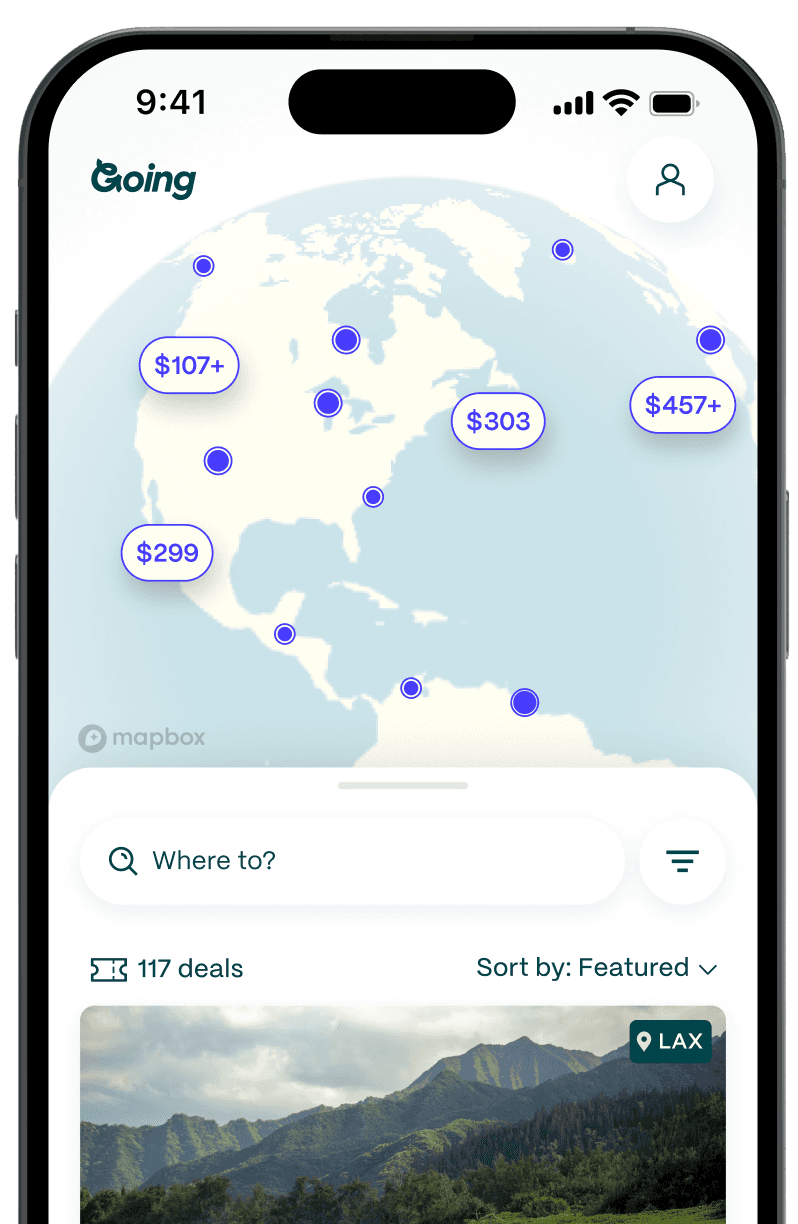
- Set alerts, and let the tools do the hard work. Going watches thousands of routes around the clock and notifies you when a fare is actually worth booking, so you don't have to keep checking.
- Going's Price Drop watches your fare after you book and tells you if it falls enough to rebook for less, so you don't have to keep checking the price yourself.

Why do flight prices change so much?
You find a great fare in the morning, go back in the afternoon, and it’s $60 higher. Nothing about the flight changed, so what happened?
Airfare is entirely tied to demand, competition, and how many cheap seats are left, and all three shift constantly.
How airlines set ticket prices
Every airline runs a revenue management system whose only job is to sell each seat for the most someone will pay for it. Airlines split a cabin into a set of price tiers called fare buckets, with roughly 10 to 26 booking classes on a single flight.
The cheapest bucket sells first. Once it's gone, the next-lowest price becomes the new “cheapest available,” which is why a fare can jump the moment those bargain seats sell out.
Most major carriers also use dynamic pricing. These systems recalculate fares in real time against competitor prices, booking pace, and demand forecasts, sometimes adjusting a route several times a day.
This means two people next to each other on the same flight can pay very different prices depending on when they booked.
When are flights cheapest? (by trip type)
The right booking window depends on your destination, your travel season, and how flexible you can be. Here's a quick overview before we get into the specifics.
| Flight type | Cheapest booking window |
| Domestic | 1 to 3 months ahead |
| International | 2 to 8 months ahead |
| Peak season domestic | 3 to 5 months ahead |
| Peak season international | 4 to 10 months ahead |
| Last-minute | Rare deals, risky to wait |
Sweet spot: the Goldilocks Window explained
The Goldilocks Window is the timeframe that's “just right”: not so early that you're paying a premium for planning convenience, and not so late that seats are scarce and prices spike.
For domestic US flights that's 1 to 3 months out, and for international flights it's 2 to 8 months out, varying by destination and season. It's the statistical stretch where fares are lowest, and availability is still reasonable.
When to book earlier than the Goldilocks Window
Book earlier for high-demand periods like Christmas, Thanksgiving, summer vacation weeks, and major events like the Olympics or World Cup.
These see higher prices and tighter availability, so aim for 3 to 5 months ahead domestically and 4 to 10 months for popular international trips. Routes with little airline competition also reward booking early, since you have fewer fallback options if seats sell out.
If you have zero flexibility on dates, book as soon as your plans are firm.
Last-minute booking reality check (Bargain Bin Trap)
The era of amazing last-minute deals is largely over. Airlines know they can charge more as departure nears, and prices typically climb in the last three weeks before the flight takes off.
Waiting on the assumption that fares will fall is the classic Bargain Bin Trap. Sure, an airline will occasionally discount unsold seats on an off-peak midweek flight, but that's the exception. If you’re booking a trip last minute and you see a solid price, book it.
When is the cheapest time of year to fly?
Airfare follows demand, and demand follows the calendar.
The cheapest months to fly
January and February are the lowest-fare months of the year. The post-holiday slump hits hard. People have spent their budgets, and airlines cut prices to fill seats.
The same logic applies to international routes to Europe, Asia, and Latin America. September and October are strong too, sitting in the shoulder season after the summer rush ends. For domestic travel, your best bets are usually:
- January (post-holiday slowdown)
- February (a low-demand month overall)
- Late August (after the summer peak tapers)
- September and October (kids back in school, leisure travel drops)
Great deals can still surface in any month, so treat the calendar as a framework, not a guarantee.
The most expensive months to fly
July is the priciest month to fly, at home and abroad, with summer vacation in full swing. December is right behind it, with fares spiking in the two weeks before Christmas and again around New Year. Other high-cost windows to watch:
- Late March and early April (spring break, especially beach and theme-park spots)
- Late June (the start of peak European summer)
- The week of Thanksgiving (one of the most expensive domestic stretches all year, though international travel can be quite affordable)
If you must travel during these periods, book earlier than usual: 3 to 5 months out domestically, 4 to 10 months internationally.
Shoulder season
Shoulder season is the traveler's secret weapon, the windows between peak and off-peak that are close enough to good weather but past the crowds and premium pricing.
In Europe, that's April to May and September to October, when flights can run 20–40% below July or December fares.
Southeast Asia has its own shoulder-season windows around the rainy season. Beyond the savings, it's often the best time to experience a place. Think Paris in October, Japan in early April before Golden Week, or Costa Rica in late November.
Cheapest days to fly vs. cheapest days to book
This is one of the most common points of confusion for travelers: The cheapest day to fly is not necessarily the cheapest day to book. They're two different things, and mixing them up can cost you.
What are the cheapest days to fly?
Tuesday, Wednesday, and Saturday departures are consistently the cheapest. Business and leisure travelers cluster around the weekend (Monday, Thursday, Friday, Sunday), and that demand drives those fares up. Midweek and Saturday flights see less of it.
Expedia's 2026 data backs this up: Flying domestically on a Tuesday is about 14% cheaper than a Sunday departure. It isn't an ironclad rule. A great Sunday fare can still appear, but if you can flex your travel day, lean midweek.
Is there a cheapest day to book flights?
Short answer: Not really. The old “book on Tuesday” tip dates back to when airlines loaded new fares on Monday nights, briefly making Tuesday morning a deal window.
That world is gone. Pricing systems now update continuously, so the day you buy barely matters. Your booking window, flexibility, and acting fast on a good fare matter far more.
Pro tip: Use the “whole month” calendar view
One of the most underused features in flight search is the monthly view. Instead of pricing a single date, open a full grid across a month, and the cheap days jump out.
Google Flights does this well with its “Date grid” and “Price graph” views. You'll often spot a $50 to $100 swing between a midweek and weekend departure at a glance. It takes 30 seconds and can save you hundreds.
>> Our guide to Google Flights walks through it.
When is the best time to book flights by destination?
Domestic US flights
Domestic fares move with holiday demand and peak seasons. Spring and fall tend to be cheaper since school's in session and fewer people travel. Aim for 1 to 3 months ahead or 3 to 5 months for peak periods.
Beach spots like Florida and California climb during summer, and big hubs like New York and Los Angeles jump over the November-to-December holidays, but good fares still pop up the rest of the year.
International destinations by region
Europe
Book 4 to 10 months ahead for summer, winter holidays, and events like St. Patrick's Day in Dublin or Oktoberfest in Munich. For the rest of the year, 1 to 3 months works. Peak summer trips to places like London, Paris, Rome, and Amsterdam are best locked in by March or April at the absolute latest. April, May, September, and October bring pleasant weather, thinner crowds, and lower fares.
Asia
Plan 2 to 8 months out or 4 to 10 for cherry blossom season and Lunar New Year, when fares to China and East Asia soar. Popular spots like Japan, Thailand, and India see steep jumps within two months of departure. Monsoon season means lower prices but unpredictable weather.
Central and South America
Book 2 to 8 months ahead. The December-to-April dry season overlaps with high beach demand, and Rio's Carnival (February) requires booking early. The Caribbean and Central American hurricane season creates steep price swings.
Africa
Give yourself 2 to 8 months and 4 to 10 for the safari season (June to October) in Kenya, Tanzania, and South Africa. Traveling just before or after peak can unlock much better fares.
Oceania
Australia and New Zealand need 2 to 8 months, with longer windows over their peaks (June to August and October to March). Few airlines serve these routes, so prices stay firm. Shoulder seasons (April to June, September to November) are the value play.
Holiday and event booking strategy
Major US holidays
Thanksgiving is one of the toughest holidays to book, so aim to have your domestic trips booked by August at the latest. Traveling on the Wednesday before and Sunday after the holiday are the priciest and most crowded days. Flying on Thanksgiving Day itself is usually cheaper.
For Christmas and New Year, book 4 to 10 months out. Consider flying on Christmas Eve or New Year's Day for better pricing, but overall, avoid the December 20–26 peak. Summer holiday weekends (Memorial Day, July 4th, Labor Day) spike too, though less dramatically.
Global festivals and events
Major cultural events create demand surges requiring 4–10 months' advance booking. Prices can be 2–3 times normal levels during these periods, so early planning is essential for reasonable fares.
For Lunar New Year in China, book 4–10 months in advance, particularly for big cities like Beijing and Shanghai. The two weeks before and after typically see spikes in demand and higher fares as millions travel for family and cultural gatherings.
Rio de Janeiro Carnival similarly requires 4–10 months' advance booking due to its worldwide popularity, drawing millions of visitors each year. Flying before Carnival kicks off, especially early in the month, helps avoid price hikes associated with the festival.
Día de Muertos in Mexico attracts tourists to Oaxaca and Mexico City in early November. To find the best deals for this holiday, book 4–10 months in advance, and be flexible with arrival and departure dates for better prices.
Sports and cultural events
Major sporting events, festivals, and cultural celebrations also affect both flight and accommodation pricing. Oktoberfest in Munich requires 4–10 months advance booking to secure reasonable fares. Similarly, aurora borealis viewings in Nordic countries, Alaska, and Iceland, require booking 4-10 months in advance.
If you want to experience the Cherry Blossom Festival season, book your flights 4–10 months in advance for Japan destinations like Tokyo and Kyoto or 3–5 months ahead for Washington, DC. Mardi Gras in New Orleans requires booking 3–5 months in advance to find affordable flights, as prices increase especially in the week leading up to Fat Tuesday.
How to find the cheapest flights: smart strategies and tools
Date flexibility benefits
Flexibility is the single biggest lever you have. Shifting your departure or return by even one to three days can save hundreds on an international ticket.
Multi-city flights sometimes cost less than a simple roundtrip, and open-jaw tickets (flying into one city and home from another) can save money while opening up a more interesting itinerary.
Book when the price looks right (don't wait for "perfect")
The endless hunt for a slightly better deal is how people miss good fares. Prices don't follow a tidy downward arc. Decide your "pull the trigger" price before you search. If Lisbon in October usually runs $700 to $900 and you see $580, that's your deal. Book it. Don't hold out for a $499 that may never come.
Best flight price-tracking tools compared
Rather than refreshing search sites for hours, set alerts and let them do the watching.
- Going monitors thousands of routes around the clock and sends deals worth booking, including rare mistake fares for Premium and Elite members. With Price Drop, we also watch your fare after you book, letting you know if the fare falls and the steps to pocket the savings.
- Google Flights is great for flexible-date searches and route price tracking. Lean on the price graph and date grid.
- Kayak and Skyscanner shine for comparing many airlines at once. Skyscanner's "Everywhere" search is fun when you're open on your destination.
Set alerts for a few date ranges and nearby airports, then check in when you're notified.

Use the 24-hour rule to lock in a fare
There's a safety net worth knowing. The US Department of Transportation requires airlines to either let you cancel for a full refund within 24 hours of booking or hold a fare for 24 hours without payment, as long as you booked at least seven days before departure.
The rule applies to flights to, from, and within the US booked directly with the airline. That means you can grab a good fare now and still back out within a day if a better one appears.
Watch for mistake fares
Every so often an airline publishes a fare far below normal because of a pricing glitch, a currency mix-up, or a simple typo. These mistake fares can be up to 90% off, but they vanish fast, sometimes within hours.
The problem is you can’t always catch them by searching manually. The reliable way is a service like Going that's watching for these deals full time.

Miles, points, and loyalty optimization
Frequent flyer programs add real value, but don't let loyalty override a good deal. Sometimes paying cash beats a poor points redemption.
When you do use points, transferring credit card points to airline partners usually gets more value than cashing out, and premium cabins or long-haul flights are where miles stretch furthest.
Destination flexibility strategies
If your goal is to travel “somewhere warm in February” rather than a specific destination, your odds of a great deal go way up.
Alerts can surface places you'd never have searched, and checking nearby airports often uncovers better fares, especially where budget carriers serve a secondary airport.
Book economy class or higher for deal drops after booking
Basic economy usually locks you out of changes and cancellations, so if the fare drops after you buy, you can't do anything about it. Standard economy or higher typically lets you rebook or cancel under the airline's policy.
This means you can recoup the difference if the price falls. On a route where you expect volatility, the small step up from basic economy can pay for itself.
[CTA banner: Download the Going app]
When do airlines run fare sales?
Airlines don't publish a sale calendar for obvious reasons, but the patterns are fairly consistent.
Common sale periods include January (post-holiday), September (fall sales for winter travel), Black Friday, Cyber Monday, and Travel Tuesday, the Tuesday after Thanksgiving (December 1 in 2026). Travel Tuesday has grown to have some decent deals on offer, with carriers offering sub-$100 one-way domestic fares and discounted international routes. However, that doesn’t mean you should wait to buy until Travel Tuesday. If a great deal pops up before then, grab it.
One reality check: Airline "sales" usually knock 10–30% off off-peak dates on competitive routes. They rarely discount popular routes during peak season, so a January sale to Europe is realistic while a July one isn't. The move is to set alerts for your target routes and be ready to book within a day or two when a sale lines up with your plans.
Flight booking myths debunked
"Tuesday is the cheapest day to book"
False. Airlines once released fares on Tuesdays, but pricing now updates continuously, many times a day. No single booking day guarantees a lower fare.
"August 23rd is National Cheap Flight Day"
Yes, August 23rd is technically known as National Cheap Flight Deal, but that doesn’t mean flights are inherently cheaper on this day. This one makes the rounds every August, and it's a marketing tale, not an actual rule.
Airlines don't coordinate to drop prices on a calendar date. Pricing runs on demand algorithms. Any deal that happens to land on or near August 23rd is a coincidence.
"Booking late at night is cheaper"
This is also a leftover myth from when airlines updated fares manually early each morning. Time of day has no impact anymore. Prices move with market conditions, not your bedtime.
"Use incognito or delete cookies for a better price"
Airlines and booking sites don't jack up prices based on your search history. Their systems are far too complex for that kind of targeting. If a price changes when you switch to incognito, it's demand or a fare bucket selling out, not your browser.
"Always trust fare predictions 100%"
Fare forecasts are a useful signal, not a guarantee. They're built on historical trends and can't promise exactly where a fare will go. Use them as a guide, not gospel. Using a post-booking tool like Going’s Price Drop ensures that even if a forecast misses the mark, you still get notified if your fare decreases after you book.
Let Going track the best cheap flight deals for you (even after booking)
While staying flexible, knowing your booking windows, and setting alerts are key to snagging a great fare, you don't have to manage it all on your own, especially once you’ve booked your flight. Once a flight is booked, many travelers don’t have the time or energy to continue monitoring the fare for drops.
That's where Going's Price Drop comes in. Once you add your booked flight, our flight experts keep tabs on the fare until your departure. If prices drop enough to matter, we'll send an alert with quick, easy steps to rebook.
Going won't change or cancel your reservation. Your seats and flight details stay exactly as scheduled. You simply claim the savings with the airline.
Add your booked flight to Price Drop, and let us help you keep saving.
Frequently asked questions
When is the cheapest time to buy airline tickets?
What day are flights cheapest to purchase?
How do I check if flight prices will drop?
Is it better to buy tickets in the morning or evening?
What months are most expensive to fly?
Are last-minute flights cheaper?
What happens if I find a better deal after booking?
Last updated September 23, 2026
Articles you might like
View All