


Table of Contents
Winter in the US can be brutal (some regions understand better than others). Buried under a foot of snow in Chicago? Enduring the gray drizzle of the Pacific Northwest? Just tired of wearing a coat every time you step outside? The thought of escaping somewhere warm can be enough to get any snowbird through to springtime. Luckily, December through February is actually peak season for a huge chunk of the world's best and warmest destinations, and flights are often cheaper than you'd expect if you know when to book.
This guide covers the best warm winter getaways for US travelers, from easy domestic escapes to international adventures. Whether you have a long weekend or two weeks, there's a warm destination here with your name on it.
Key takeaways
- US winter (December through February) is the peak dry season for much of the Caribbean, Mexico, Southeast Asia, and East Africa, making it an ideal time to travel internationally.
- For no-passport warmth, Florida, Hawaii, Puerto Rico, and San Diego are all solid options depending on your budget and vibe.
- International destinations like Mexico, Costa Rica, Thailand, and Bali offer significantly more warmth and value than most domestic alternatives.
- Book flights 1–3 months out for domestic warm-weather trips and 2–8 months out for international ones. If you’re traveling during a peak season (e.g., winter holidays), add a couple of months to each of those windows.
- Going members get flight deal alerts to warm winter destinations year-round, so you're never scrambling at the last minute. Sign up for Going and download the app to set up flight alerts so you can book the lowest prices with confidence.

Warm winter getaways in the US
You don't have to leave the country to find warm weather in winter. The US has a handful of warm destinations that deliver sunshine, beaches, and a change of scenery without the complexity of international travel.
Florida Keys: The easiest warm escape

Few places feel more like a true tropical escape without leaving the US than the Florida Keys. The string of islands stretching from Key Largo down to Key West sits at a latitude where even January rarely dips below the mid-60s°F, and most days see sunshine, clear blue water, and the kind of laidback atmosphere that makes you wonder why you’d ever leave. Key West is the most popular stop, but the quieter upper keys offer excellent diving and snorkeling, especially around John Pennekamp Coral Reef State Park.
- Things to do: Snorkel or dive the coral reef at John Pennekamp, explore the Ernest Hemingway Home in Key West, watch the sunset at Mallory Square, kayak through the mangroves, and eat stone crabs when they’re available (season runs October–May).
- Average winter temperature: 72–78°F (22–26°C). Expect sun, low humidity, and occasionally cool evenings.
- Best for: Couples, divers, road-trippers, anyone who wants a lowkey beach escape
- Budget: Moderate to high. Key West in particular has climbed in price in recent years. Budget $150–$250/night for accommodation, with meals ranging from cheap tacos to upscale seafood.
- Main airport: Miami International (MIA) or Fort Lauderdale-Hollywood International (FLL), then drive south on the Overseas Highway. Key West also has its own airport (EYW) with limited direct service.
- Average Going deal: $200 roundtrip
Hawaii: The classic for a reason

Hawaii in winter is arguably at its best. Temperatures across the islands hover in the low-to-mid 80s, the trade winds keep things comfortable, and humpback whales arrive in the waters off Maui from December through March. Maui and Kauai draw beach-goers and honeymooners, while the Big Island rewards those who want dramatic landscapes, including active lava flows and even snow-capped Mauna Kea. Oahu offers the most infrastructure and nightlife, plus the iconic North Shore, where massive winter surf draws spectators from around the world.
- Things to do: Watch humpback whales off Maui, hike Kauai's Napali Coast (permit required), explore Volcanoes National Park on the Big Island, surf (or watch other people surf) at Oahu's North Shore, and eat your weight in fresh poke.
- Average winter temperature: 78–83°F (26–28°C) on the coasts. Trade winds keep it comfortable even when it's warm.
- Best for: Couples, honeymooners, families, nature lovers, surfers
- Budget: High. Hawaii is one of the priciest domestic destinations. Expect $200–$400+/night for accommodation and $100+/person/day for food and activities. Flights from the mainland can be expensive, but Going members frequently see deals 40–50% off normal prices..
- Main airport: Honolulu International (HNL) on Oahu; Kahului Airport (OGG) on Maui; Ellison Onizuka Kona International (KOA) and Hilo International (ITO) on the Big Island; Lihue Airport (LIH) on Kauai
- Average Going deal: $415 roundtrip
San Diego, California: Mild, sunny, and laidback
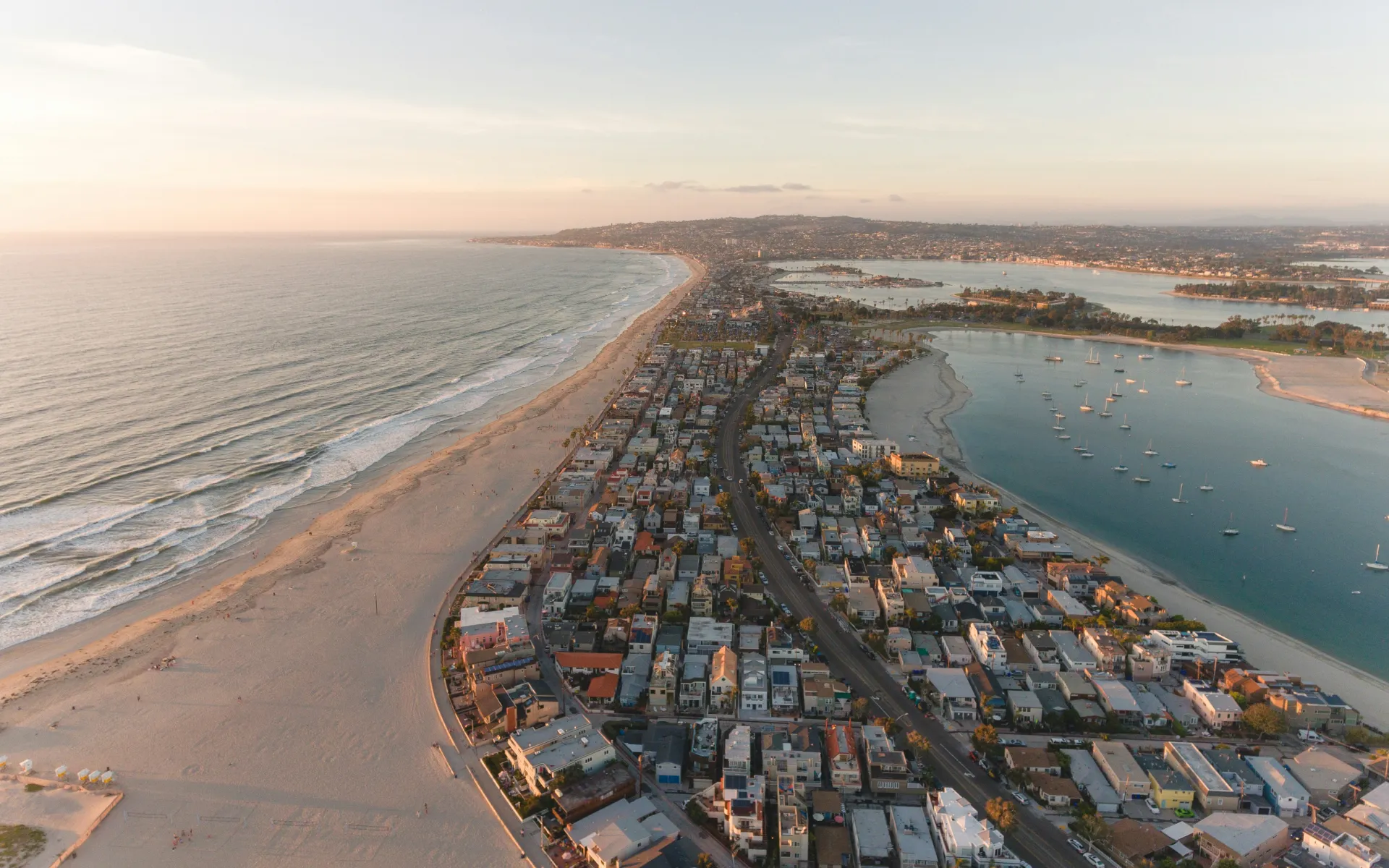
San Diego doesn't get nearly enough credit as a winter escape (and that’s the perfect reason to put it on your list). With average winter temperatures in the low-to-mid 60s°F, virtually no rain, and a food and outdoor culture that's hard to beat, San Diego is the perfect option for anyone who wants to swap cold for comfort without the price tag of Hawaii or the chaos of Miami. The city has world-class beaches (Coronado, La Jolla, Pacific Beach), excellent Mexican food, the best zoo in the country, and easy access to wine country in Temecula and the mountains near Julian.
- Things to do: Walk or bike the beaches from Mission Beach to La Jolla, visit the San Diego Zoo and Safari Park, eat fish tacos and birria, hike Torrey Pines State Reserve, and cross the border for a day trip to Tijuana.
- Average winter temperature: 60–66°F (16–19°C). Warm and sunny by day, cool in the evenings.
- Best for: Families, couples, solo travelers, anyone who wants mild weather without a huge budget
- Budget: Moderate. Hotels range from $120–$250/night depending on location and timing. Food is very reasonable, especially if you embrace street tacos.
- Main airport: San Diego International (SAN)
- Average Going deal: $168 roundtrip
Phoenix and Sedona, Arizona: Desert warmth and dramatic landscapes

Arizona in winter is one of the US's best-kept travel secrets. While the rest of the country freezes, Phoenix basks in sunshine with average highs around 65–70°F, and the dry air makes it feel even more pleasant. Sedona, about two hours north, sits at a higher elevation and runs slightly cooler (highs around 55–60°F), but the red rock scenery is otherworldly and the hiking is next level. Together, they make one of the country's best winter road-trip pairings: a few days in Sedona for hiking and scenery, then down to Scottsdale for golf, spas, and great food.
- Things to do: Hike Cathedral Rock or Devil's Bridge in Sedona, take a hot air balloon ride over the desert at sunrise, golf any of Scottsdale's world-class courses, explore the Desert Botanical Garden in Phoenix, and spa-hop in Sedona.
- Average winter temperature: Phoenix: 65–70°F (18–21°C). Sedona: 55–60°F (13–16°C). Both are sunny and dry.
- Best for: Outdoor enthusiasts, golfers, spa-goers, couples, anyone who hates the cold but also hates humidity
- Budget: Moderate. Phoenix and Scottsdale can get expensive at the top end (resort fees are rampant), but there are plenty of mid-range options. Sedona skews pricier.
- Main airport: Phoenix Sky Harbor International (PHX)
- Average Going deal: $147 roundtrip
New Orleans, Louisiana: Warm-ish, fun, and perfectly timed for Mardi Gras

New Orleans in winter is a slightly different kind of warm escape. It's not tropical, but it's mild, and the culture brings things up a notch. January temperatures average around 55–62°F, comfortable for walking the French Quarter, eating your way through the city, and hitting the live music venues on Frenchmen Street. Then there's Mardi Gras: The season officially kicks off January 6th (Epiphany), and the city builds toward the Fat Tuesday climax in late February or early March. If you're going for the parades and parties, this is one of the best festival experiences in the world. If you want a quieter trip, January is ideal.
- Things to do: Eat beignets at Café Du Monde, explore the French Quarter and Garden District, catch live jazz on Frenchmen Street, take a swamp tour, and catch a parade during Mardi Gras season.
- Average winter temperature: 55–62°F (13–17°C). Mild and walkable, with occasional cold snaps.
- Best for: Foodies, music lovers, festival-goers, culture travelers
- Budget: Budget-friendly to moderate. New Orleans is one of the most affordable major US cities for food and entertainment. Accommodation is reasonable outside of Mardi Gras peak, when prices spike significantly.
- Main airport: Louis Armstrong New Orleans International (MSY)
- Average Going deal: $175 roundtrip
Puerto Rico: No passport, full tropical experience

Puerto Rico might be the best value warm-weather destination for US citizens. No passport required, the US dollar works everywhere, English is widely spoken, and yet you land somewhere that feels entirely Caribbean. San Juan's Old Town has colorful colonial architecture, excellent restaurants, and a nightlife scene that runs until sunrise. Rincon on the west coast is a surfer's paradise. The bioluminescent bays (Mosquito Bay on Vieques is the brightest in the world) are unlike anything else you can see in US territory, and El Yunque National Forest is the only tropical rainforest in the US national forest system.
- Things to do: Explore the colorful streets and forts of Old San Juan, visit El Yunque National Forest, kayak or take a boat tour to a bioluminescent bay, surf in Rincon, and eat mofongo every day.
- Average winter temperature: 78–84°F (26–29°C). Warm, sunny, and breezy. December through February is Puerto Rico's dry season.
- Best for: Budget travelers, families, couples, solo adventurers, anyone who wants tropical vibes without a passport
- Budget: Budget to moderate. Puerto Rico is significantly more affordable than Hawaii for a comparable tropical experience. Direct flights from the East Coast are frequent and often inexpensive.
- Main airport: Luis Muñoz Marín International (SJU) in San Juan
- Average Going deal: $268 roundtrip
South Padre Island, Texas: For birders and water-sport aficionados alike

South Padre Island doesn't get the headlines as a winter destination, but it should, particularly for travelers in the South and Midwest who want a beach without a long flight. Located at the southern tip of Texas near the Mexican border, the island sits far enough south to stay warm in winter, with December and January temperatures regularly hitting the low-to-mid 60s°F. It's a laidback barrier island with excellent beach access, great birding (the area is a major migratory corridor), and easy access to the border town of Matamoros.
- Things to do: Walk the uncrowded beaches, go kite surfing or windsurfing (South Padre is world-famous for it), visit the Sea Turtle Inc. rescue center, go deep-sea fishing, and spot migratory birds at the World Birding Center.
- Average winter temperature: 62–68°F (17–20°C). Mild and sunny, with occasional Gulf breezes.
- Best for: Budget travelers, beach lovers, birders, families, Texans and Midwesterners who want a quick escape
- Budget: Budget-friendly. One of the most affordable beach destinations in the US.
- Main airport: Valley International Airport (HRL) in Harlingen, about 30 miles away. Brownsville South Padre Island International (BRO) is closer but has limited service. Your best bet for a good deal will be to fly into San Antonio (SAT) and drive about 4.5 hours south to South Padre.
- Average Going deal: $167 roundtrip via San Antonio

Warm winter getaways outside the US
If you're willing to grab your passport, the winter world opens up dramatically. US winter perfectly overlaps with the dry season across Mexico, the Caribbean, Central America, and Southeast Asia, meaning you're not just escaping the cold but arriving somewhere at its best.
Mexico: Beach towns and colonial cities all hitting their stride

December through February is the loveliest time of year to visit Mexico. The beach towns are dry and breezy, the colonial cities are festive without the summer heat, and the crowds, while not insignificant in popular spots, haven't reached spring break levels yet.
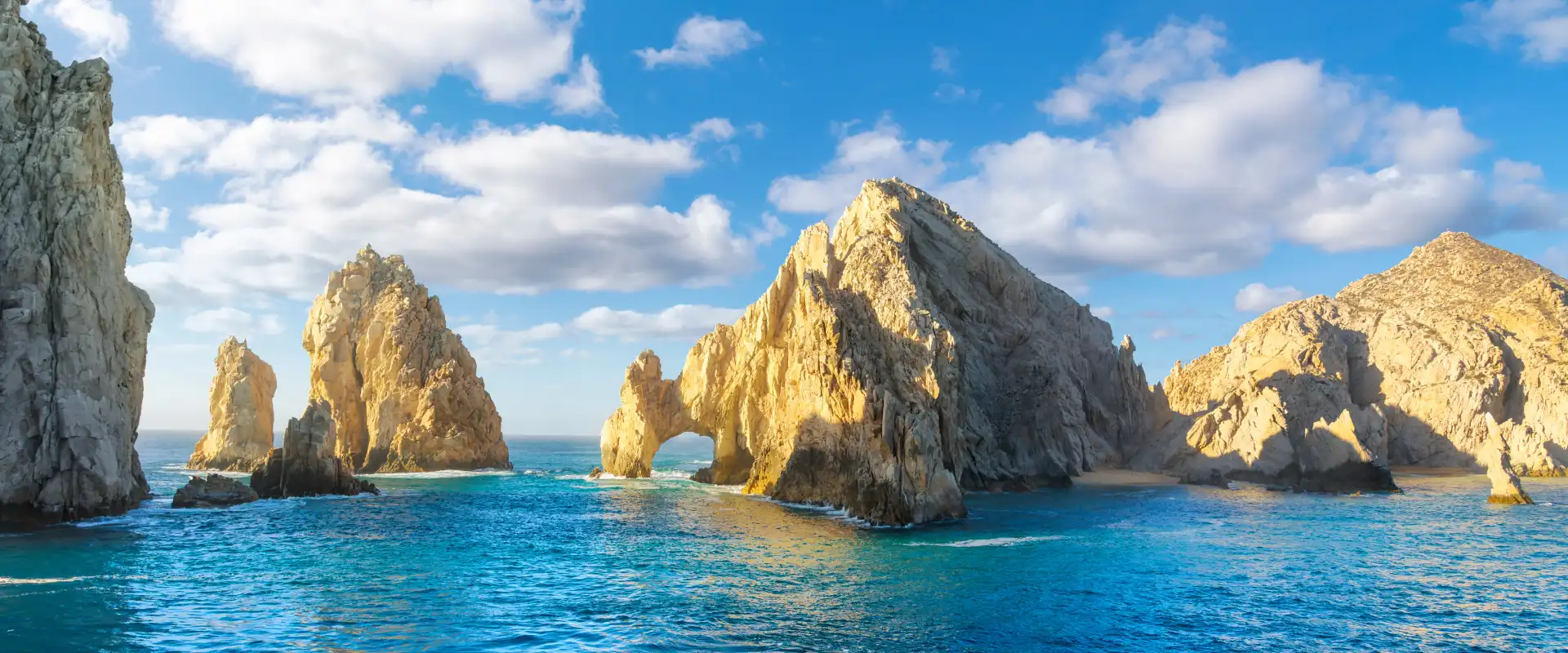
On the Pacific coast, Los Cabos (the resort corridor connecting Cabo San Lucas and San José del Cabo) is dry, sunny, and spectacular, with desert-meets-ocean scenery. Sayulita and Puerto Vallarta further north are vibrant, more budget-friendly alternatives with great food scenes and beach towns that still feel authentic. Oaxaca on the cultural side is exceptional in winter: warm (mid-70s°F), dry, and home to one of Mexico's most celebrated food and art scenes. The Caribbean coast delivers Tulum and Playa del Carmen, both of which hit their stride in winter when crowds are manageable and the humidity drops.
- Things to do: Snorkel or dive the cenotes near Tulum, eat your way through Oaxaca's food markets, whale-watch in Baja California (humpbacks and gray whales, December through March), explore the ruins at Chichen Itza or Tulum, surf in Sayulita, and drink mezcal.
- Average winter temperature: 75–85°F (24–29°C) across most popular beach destinations. Slightly cooler in the evenings in highland cities like Oaxaca (mid-60s°F).
- Best for: Everyone. Mexico has options for every budget, travel style, and group size.
- Budget: Budget to moderate. Mexico is excellent value, especially outside the most resort-heavy areas. A good hotel in Oaxaca or Sayulita can cost $60–$120/night.
- Main airports: Los Cabos International (SJD); Puerto Vallarta International (PVR); Cancún International (CUN); Oaxaca International (OAX); Mexico City International (MEX)
- Average Going deal: $340 roundtrip
Caribbean islands: Island-hop or go deep on one
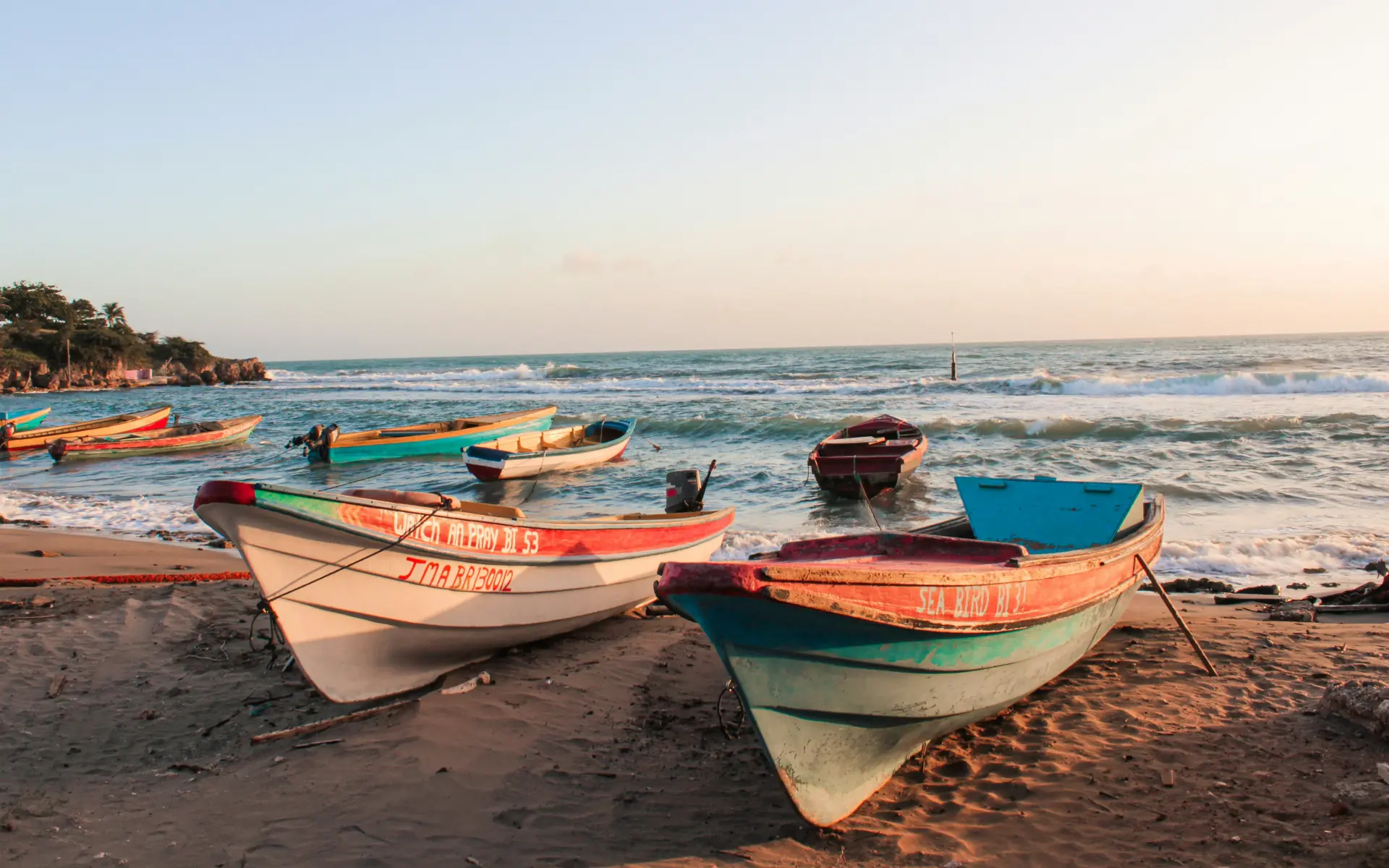
The Caribbean in winter is arguably the most straightforward warm escape for US travelers. Flights are frequent from the East Coast, the time zone difference is minimal (most islands are one to two hours ahead of Eastern), and the weather is reliably warm and dry from December through April.
The key is knowing what kind of trip you want. Barbados is polished, great for food and culture, and has some of the Caribbean's best beaches (e.g., Crane Beach). Jamaica delivers warmth, incredible music, jerk everything, and the lush scenery of the Blue Mountains and Negril's Seven Mile Beach. St. Lucia is one of the Caribbean's most dramatic islands, with the twin Piton peaks rising from the jungle and excellent hiking alongside the beach resorts. The Dominican Republic (particularly Samaná and Las Terrenas) offers uncrowded beaches and a more local feel than the heavily touristed Punta Cana strip. For something smaller and quieter, the British Virgin Islands or Turks and Caicos deliver crystal-clear water and white sand without the development of larger islands.
- Things to do: Beach-hop across multiple islands (inter-island flights are affordable), hike the Pitons in St. Lucia, taste rum at a distillery in Barbados or Jamaica, snorkel the BVI's clear waters, and do absolutely nothing on a beach.
- Average winter temperature: 78–85°F (26–29°C) across most islands. Dry season means minimal rain and reliable sunshine.
- Best for: Couples, honeymooners, families, anyone who wants pure beach relaxation
- Budget: Varies widely. The DR and Jamaica offer budget-friendly all-inclusive options. Barbados, Turks and Caicos, and the BVI run significantly more expensive.
- Main airports: Grantley Adams International (BGI) in Barbados; Sangster International (MBJ) in Montego Bay, Jamaica; Hewanorra International (UVF) in St. Lucia; Providenciales International (PLS) in Turks and Caicos
- Average Going deal: $352 roundtrip

Costa Rica and its Central America neighbors: Peak dry season, incredible nature

December through April is the dry season in Costa Rica, and it's the best time of year to visit. The country transforms from lush and rainy to sunny and accessible, with roads easier to navigate, wildlife more visible, and beach days more reliable. Costa Rica is the anchor of any Central America winter trip, but it pairs beautifully with Guatemala (specifically Antigua and Lake Atitlán, two of the most beautiful places in the Americas) or Panama City, which offers a sophisticated urban escape with a world-class seafood scene and the backdrop of the canal.
In Costa Rica itself, the Nicoya Peninsula (including Tamarindo, Santa Teresa, and Nosara) offers world-class surfing and yoga retreats on the Pacific side. The Osa Peninsula and Corcovado National Park are for those who want serious rainforest and wildlife: Tapirs, jaguars, scarlet macaws, and four species of monkey all call this remote corner home. Arenal remains one of the best volcano-and-hot-springs combinations in the world, and Manuel Antonio offers the easiest gateway to wildlife and beautiful beaches for first-timers.
- Things to do: Surf in Santa Teresa or Tamarindo, wildlife-watch in Corcovado or Tortuguero, soak in the hot springs at Arenal, hike the Monteverde cloud forest, zipline through the rainforest canopy, and visit ancient Mayan ruins in Guatemala.
- Average winter temperature: 80–88°F (27–31°C) on the Pacific coast. Cooler in the highlands (Monteverde, San José runs around 65–72°F).
- Best for: Nature lovers, adventure travelers, families, eco-travelers, budget backpackers
- Budget: Budget to moderate. Costa Rica has options across the spectrum. Backpacker hostels exist alongside luxury eco-lodges. Budget travelers can manage $50–$70/day; comfortable mid-range travel runs $120–$200/day.
- Main airports: Juan Santamaría International (SJO) in San José; Daniel Oduber Quirós International (LIR) in Liberia (best for the Nicoya Peninsula)
- Average Going deal: $335 roundtrip
Southeast Asia: Thailand, Vietnam, and beyond
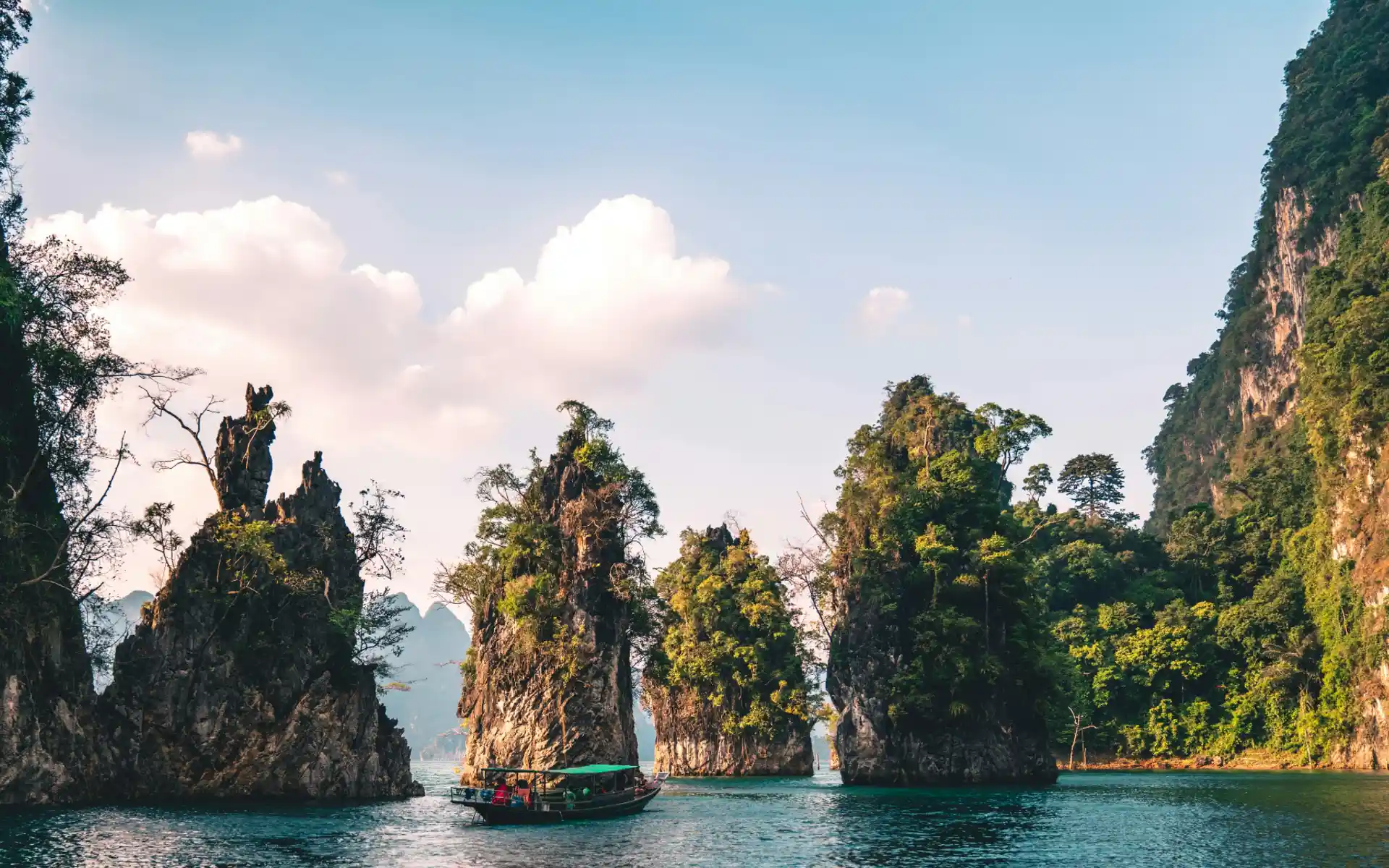
Winter is begging US travelers to flock to Southeast Asia. November through February is the dry season across most of Thailand, Vietnam, and Cambodia, meaning you arrive at exactly the right time. For a full breakdown of which countries are at their best when, check out our guide to the best time to visit Southeast Asia.
Thailand in January and February is exceptional. Bangkok's temples and street food scene are world-class, the southern islands (Koh Samui, Koh Lanta, Koh Tao) are sunny and warm, and Chiang Mai in the north offers cultural immersion and some of the best food in the country. Vietnam features a north-to-south journey: Start in Hanoi (which can be cool in December and January), cruise Halong Bay, make your way through the lantern-lit streets of Hoi An, and finish in the warm and chaotic energy of Ho Chi Minh City. Bali is technically in its wet season from November through April, but the rain is usually limited to afternoon showers, and the island is dramatically less crowded and cheaper than peak season.
- Things to do: Temple-hop in Bangkok, beach-lounge on Koh Lanta or Koh Tao, cruise Halong Bay, wander Hoi An's ancient town, eat delicious local cuisine, and catch a Songkran parade if you time it right (April).
- Average winter temperature: 85–92°F (29–33°C) in beach and lowland areas. Hanoi can dip to 60°F in January. Bangkok runs hot year-round.
- Best for: Adventure travelers, foodies, culture lovers, backpackers, anyone who wants maximum value for their dollar
- Budget: Budget-friendly to moderate. Southeast Asia remains one of the world's best-value destinations. Thailand and Vietnam especially stretch a dollar remarkably far.
- Main airports: Suvarnabhumi (BKK) in Bangkok; Tan Son Nhat International (SGN) in Ho Chi Minh City; Noi Bai International (HAN) in Hanoi; Ngurah Rai International (DPS) in Bali
- Average Going deal: $813 roundtrip
Australia and New Zealand: Your winter is their summer

It's easy to forget that the Southern Hemisphere flips the seasons entirely. When the US is shivering through January, Sydney is in the middle of summer and New Zealand's South Island is offering some of the best hiking conditions of the year. The catch, of course, is the flight: Expect 15 to 20+ hours from most US cities, and budget accordingly.
Sydney in summer (December through February) hits highs around 77–84°F (25–29°C), with long evenings, packed beaches at Bondi and Manly, and an outdoor culture that fully blooms. Melbourne is slightly more temperate and offers world-class coffee, food, and the Australian Open tennis in mid-to-late January. In New Zealand, the South Island in summer is beautiful: Queenstown for adventure sports (bungee jumping, skydiving, jet boating), the Milford Sound and Fiordland for dramatic scenery, and the Abel Tasman for golden beach hiking. The North Island's Bay of Islands and Coromandel Peninsula deliver warm-weather beach escapes within easy reach of Auckland.
- Things to do: Swim at Bondi Beach, hike the Milford Track in New Zealand, watch the Australian Open in Melbourne, explore the Great Barrier Reef from Cairns, visit Queenstown for adventure sports, and drive New Zealand's South Island at your own pace.
- Average winter temperature (their summer): Sydney: 77–84°F (25–29°C). Auckland: 70–77°F (21–25°C). Queenstown: 65–75°F (18–24°C).
- Best for: Adventure travelers, nature lovers, couples, families willing to do the long-haul flight
- Budget: Moderate to high. Australia and New Zealand are not cheap destinations. Budget $150–$250/day for comfortable mid-range travel.
- Main airports: Sydney Kingsford Smith (SYD); Melbourne Airport (MEL); Auckland International (AKL); Queenstown Airport (ZQN)
- Average Going deal: $805 roundtrip
Warm winter getaways by travel style
Best for beach lovers
For pure beach quality, it's hard to beat Turks and Caicos (Grace Bay is consistently rated among the world's best beaches), The Maldives (over-water bungalows and crystal-clear water), or Palawan in the Philippines (El Nido and Coron for island-hopping). On a more accessible budget, Puerto Rico, Barbados, and Tulum all deliver excellent beach experiences. For US-only options, the Florida Keys and Hawaii remain top choices.
Best for outdoor adventures and hiking
New Zealand's South Island in summer (US winter) is the gold standard for outdoor adventure, with world-class hiking (the Milford Track, the Routeburn), bungee jumping, and some of the most dramatic scenery on the planet. Costa Rica is the closest high-adventure destination for US travelers, with surfing, rainforest hiking, ziplining, and volcano exploration all in one compact country. Sedona, Arizona, punches well above its weight for hiking without requiring a passport.
Best for food, culture, and city exploration
Mexico City in winter (highs around 70–75°F) is one of the world's great food and cultural destinations, with world-class museums, a legendary dining scene, and neighborhoods like Roma and Condesa that reward wanderers. Oaxaca is even more special for food travelers. New Orleans is the domestic champion for food and culture in winter. Bangkok is in a class of its own internationally, combining world-class street food with extraordinary temples and a stellar nightlife scene.
Best for families
Orlando, Florida, remains the easy answer for family winter warmth, with theme parks and reliable sunshine. Puerto Rico offers a more interesting and culturally rich alternative: beaches, rainforest, historic forts in Old San Juan, and bioluminescent bays that will blow kids' minds. Costa Rica is increasingly popular for families who want nature and adventure without the exhaustion of a long-haul flight. Cancún and the Riviera Maya deliver warm water, easy resort infrastructure, and proximity to archaeological sites like Chichen Itza.
Best on a budget
Southeast Asia remains the world's best-value (on the ground) warm winter destination by a wide margin. Thailand, Vietnam, and Cambodia all offer extraordinary experiences for $50–$80/day including accommodation, food, and activities. Within the Caribbean, the Dominican Republic and Jamaica offer budget all-inclusive options that are hard to beat on a cost-per-day basis. For no-passport options, Puerto Rico and South Padre Island, Texas, are the most affordable.
How to find cheap flights to warm winter destinations
Winter is the peak travel season for warm destinations, which means fares can be high if you wait too long or book at the wrong time. Here's what actually works:
- Book domestic warm-weather trips 1 to 3 months out. For Florida, San Diego, Phoenix, and Puerto Rico, this is the sweet spot. Booking too far in advance for domestic routes doesn't always pay off.
- Book international trips 2 to 8 months in advance. For Mexico, the Caribbean, and Central America, 2 to 4 months is typically ideal. For longer-haul destinations like Southeast Asia and Australia, start looking 4 to 8 months out.
- Be flexible on dates. Flying mid-week (Tuesday or Wednesday) and avoiding holiday travel windows (the two weeks around Christmas and New Year, spring break) can save hundreds of dollars.
- Consider alternate airports. If you're flying to South Florida, Fort Lauderdale (FLL) can be cheaper than Miami (MIA). For the Caribbean, routing through a hub like Atlanta, Charlotte, or New York can open up better fares.
Use Going to get alerts the moment fares drop to your target warm-weather destination. Our flight experts track thousands of routes around the clock, and Going members are often the first to know when prices hit a low. Check out our guides to finding cheap flights and the best time to book a flight for more tips.
Frequently asked questions
Where can I go in winter that is warm and cheap?
What is the warmest US state to visit in winter?
Where can East Coast travelers fly for a warm winter getaway?
When should I book flights for a winter trip to get the best price?
What warm destinations don't require a passport?
Last updated April 23, 2026