Premium Economy vs. Economy: Key Differences and How To Pick One



July 23, 2026
9 min read
Table of Contents
Premium economy gives you more space, comfort, and airport perks than economy for roughly 30–100% higher cost. Neither cabin reclines into a lie-flat bed, but premium economy comes with wider seats, more legroom, better meals, and a bigger baggage allowance.
But what exactly sets these two classes apart? Here's how the two cabins compare, what each one includes, and how to tell when the upgrade is worth your money.

Economy vs. premium economy: side-by-side comparison
Premium economy sits between economy and business class in both price and comfort. It’s not a lie-flat product, but you’ll feel the status upgrade immediately, especially over a long flight. A few things worth mentioning:
- Economy seats run about 30 to 32 inches of pitch, while premium economy typically offers around 38 inches, with a wider seat and a footrest. It’s a difference between arriving stiff and arriving ready to explore.
- The food and amenities are a step up, too. In premium economy, expect upgraded meals on real dishware, a welcome drink, noise-canceling headphones, and an amenity kit on most carriers.
- Priority check-in, security, and boarding are standard in premium economy, along with an extra checked bag or two.
- Frequent flyers generally find the upgrade worthwhile on long-haul routes like the US to Europe or Asia, where sleep and legroom matter most. On a short domestic flight, the comfort bump is small and might not be worth the premium for some travelers.
| Economy | Premium economy | |
| Seat pitch (legroom) | ~30 to 32 inches | ~38 inches (up to 42 on some carriers) |
| Seat width | ~17 to 18 inches | ~18 to 21 inches |
| Recline | Limited | Deeper, often with leg and foot rests |
| Meals | Basic, sometimes for purchase | Upgraded, served on real dishware, complimentary alcohol beyond the standard selection on long-haul international flights |
| Amenities | Minimal | Larger screen, noise-canceling headphones, amenity kit |
| Checked bags | Often a fee | Usually 1–2 included |
| Airport perks | None | Priority check-in, security, and boarding |
| Price | Lowest fare | ~30–100% more |
What is economy class?
Economy class is the most basic and least expensive way to fly. Comfort isn't necessarily the priority. What matters is getting you from point A to point B for the lowest price possible.
Seats
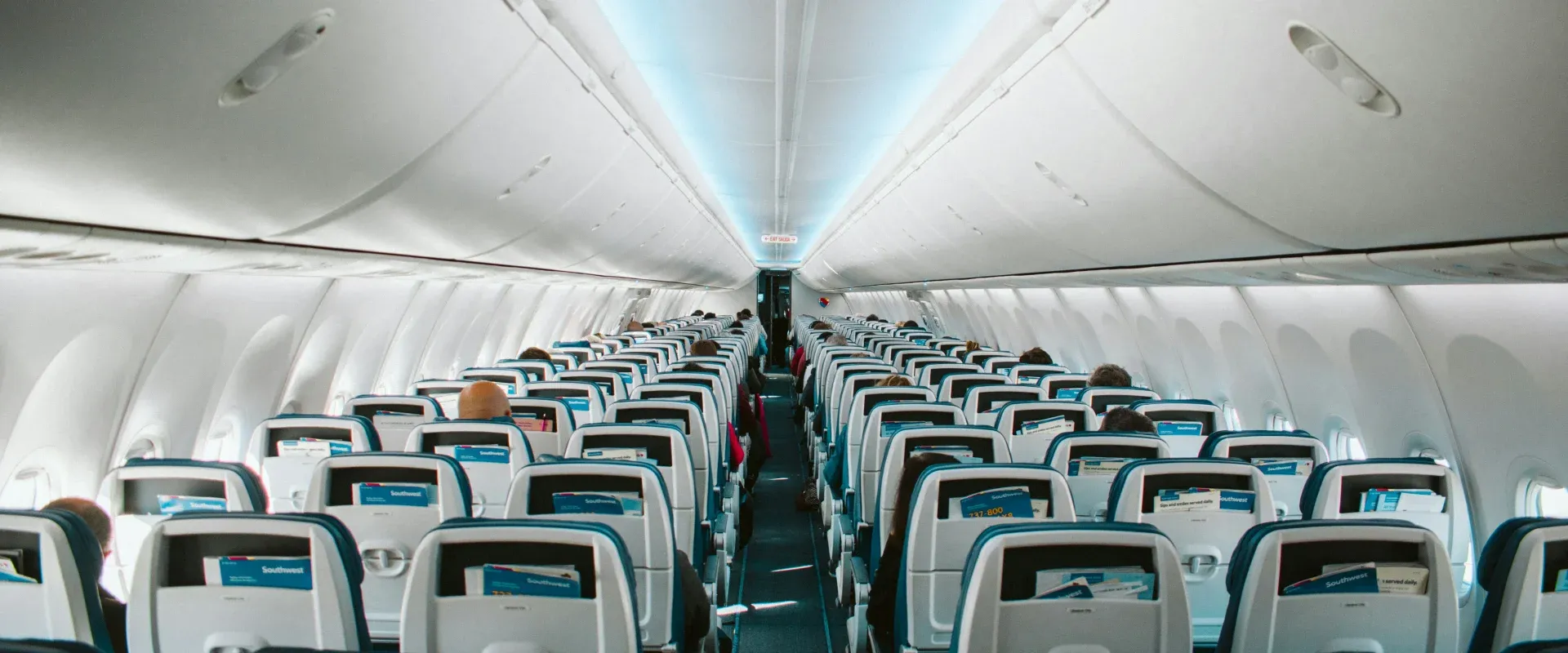
Economy seats typically run 30 to 32 inches of pitch and 17 to 18 inches of width, with limited recline, and even tighter on budget carriers.
Entertainment
Most long-haul economy cabins have seatback screens with movies, TV, and music. Budget airlines may charge for entertainment or skip it entirely, and Wi-Fi usually costs extra.
Meals
Meals are generally included on long-haul flights, though choices are limited. Budget airlines tend to sell snacks and drinks rather than include them.
Lounge access
Not included. Frequent flyers or anyone willing to pay can buy a lounge pass separately.
Extras
Baggage is the least consistent part of economy. Budget carriers often charge for both checked and carry-on bags, and seat selection usually costs extra.
Availability
Economy is on virtually every airline and route, and it's the first cabin to sell out during peak season.
Price range
Basic economy is the cheapest fare, with standard economy a small step up. Prices swing with season, route, and demand.
Target audience
Best for tight budgets, families and groups, and anyone who values a low fare over comfort, especially on short flights.
What is premium economy class?
Premium economy is an upgrade from standard economy, with reclining seats, larger screens, more legroom, and better service. It's a smart pick for long-haul journeys when comfort matters and you have a bit of extra budget to put toward flights.
Seats
Premium economy seats are wider than economy and usually offer around 38 inches of pitch and 18 to 21 inches of width, with deeper recline and often leg or foot rests.
Entertainment
Larger personal screens, a broader library, and noise-canceling headphones are common. Some carriers include Wi-Fi or prioritized access.
Meals
Expect higher-quality meals, upgraded menus, complimentary alcoholic drinks beyond what’s typically offered during mealtimes in economy on long-haul flights, and a more polished presentation.
Lounge access
It’s usually not included with premium economy tickets. Elite status or a loyalty program can unlock it on some airlines.
Extras
Priority boarding, a bigger checked-baggage allowance, and a dedicated check-in counter are standard, and many cabins add an amenity kit with a blanket, pillow, and small comforts.
Availability
It’s common to lock in a seat on long-haul international routes but not on every airline or short-haul flight. Carriers like Emirates, Virgin Atlantic, and Lufthansa have well-regarded products.
Price range
Premium economy usually costs 30–100% more than standard economy, but it’s still a fraction of what you’d pay in business class.
>> Don't overspend on airfare. Learn how to save money on flights and travel more for less.
Target audience
Premium economy is ideal for long-haul travelers who want more comfort, budget-minded business travelers, and couples or families who want an upgrade without paying for business class.
Key differences between economy and premium economy
Comfort and seating
The seat is the biggest difference. Economy gives you roughly 30 to 32 inches of pitch and 17 to 18 inches of width with limited recline.
Premium economy opens that up to about 38 inches of pitch, 18 to 21 inches of width, and a deeper recline, often with leg rests, foot rests, and adjustable headrests.
On a long-haul flight, that gap can be the difference between surviving the journey rather than thriving and arriving rested.
Quality of service
Economy runs on efficiency, with more passengers per crew member and boarding by zone (economy usually boards last, which means less overhead bin space).
Premium economy has a lower passenger-to-crew ratio and earlier boarding, so you get more attentive service and a better shot at storing your carry-on nearby.
Value for money
Whether the upgrade is worth it comes down to your priorities.
At 30–100% the cost of economy, the extra space, service, and amenities tend to justify the cost on long-haul routes or trips for special occasions. For a short flight or the cheapest possible ticket, economy is perfectly fine.
Think of premium economy as a middle ground: closer to business-class comfort without the business-class price.
>> Cheap flights aren't luck. They're strategy. Learn how to find cheap flights and save big.
Additional perks
Premium economy usually adds an extra checked bag or higher weight limit, a dedicated check-in area, and priority boarding to cut your wait.
Lounge access typically isn't included, though some airlines offer it for a fee or through loyalty status. Economy generally skips these and charges fees for extras like checked bags and seat selection.
Premium economy vs. "economy plus" and other lookalikes
This is where cabin names get confusing. Economy plus (also called extra-legroom economy) is not the same as premium economy. This category is only a small step up from standard economy: a few extra inches of legroom, a bit more recline, and sometimes priority boarding. The seat, service, and meals stay largely the same as economy.
On United, the extra-legroom product is Economy Plus, while true premium economy is Premium Plus. On Delta, the extra-legroom seat is Comfort+, and the premium economy cabin is Premium Select. American Airlines uses Main Cabin Extra for extra legroom and premium economy for its long-haul cabin.
Here’s a quick test: If the upgrade is mostly legroom, it's probably an economy plus product. If it comes with a wider seat, upgraded meals, and airport perks, it's likely premium economy.
When to choose premium economy or economy: insider tips
Long-haul flights
If your flight runs longer than eight hours, premium economy can be a game-changer. The extra legroom, deeper recline, and better meals can really improve the experience, and the added space and quieter cabin help you rest and minimize jet lag.
Traveling with family or groups
With kids or older relatives, the extra room and calmer cabin make the journey run smoother. There's more space for restless kids, varied meals and entertainment to keep everyone happy, and priority boarding plus a bigger baggage allowance to take the stress out of settling in.
Business travel and productivity
If you need to work in the air, premium economy gives you more laptop room, a sturdier tray table, and a quieter space. Most cabins add in-seat power and Wi-fi, and the comfier seat helps you show up rested for whatever meeting is waiting at the other end.
Specific airline amenities
Not all premium economy cabins are equal, so it pays to research the best airlines for international premium economy before booking. Some carriers deliver an experience that's close to business class. Singapore Airlines and British Airways, for example, run highly rated cabins with larger screens, upgraded meals, and priority check-in.
Special discounts
Premium economy usually costs 30–100% more, but you can find deals. Going's Elite membership tracks fares on your routes and alerts you to price drops, limited-time offers, and mistake fares, so you can sometimes fly premium economy for the cost of an economy ticket.

What economy and premium economy look like per airline
Premium economy varies a lot by carrier. Here are some of the most popular carriers.
Lufthansa
Lufthansa premium economy offers about 38 to 39 inches of pitch and up to 19 inches of width, with a hard-shell design so you can recline without bothering the person behind you.
Passengers get upgraded meals on fine china, noise-canceling headphones, a bigger baggage allowance, and an amenity kit. The newer Allegris cabins push the seat a bit further.
British Airways
British Airways calls its premium economy World Traveller Plus. Seats run about 38 inches of pitch and 18.5 inches of width, with extra recline, meals served on real dishware, a two-bag checked allowance, and priority boarding and check-in. It lacks business-class privacy, but it's a solid step up in terms of comfort.
American Airlines
American's premium economy offers up to 38 inches of pitch, a wider seat, and enhanced recline. Perks include priority check-in, security, and boarding, two free checked bags, complimentary alcoholic beverages, and upgraded meals.
Singapore Airlines
Singapore is known for its standout service, and its premium economy delivers, with about 38 inches of pitch, 19 inches of width, generous recline, and leg and foot rests. Each seat has a 13.5-inch screen and noise-canceling headphones, plus priority boarding and two priority-tagged checked bags. Their “Book the Cook” service lets you pre-order gourmet meals.
ITA Airways
ITA Airways premium economy offers extra legroom and recline, priority boarding and check-in, a larger baggage allowance, and upgraded dining. It's not the most luxurious cabin on this list, but it's a comfortable step up for long-haul flights.
United Airlines
United's premium economy, branded Premium Plus, features larger seats with up to 38 inches of pitch, more recline, and adjustable leg rests. Passengers also get enhanced meals, complimentary alcohol, two free checked bags, priority boarding, and better in-flight entertainment.
Delta (Premium Select)
Delta's premium economy is called Premium Select, and it has up to 38 inches of pitch, up to 19 inches of width, and up to 7 inches of recline, plus adjustable leg and foot rests. Perks include Sky Priority service, two checked bags, a TUMI amenity kit, noise-canceling headphones, a larger screen, and upgraded dining you can pre-order. There's usually a dedicated flight attendant for the cabin, so service is quicker and more attentive.
Virgin Atlantic
Virgin Atlantic's Premium cabin runs a consistent 38 inches of pitch across its wide-body fleet, with wide leather seats (up to 21 inches on the A330 and 787), a 7- to 8-inch recline, and a footrest. You get priority check-in and boarding, two checked bags, a welcome glass of bubbly, dining on china, and in-seat power. It's often described as “business-lite” for transatlantic routes.
What other classes have to offer
Business class
Business class is a significant step up from premium economy, with spacious seats that usually convert into lie-flat beds. Airlines like Qatar Airways (Qsuite) and Delta One even offer private suites with sliding doors for maximum privacy.
First class
First class is the top of the ladder: private suites, gourmet dining, and personalized service, mostly on international long-haul routes. Some airlines add extras like onboard showers, lounges, and personal minibars, along with priority check-in, VIP lounge access, and even dedicated airport transfers in some cases.
Find the best deals with Going
Choosing between economy and premium economy is tricky, especially when prices are in flux. Are the comfort and perks worth the upgrade, or are you better off with a cheap economy fare?
There's no single right answer, but here's what we're sure of: Going helps you find the best fares across every cabin. And Going Elite members get alerts for those rare moments when premium seats are priced close to economy. Let Going do the searching so you don't have to.
Frequently asked questions
Is it worth paying extra for premium economy?
What is the average price difference between economy and premium economy?
Does premium economy get lounge access?
What is the best airline with premium economy?
What's the difference between basic economy and economy?
Is premium economy the same as business class?
Is premium economy worth it for short-haul flights?
Last updated July 23, 2026
Articles you might like
View All