The Last-Minute Flight Playbook: Save Big Even When You Book Late



August 12, 2026
6 min read
Table of Contents
When you’re booking a flight, do you often find yourself waiting for prices to drop? In actuality, booking at the last minute usually costs more, not less. Booking less than a week before your trip can cost you up to 59% more than booking in the sweet spot, and there's no reliable last-minute deal coming to save you.
Holding out for a bargain late in the game is more gamble than strategy. Here's how last-minute pricing really works and how to find the best deal when the clock is running out.

Key takeaways
- Last-minute flights are usually the most expensive, not the cheapest.
- Fares typically rise in the final three weeks before departure.
- The Bargain Bin Trap: the mistaken belief that airlines will slash prices at the last minute to fill empty seats, when in reality, airfare is far more likely to increase as the departure date approaches. The seats that are left are the ones that no one wanted (or couldn’t afford to get).
- The day and time you book doesn't matter. Flexibility with dates, airports, and destinations does.
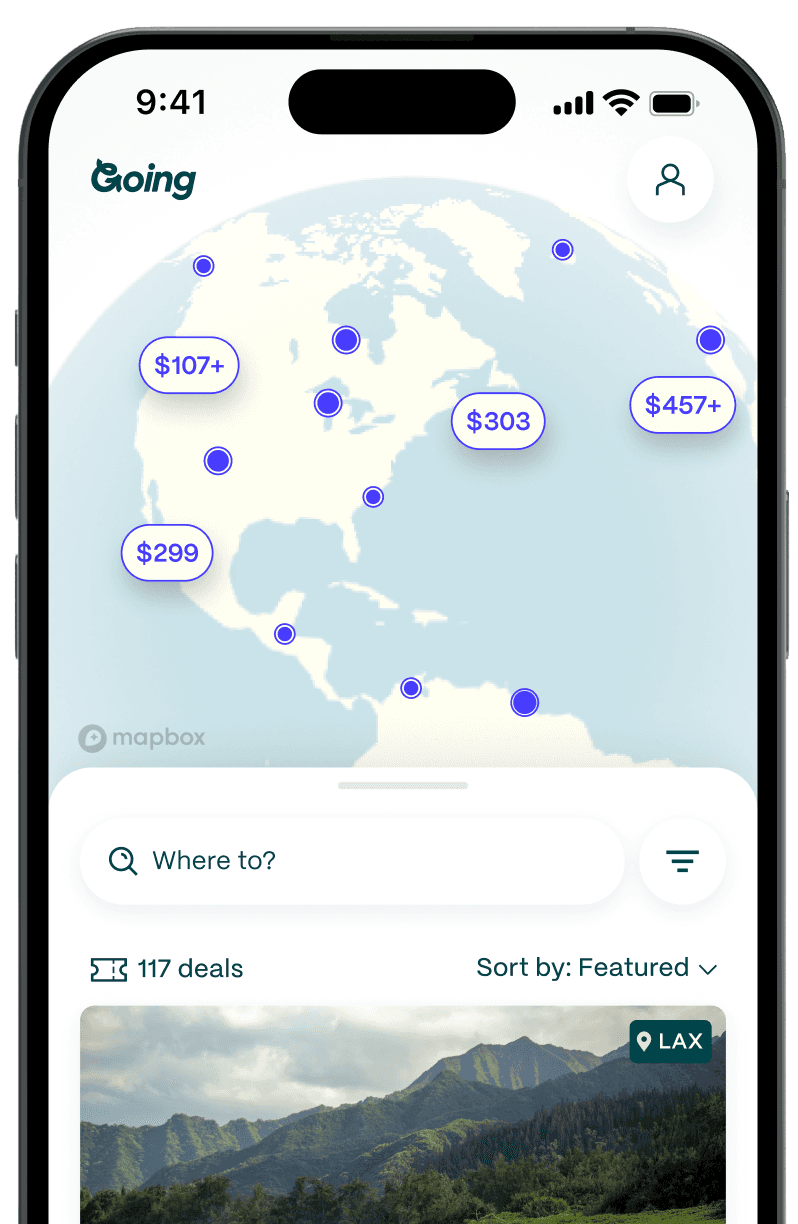
- Downloading the Going app can get you deals on domestic and international flights, advice to use miles efficiently, newsletters with travel advice, mistake fare tracking, and other benefits.
How last-minute flight pricing works
Airlines price seats with dynamic, revenue-management software. Every fare sits in a bucket with a fixed number of seats, and as the cheaper buckets sell, the lowest available price increases.
Close to departure, airlines know who's left in the market: business travelers and people heading to weddings, funerals, or fixed events who have to fly regardless of cost. That’s why airlines tend to raise fares as the departure date nears rather than lower them.
That's also why the “empty seats go for cheap” idea rarely plays out. When leftover inventory does get discounted, it's usually the Bargain Bin Trap in action, the mistaken belief that airlines will slash prices at the last minute to fill empty seats, when in reality, airfare is far more likely to increase as the departure date approaches. Instead, what you’re left with are the red-eyes, ugly layovers, awkward dates, or destinations that few people want.
Is it cheaper to book a trip last minute? Myths vs. reality
No. In most cases, last-minute booking costs more. Prices typically rise in the three weeks before departure, so last-minute deals are mostly a myth.
Flights are reliably cheapest in the Goldilocks Window: not too early, not too late, just right in the middle. This sweet spot is around 1–3 months before departure for domestic flights and 2–8 months ahead for international. If you’re flying during a peak season, like summer, winter holidays, or major events, add a couple of months to each of those windows.
If you spot a good fare within the best booking window, book it. Waiting for a cheaper last-minute version usually means paying more, if the seat is even still there.
(And no, there's no magic drop at midnight or on a "National Cheap Flight Day".)
How to find cheap last-minute flights: 4 strategies
Use the right tools and alerts
The single biggest advantage in a time crunch is knowing about a deal the moment it appears. Let the tools watch prices so you don't have to.
- Set a Going price alert for your routes. Going monitors thousands of routes around the clock and pings you when a fare drops to a price worth booking, including sales and mistake fares.
- Turn on price tracking in Google Flights for your exact dates, and watch a whole month if your dates are flexible.
- Going Premium, our most popular membership, surfaces the most highly sought-after deals, including Hawaii, Alaska, and international deals, mistake fares, and award seats on points and miles. Premium members are among the first to know when a deal drops, which matters most when you have days, not weeks, to act.

Be flexible with dates, airports, and routes
Flexibility is where last-minute travelers actually save. Small changes can move you into a cheaper fare bucket.
- Shift your departure or return by a day or two. Midweek and Saturday departures (Tuesday, Wednesday, and Saturday) tend to be cheaper, while Friday and Sunday are usually the priciest days to fly.
- Check nearby airports at both ends. A secondary airport served by a budget carrier can undercut the main hub.
- Stay open on the destination. Skyscanner's “Everywhere” search shows the cheapest places you can fly right now, which is ideal for a spontaneous trip.
- Consider a connection instead of a nonstop. One stop is often significantly cheaper.
Make your points and miles work
When cash fares spike close to departure, award tickets can hold steadier, so points are a strong last-minute lever. See our full guide to booking last-minute flights with points.
- Keep transferable points (from cards like Chase, Amex, or Capital One) so you can move them to whichever airline has award space.
- Search award availability directly with airlines and their partners. A route that’s expensive in cash can still have saver awards open.
- Book one-ways with points to mix and match the cheapest option each direction.
- Watch for last-minute award seats airlines release as departure nears when a flight isn't selling.
Book smart when the clock is ticking
Once you find a fare that works, protect it.
- Book the moment you see a good price. Last-minute inventory disappears quickly, and hesitating usually costs you.
- Use the DOT 24-hour rule as a safety net. On tickets bought directly with a US airline at least seven days out, you can cancel for a full refund within 24 hours. Lock the fare, then sort logistics.
- Add up the real cost before you commit. A cheap base fare on a budget carrier can balloon once you add bags and seat selection.
- Skip basic economy if you might need to change anything. It's usually nonchangeable and nonrefundable after the 24-hour window.
Top 10 best sites for last-minute flights (pros and cons)
No single site wins every time, so it pays to compare a couple. Here's how the best options stack up for last-minute searches.
| Site | Pros | Cons |
| Going |
|
|
| Google Flights |
|
|
| Skyscanner |
| |
| Momondo |
| |
| Kayak |
| |
| Kiwi.com |
|
|
| Priceline |
|
|
| Expedia |
|
|
| Hopper |
|
|
| CheapOair |
|
|
Whatever you use, cross-check one comparison site against the airline's own website before booking. For more tactics that apply year-round, see how to find cheap flights.

Frequently asked questions
What counts as a "last-minute" flight?
Do flight prices drop last minute?
Do airlines still offer last-minute deals?
How risky are last-minute flight deals?

Last updated August 12, 2026
Articles you might like
View All