


Table of Contents
The cheapest international flight tickets go to travelers who track prices early, stay flexible on dates and destinations, and let deal alerts do the watching for them. Booking at the last minute almost never works, and no single search engine shows you every fare. The real savings come from combining a few smart habits, not from one magic hack.
Here’s what actually works in 2026 based on the strategies our flight experts use every day.
Key takeaways
- Start tracking prices 2–8 months before your trip. International fares fluctuate constantly, and the lowest prices usually appear well before departure, not the week of.
- Flexibility beats every other strategy. Shifting your dates by a day or two or flying into a cheaper nearby airport can save you hundreds of dollars on a single ticket.
- No search engine shows you everything. The biggest deals, including mistake fares, often disappear before they show up on comparison sites.
- Last-minute international flights get more expensive, not cheaper. The cheapest fares are gone weeks before departure.
- Deal alerts catch what manual searching can’t. That’s where we come in, but more on that later.

Start tracking prices early (but don’t book too early)
International fares follow a predictable pattern: They start high when airlines first load the schedule (usually 10–11 months out), dip as seats on the route begin selling, and spike in the final weeks before departure. The sweet spot for booking varies by region, but for most international trips, you want to watch prices 2–8 months before your departure date.
The mistake people make is either booking too early, when fares are still at their initial release price, or waiting too long, when only expensive seats remain. If you’re flying to Europe in July, you should have a sense of typical fares over the prior winter months. If you’re heading to Asia over the holidays, get into booking mode over the summer.
We’ve put together a detailed breakdown of when flight prices actually drop that covers the specific windows by region and season.
Tip: Don’t just check prices once. Set up a price alert on your preferred route the moment you know you want to travel. You’ll get a notification when fares drop, so you can book the day the deal appears instead of refreshing a search page every day.
Be flexible with your dates
A single day can make a $200 difference on an international ticket. Tuesdays, Wednesdays, and Saturdays tend to have lower fares on international routes, while Fridays and Sundays tend to be more expensive. This isn’t a secret hack. It’s supply and demand. Business travelers fill the Monday and Friday flights, and weekenders push up Sunday returns.
Shifting your entire trip by two or three days can significantly lower your fare. If you’re flexible enough to depart on a Tuesday instead of a Friday, you’ll often see the savings immediately.
The same logic applies to seasons. Shoulder season, the months just before and after peak tourist season, is when you’ll find the best combination of low fares and decent weather. For Europe, that means late April to early June and September to October. For Southeast Asia, look at the months around monsoon and dry seasons. For Latin America, May and October often undercut December and January by a wide margin.
Let the destination come to you
Most travelers pick a destination, then they look for deals. But the cheapest international flights usually go to people who do it the other way around: They watch for deals, then they pick a destination.
If you’re open to where you go, you can save 40–90% off typical fares. Our flight experts spot roundtrips to Tokyo under $500, Lisbon under $350, and Bogotá under $300 when the right sale hits. The catch is that these fares don’t last, sometimes only a few hours, and you have to be ready to book.
We’ve ranked the cheapest places to fly internationally from the US based on recent deal data, which is a good starting point if you’re flexible on destination.

Use flight search tools the right way
Flight search engines are good at one thing: showing you what’s available right now. They’re less useful for catching fares that haven't been loaded yet or mistake fares that get corrected within hours (or even minutes).
Use search tools to get a baseline price for your route and dates. Check a couple of different ones, as no single site shows every airline or fare class. Pay attention to the total price including taxes and fees, not just the headline number.
For more details, read our guide to using the most popular flight search engine.
Consider budget airlines and alternative airports
Budget airlines have expanded aggressively into long-haul routes, and the savings can be significant. Sometimes the budget fare is half the price of a legacy carrier on the same route.
But also remember there are trade-offs. Budget carriers often charge extra for checked bags, seat selection, meals, and even carry-ons beyond a personal item. Read the fine print before you book because the advertised price is rarely what you’ll pay by the time you add the basics.
Learn more about the best and worst budget airlines for US travelers.
If your home airport has expensive international options, fly domestic to a major hub city first. A separate domestic ticket to New York, Miami, or Los Angeles, followed by an international departure from there, can save you hundreds even after accounting for the extra ticket.
Tip: When comparing a budget airline fare to a legacy carrier, add up the bag fees, seat selection, and meal costs before you decide which is actually cheaper. The budget fare should be at least $50–$100 lower to break even once fees are included. Then, any additional savings are up to your price sensitivity.
Use the 24-hour rule to lock in a good fare
The US Department of Transportation requires airlines to either let you hold a reservation for 24 hours at the quoted fare without payment or allow you to cancel within 24 hours of booking for a full refund; most US airlines have adopted the latter. This applies to flights booked directly with the airline, as long as the reservation is made seven or more days before departure.
If you see a fare that looks good but you’re not sure, book it. You have 24 hours to cancel for free. If a better fare appears the next day, cancel and rebook. If it doesn’t, you’ve locked in the price. While some booking engines have employed their own version of a 24-hour rule, the federal rule doesn’t automatically apply to flights booked through third-party sites, so book directly with the airline when you want this protection.
Stack savings with points and miles
If you’ve got a stash of airline miles or credit card points, international flights are where they often deliver the most value. A domestic economy flight might cost 25,000 miles to save $300, but an international business class seat can cost 70,000 miles to save $2,000.
The best redemptions go fast, so search award availability early. Airlines typically release award seats around 11 months out, and the best deals disappear within days. Another batch of award seats might be released in the final weeks before departure for last-minute bookers, but waiting for this window for a good deal, especially on a popular route, can be a gamble.
If you’re flexible with dates and routing, you can often find premium cabin seats at economy prices using points. And don’t forget: Points and miles can complement cash deals. If you don’t have enough miles for a full award flight, look for airlines that let you book with a mix of cash and points.
Mistakes that make your flight more expensive
A few habits drain your travel budget without you noticing:
- Booking through only one search engine. Different tools have different airline partnerships and fare inventories. Check several before you book.
- Ignoring the total trip cost. A cheap flight that lands at midnight, when taxis are scarce and hotels charge for an extra night, might cost more overall.
- Waiting for a last-minute deal. International fares rise, not fall, in the final weeks before departure. The “last-minute deal” is one of the most expensive myths in travel.
- Booking through a third party to save $12. When something goes wrong, like a flight cancellation, a schedule change, or a missed connection, the airline will often tell you to deal directly with the booking site, not them. Those $12 in savings can cost you hours on a customer service line.
Let deal alerts do the watching for you
Finding cheap international flights takes time and attention. You can do that work yourself, tracking prices, checking search engines, and studying booking windows, or you can hand it off.
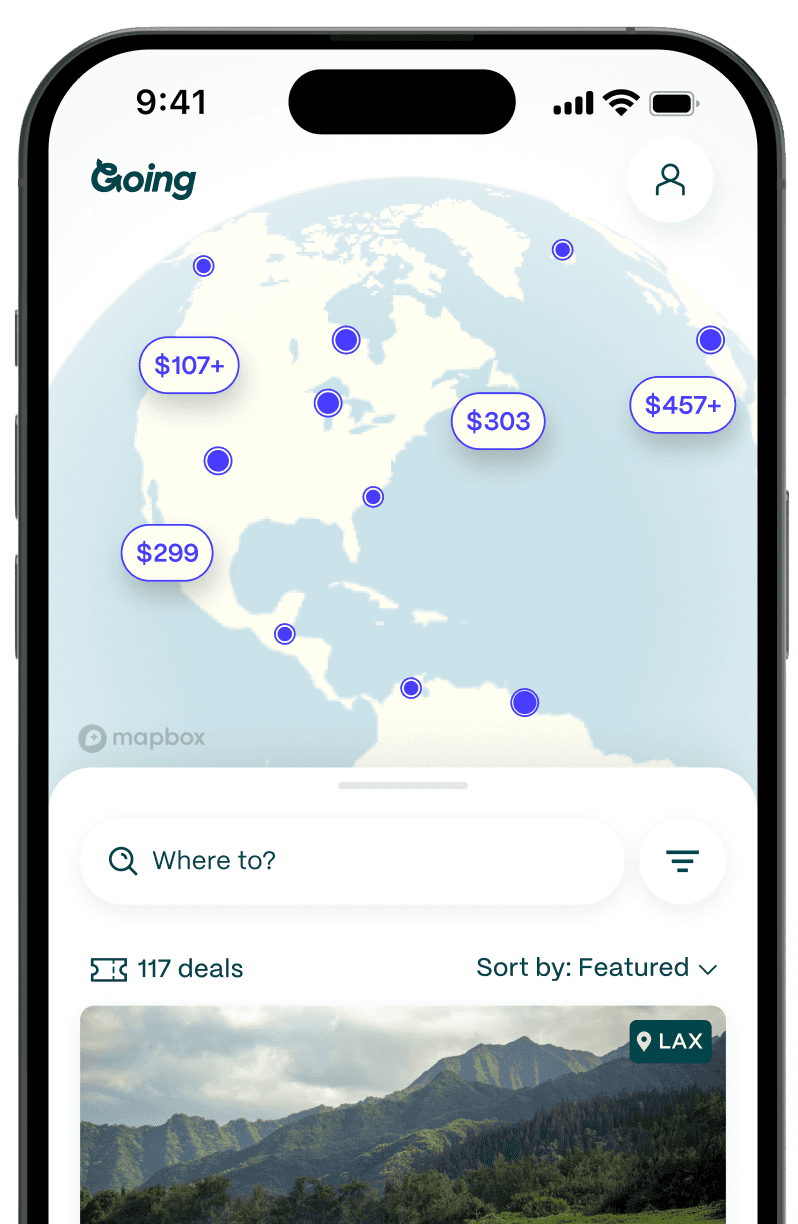
That’s what we do at Going. Our flight experts monitor fares around the clock and send you alerts when prices drop to a deal worth booking. Members regularly see international fares at 40–50% off typical prices, including mistake fares sometimes 90% off and sale prices that disappear before they reach comparison sites.

Frequently asked questions
How can I get extremely cheap international flights?
Can you skip the last leg of a flight?
Are flights cheaper if you use a VPN?
What is the cheapest day to fly internationally?
Last updated September 21, 2026
Articles you might like
View All