Best Time to Book Flights: Hit the Sweet Spot Using Google Flights



March 19, 2026
5 min read
If you’ve ever wondered whether you should book flights now or wait for prices to drop, join the club. Timing a flight purchase can be one of the most uncertain, frustrating parts of planning a trip, as fares are constantly on the move. The good news? Google Flights gives travelers a clearer way to make smarter timing decisions with real data, not by relying on common myths like always book on Tuesday, at midnight, or on August 23.
Google has launched tools that highlight the best time to book flights for your route based on historical pricing patterns. The feature is especially helpful for finding deals in competitive regions like Europe. Used correctly, these insights can be one of the simplest ways to avoid overpaying for flights, whether you're planning a last-minute getaway, a peak holiday trip, or a bucket-list international adventure.
Why knowing the best time to book matters
Booking at the wrong time can cost you hundreds—even on the same route, same airline, and same travel dates. Airfare doesn't rise gradually as departure nears. It fluctuates based on demand, seasonality, competition, and fare class availability.
Knowing when prices are typically lowest gives you a strategic advantage. You avoid booking too early when airlines haven't released competitive pricing and avoid booking too late when only expensive seats remain. Instead, you target the sweet spot, or what we call the Goldilocks Window—the period not too early, not too late, that just-right time when airlines historically offer the most competitive fares.
| What is the Goldilocks Window? The Goldilocks Window is the time before a flight when you are most likely to see an amazing deal pop up. For domestic travel, it's 1–3 months before departure. For international travel, it's 2–8 months. If you're traveling during peak season, add a couple of months to those time frames. |
While there will always be exceptions (e.g., flash sales, new competitors on a route, mistake fares), using timing as a baseline dramatically improves your odds of paying less.
How Google Flights calculates the best booking windows
Google Flights uses real data based on millions of past fare trends to surface price patterns. That’s why travelers increasingly use the system to determine the Google “best time to book flights” feature instead of guessing or relying on outdated rules.
Historical price data and trends
Google Flights analyzes past prices on your route and compares them against current fares. It identifies patterns like:
- When prices are typically lowest
- How far in advance fares start rising
- Price volatility for your travel season
- Whether your current fare is below, above, or within the normal range
These insights are especially helpful when searching for bucket-list routes to places like Europe, where Google Flights' best time to book to Europe varies by season.
For example:
- Summer Europe trips often hit their lowest prices 4–10 months out
- Shoulder-season trips (spring and fall) may stay cheap until 2–4 months before departure
Knowing those patterns helps you decide whether to book now or wait.
When the “best time to book” feature appears
You’ll see this feature appear directly under the calendar or price insights box when enough route data exists. It’ll say something like: “Prices for this trip are usually lowest 60–100 days before departure.”
That’s the Google Flights best time to book flights feature: your cue that there’s enough historical data to guide your timing.
The feature doesn’t appear? It’s possible the route is either newer, less competitive, or too seasonal for consistent pricing patterns.
Booking windows by trip type
While every route behaves differently, Google’s patterns—and our experience watching thousands of airfare drops—point to consistent ranges.
| Domestic (off/shoulder season) | Domestic (peak season) | International (off/shoulder season) | International (peak season) |
| 1–3 months before departure | 3–5 months before departure | 2–8 months before departure | 4–10 months before departure |
Domestic flights: cheapest 1–3 months before departure
Most domestic US flights hit their lowest range around 1–3 months (30–90 days) before takeoff. Booking too early can mean paying more because fares haven’t yet reached a competitive range.
The exception is peak travel dates (e.g., holidays, summer vacation, spring break), and I’ll get to that in a minute.
International flights: cheapest 2–8 months before departure
International routes take longer to stabilize. For most destinations outside the US, the best window is 2–8 months (60–240 days) out from departure. Places like Europe and Asia fit neatly into this range, which is why the Google Flights insights “best time to book Europe” feature can confirm the pricing for when you want to travel based on your departure and arrival airports.
Don't want to worry about timing your own booking? Going alerts you when prices drop—no tracking required from you.

Holiday travel
Above I mentioned that peak travel dates are an exception to the typical Goldilocks Window rule. That goes for holiday travel like Thanksgiving, Christmas/New Year, and school breaks. Fares behave differently during these periods. Prices tend to:
- Start high
- Drop briefly
- Spike sharply as seats fill (and they typically fill quickly)
So for these dates, it’s best to begin your search and book earlier—about 3–5 months ahead of departure for domestic flights and 4–10 months out for international flights. The destination and demand can heavily influence pricing on routes during these time frames.
Using Google Flights tools together for best results
Timing alone doesn’t secure a great fare. Pairing the right strategy with the right tools does.
Calendar and flexible date view
Using the date calendar or “Flexible dates” option shows you how changing travel by just a day or two can shave hundreds off a fare. This is often where the best savings happen.
If you’ve ever changed a departure from Friday to Tuesday and saved 40%, this is why.
Price tracking and alerts
Once you know the typical booking window, set an alert with Google Flights. The tool will email you if the fare drops—sometimes by hundreds in a single day, and other services, such as Skyscanner or Kayak, can also alert you to price fluctuations.
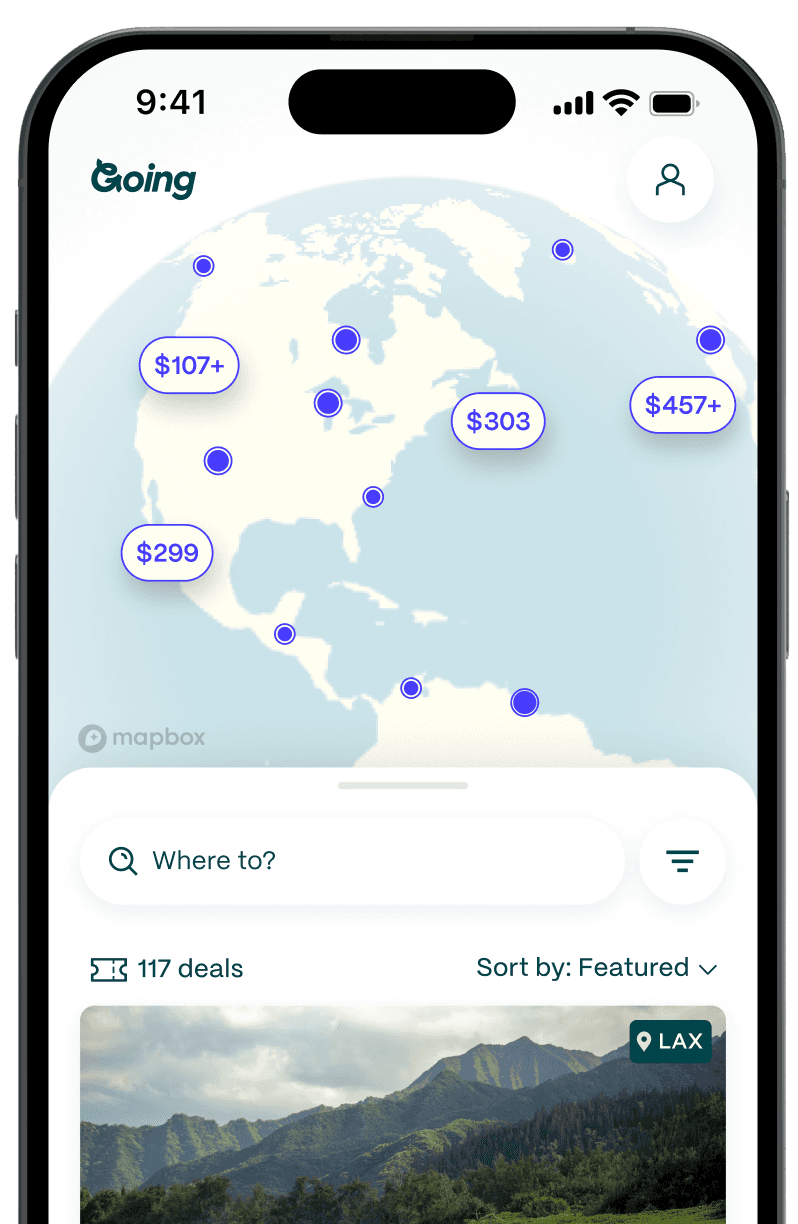
If you set your flight alert in the Going app, we’ll send you a push notification when prices change. This is the simplest way to monitor multiple destinations without daily searching.

Explore Map for flexible travel options
The Explore Map shows where the deals are from your departure airport—great for open-ended trip planning. If prices for Europe are high from one airport but cheap from another nearby, or if it’s cheaper to fly into a nearby airport (e.g., Rome vs. Florence), it can be a good idea to compare your options.
Practical tips: When to book now vs. wait
Understanding timing windows is helpful, but sometimes the best fare is already in front of you.
Route‑specific variability and demand signals
Competitive routes (like NYC–London) drop more often and stay low longer. Limited-service routes (like small-city Europe pairings) rise quickly and rarely drop.
If only a few seats remain at a low fare, it may be a sign to book.
Red flags: low supply, peak holidays
If your trip falls on:
- Summer school breaks
- Major events (e.g., Olympics, FIFA World Cup, Taylor Swift in Stockholm)
- Holidays
- Cherry blossom season in Japan
- Christmas markets in Europe
Waiting may cost you.
Examples: business trips, last‑minute escapes, school holidays
- Business trips: Book as soon as you know dates, particularly for last-minute business trips. Flexibility is limited.
- Last-minute escapes: Use alerts, the Explore Map, and flexible dates. Finding a good deal is possible, but it varies significantly depending on the dates and destination.
- Family school holidays: Book early. The longer you wait, the worse the odds. Everyone else is looking to travel during that time, too.
Advanced tips to maximize savings
Combine multi-airport and flexible-date searches
Search nearby airports and multiple outbound options. Sometimes the cheapest trips to Europe aren’t directly from your home airport. However, a positioning flight can be worth the time and effort.
Check airline rules and fare policies
A cheap fare isn’t automatically a good deal if it’s:
- Nonrefundable
- Bare-bones basic economy
- Missing carry-on baggage
This is, of course, heavily dependent on your travel style. Know what you’re comfortable with, and always read the details.
Interpret “typical” vs. “current” price insights
If Google shows “Prices are typical for these dates,” waiting might help. If it says, “Prices are higher than usual,” and you have flexibility, try adjusting dates or airports.

Conclusion and checklist
Google Flights makes timing airfare far less mysterious by using real data to help you understand when to book, not just guess when to book. The insights tools, flexible date views, Explore Map, and alerts work together to help you make smarter decisions and avoid overpaying for flights.
Going can also help remove some of the uncertainty of when to book flights. With a Premium or Elite membership, you can set up flight alerts so we can send you a push notification when fares fluctuate.
Before booking, run through this quick checklist:
- Did Google show a “best time to book” insight?
- Did you check the flexible date calendar?
- Have you compared multiple airports, both departure and arrival?
- Is this fare below average for the season?
- Did you set price alerts using Going or Google Flights in case it drops?
Do those steps consistently, and you’ll hit far more great fares—and avoid the dreaded “I booked too soon” or “I waited too long” trap.
Frequently asked questions
What is the best day to book with Google Flights?
How do you find the best fares with Google Flights?
Does Google Flights refund you if the price drops?

Last updated March 19, 2026