Best Countries for Expats: Where Americans Are Thriving Abroad in 2026



May 14, 2026
10 min read
Table of Contents
Disclaimer: The information in this article is intended for general guidance only. Going is not a visa or immigration expert, and nothing here should be construed as legal or professional advice. Visa rules, residency requirements, and immigration policies vary by country and individual circumstance, and they can change frequently. We strongly recommend consulting a qualified immigration attorney or visa specialist before making any decisions.
An estimated 5.4 million Americans live abroad, drawn by lower costs, better healthcare, and a quality of life that the US can't always match. The best countries for American expats in 2026 include Portugal, Spain, Greece, and Germany in Europe; Mexico, Costa Rica, Colombia, and Panama in Latin America; Thailand, Singapore, Australia, and New Zealand in Asia-Pacific; the UAE in the Middle East; and South Africa in Africa. Choosing where to go depends on your priorities: budget, climate, language, visa ease, and lifestyle. Here's what you need to know to find your best fit:
- Europe offers high quality of life, strong healthcare systems, and clear visa pathways for remote workers and retirees. Portugal and Spain lead the pack for affordability and culture, and Germany leads for career opportunities and social infrastructure.
- Latin America is where your dollar goes furthest. Mexico is the most popular destination for Americans overall, followed by Colombia, Costa Rica, and Panama, each offering a distinct lifestyle and cost profile.
- Asia and the Pacific range from ultra-affordable (Thailand) to world-class but expensive (Singapore, Australia, New Zealand), with relatively strong English-speaking options and excellent infrastructure across the board.
- The Middle East and Africa offer outlier advantages: zero personal income tax in the UAE and extraordinary purchasing power in South Africa for dollar earners.
- When evaluating any country, the six factors that matter most are cost of living, healthcare access, visa pathways, safety, expat community strength, and language.
- For retirees, the top picks are Portugal, Panama, Costa Rica, and Mexico. For families: Germany, Singapore, New Zealand, and Costa Rica. For budget travelers: Colombia, Thailand, Mexico, and South Africa. For English speakers: Australia, New Zealand, Singapore, and the UAE.
- Before you move, understand your US tax obligations abroad, set up international-friendly banking, sort out health coverage, and find your expat community before you land.
- Moving abroad doesn't mean you have to leave your US-based community behind entirely. Going can help you find cheap flights between the US and your new country, so you can stay connected without overpaying every time. (Note: Going is only available for US travelers, so in order to make the most of the service, you will need to select a US airport as your home airport.)

The cost of living figures, safety context, and general country information throughout this guide are based on a combination of sources, including Numbeo, the Global Peace Index by Vision of Humanity, InterNations Expat Insider, the Association of American Residents Overseas (AARO), and each country's official immigration and tourism authorities. All figures are estimates and can vary significantly depending on your lifestyle, neighborhood, and the current exchange rate. We recommend visiting these sources directly for the most up-to-date information before making any decisions.
Best countries for expats in Europe
Europe is a perennial favorite for American expats, and it's easy to see why. Between the rich history, excellent infrastructure, and (in many places) surprisingly affordable cost of living, it checks a lot of boxes. Here are the top picks for 2026.
Portugal

Portugal has been at the top of every expat list for years, and it's still earning that spot. It's one of the safest countries in the world, English is widely spoken in cities, and the culture is famously warm and welcoming. Also, the food is incredible, the weather is mild, and the pace of life gives you room to breathe.
- Cost of living: $$–$$$
- Rent: $$–$$$
- Groceries: $
- Healthcare: $
- Dining out: $
Note: Lisbon and Porto are pricier than the rest of the country. Rent for a one-bedroom in the city center runs roughly $1,200–$1,800 per month. Smaller coastal towns and the Alentejo region can cut that in half. Private health insurance is an option and affordable by US standards. Legal residents can also access the public system.
- Top cities and regions for expats:
- Lisbon: Urban, cosmopolitan, and full of other expats. Great for remote workers and younger movers.
- Porto: Slightly more laid-back than Lisbon, with a growing arts scene and lower rents.
- The Algarve: The southern coast is a hotspot for retirees, with beautiful beaches and a large expat community.
- Silver Coast (Costa de Prata): A quieter, more affordable alternative to the Algarve, popular with families and retirees alike.
- Main airport: Lisbon Humberto Delgado Airport (LIS); Porto Francisco Sa Carneiro Airport (OPO)
- Average Going deal: $552 roundtrip
- Visa option to know about: Portugal's Digital Nomad Visa (D8) allows remote workers to live legally in the country. The D7 Passive Income Visa is popular with retirees and anyone with consistent passive income.
Greece

Greece has quietly become one of the most compelling expat destinations in Europe. It's more affordable than you might expect, the quality of life is high, and with 300-plus days of sunshine a year, it's hard to complain about the weather. Athens has a thriving expat and digital nomad scene, while the islands offer something closer to slow living at its most beautiful.
- Cost of living: $–$$
- Rent: $
- Groceries: $
- Healthcare: $
- Dining out: $
Rent in central Athens runs about $700–$1,100/month for a one-bedroom. On the islands, prices vary widely by season. Local markets make groceries very affordable. A full meal with wine at a local taverna often runs $12–$18 per person.
- Top cities and regions for expats:
- Athens: Affordable for a capital city, with great food, nightlife, and a rapidly growing remote-work community.
- Thessaloniki: Greece's second-largest city, with a university-town energy and lower costs than Athens.
- Crete: The largest island offers a full range of amenities year round, unlike many smaller islands that go quiet in winter.
- Corfu and the Ionian Islands: Popular with British and European expats, increasingly attracting Americans.
- Main airport: Athens International Airport Eleftherios Venizelos (ATH)
- Average Going deal: $535 roundtrip
- Visa option to know about: Greece launched a Digital Nomad Visa in 2021 that allows non-EU remote workers to live there for up to a year, renewable once.
Spain

Spain has it all: culture, food, geography, history, and a lifestyle practically designed for enjoyment. Whether you're into the buzzing energy of Madrid, the modernist architecture and beach access in Barcelona, or the relaxed pace of Andalusia, there's a version of Spain that fits almost every expat personality. Costs are lower than in Western European neighbors like France or Germany, and the quality of life is consistently high.
- Cost of living: $–$$$
- Rent: $$–$$$
- Groceries: $$
- Healthcare: $
- Dining out: $
Madrid and Barcelona are the most expensive cities, with one-bedrooms in central areas running $1,000–$1,800/month. Seville, Valencia, and smaller cities are considerably more affordable. Spain has one of the best public healthcare systems in the world, available to legal residents. A menu del dia (set lunch) often costs $12–$15 per person and includes multiple courses.
- Top cities and regions for expats:
- Madrid: A world-class city with a huge expat community, excellent public transit, and strong job opportunities for those working locally.
- Barcelona: Iconic, cosmopolitan, and bilingual (Spanish and Catalan). Higher rents, but many expats find it worth it.
- Valencia: A fantastic mid-size city with beaches, great food, and significantly lower costs than Madrid or Barcelona.
- Seville and Andalusia: Deeply traditional, more affordable, and beloved by retirees and remote workers alike.
- Main airport: Adolfo Suarez Madrid Barajas Airport (MAD); Barcelona El Prat Airport (BCN)
- Average Going deal: $505 roundtrip
- Visa option to know about: Spain's Digital Nomad Visa, launched in 2023, allows remote workers and freelancers to live legally in Spain. The Non-Lucrative Visa is another option for those who can show passive income or savings.
Germany

Germany isn’t on everyone’s expat wishlist, but it’s on this one for highly practical reasons. It has one of the strongest economies in Europe, an excellent healthcare system, and a high quality of life. The country is orderly, efficient, and incredibly well-connected. If you're moving abroad for career opportunities or want access to a strong social safety net, Germany is hard to beat.
- Cost of living: $–$$$$
- Rent: $$$–$$$$
- Groceries: $$
- Healthcare: $$
- Dining out: $
Berlin is the most affordable major German city, with one-bedrooms averaging $1,200–$1,800/month. Munich and Frankfurt are significantly higher. Residents are required to have health insurance, but coverage is comprehensive. Eating at local restaurants and traditional Gasthaeuser is far cheaper than comparable dining in the US.
- Top cities and regions for expats:
- Berlin: Young, creative, diverse, and comparatively affordable for a Western European capital.
- Munich: Bavaria at its most charming. Higher costs but excellent quality of life and proximity to the Alps.
- Hamburg: Germany's second-largest city, with a port-city energy and a thriving international community.
- Leipzig: An emerging city with lower costs, a strong arts scene, and a growing expat community.
- Main airport: Berlin Brandenburg Airport (BER); Frankfurt Airport (FRA); Munich Airport (MUC)
- Average Going deal: $545 roundtrip
- Visa option to know about: Germany's Freelancer Visa (Freiberufler) is a solid option for self-employed workers. The Opportunity Card (Chancenkarte) allows skilled workers to job-search from within Germany.
Ready to scout flights to Europe? Going members get exclusive alerts when prices drop to their dream destinations. Join Going Premium or Elite, and start planning your European chapter for less.

Best countries for expats in Latin America
Latin America is where your budget stretches furthest. The time zones align better with the US (a big deal for remote workers), the food is phenomenal, the landscapes are extraordinary, and the communities are lively and welcoming. Here are the top picks.
Mexico

Mexico is the number-one destination for American expats. It's close to home, culturally rich, and offers an enormous range of environments: mountain cities, beach towns, colonial centers, sprawling cosmopolitan capitals. Remote workers have flooded cities like Mexico City and Oaxaca, driving up rents in some neighborhoods, but there are still incredible deals to be found if you look beyond the obvious.
- Cost of living: $–$$
- Rent: $–$$
- Groceries: $
- Healthcare: $
- Dining out: $
Costs vary significantly by location. Trendy Mexico City neighborhoods like Condesa and Roma Norte run $800–$1,400/month for a one-bedroom. Oaxaca, Mérida, and smaller cities offer great places for $400–$800/month. Private healthcare is very affordable by US standards. Street food and local restaurants rarely cost more than $8–$12 per person.
- Top cities and regions for expats:
- Mexico City (CDMX): Massive, vibrant, and full of culture. The expat community here is enormous.
- Oaxaca: A cultural powerhouse with incredible food, art, and a relaxed lifestyle.
- Mérida: One of the safest cities in Mexico, beloved by retirees and families.
- Puerto Vallarta and the Riviera Nayarit: Beach-town living with solid amenities and a well-established expat scene.
- San Miguel de Allende: A UNESCO World Heritage city with a large American and Canadian expat community.
- Main airport: Mexico City Benito Juarez International Airport (MEX); Cancun International Airport (CUN)
- Average Going deal: $336 roundtrip
- Visa option to know about: Americans can stay in Mexico for up to 180 days visa-free. For longer stays, the Temporary Resident Visa is the most common route, requiring proof of income or savings.
Costa Rica

Costa Rica has been welcoming American expats for decades. The country is politically stable, biodiversity-rich, and committed to sustainability. The famous "pura vida" philosophy isn't just a tourism slogan: It reflects the cultural attitude that makes daily life feel lighter. Costa Rica also has one of the best public healthcare systems in Latin America, a major draw for retirees.
- Cost of living: $–$$$
- Rent: $$–$$$
- Groceries: $$
- Healthcare: $
- Transportation: $–$$
The Central Valley (including San José and surrounding suburbs) offers one-bedrooms from $600–$1,200/month. Beachside towns in Guanacaste or the Osa Peninsula can run higher. Local produce is affordable, while imported goods are more expensive. Costa Rica is not a country you navigate easily without a car in many regions, so factor vehicle costs into your budget.
- Top cities and regions for expats:
- The Central Valley (Escazu, Santa Ana, Grecia): Well-developed, close to San José, with a large expat community.
- Tamarindo and Guanacaste: Pacific coast living with surf culture and a strong American expat presence.
- Puerto Viejo and the Caribbean Coast: Laid-back, affordable, and with a distinct Afro-Caribbean culture.
- The Osa Peninsula: Remote and rainforest-rich, for those who want to disconnect.
- Main airport: Juan Santamaria International Airport (SJO); Daniel Oduber Quirós International/Guanacaste Airport (LIR)
- Average Going deal: $332 roundtrip
- Visa option to know about: Costa Rica's Pensionado (Retiree) Visa and Rentista Visa are both popular with Americans. The country also has a Digital Nomad Visa for remote workers earning at least $3,000/month.
Colombia
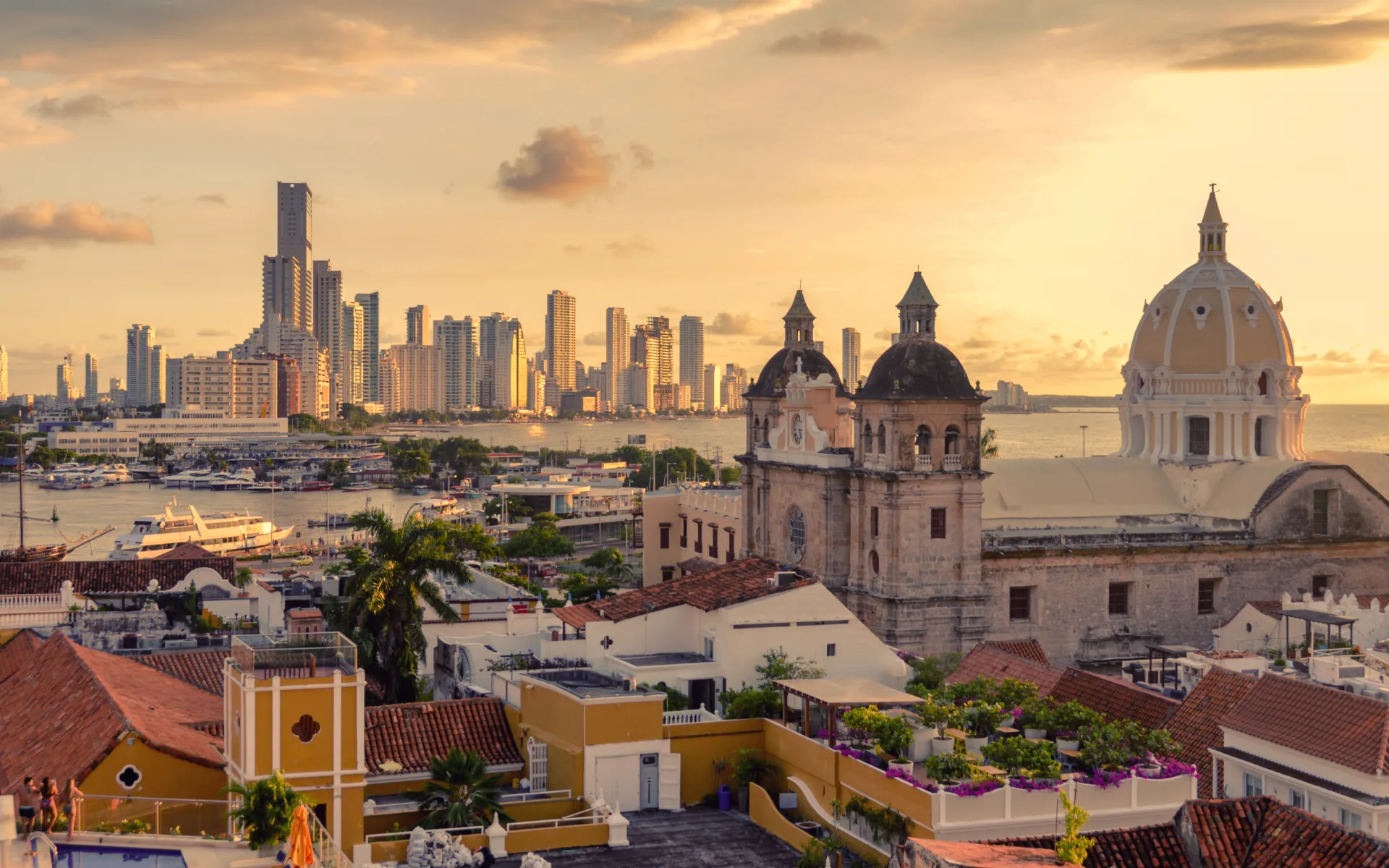
Colombia is safe, dynamic, and full of energy, particularly in cities like Medellín and Cartagena. The cost of living is very low by US standards, the food scene is fantastic, and the expat community has grown rapidly over the past decade. It's especially popular with younger remote workers and digital nomads.
- Cost of living: $
- Rent: $
- Groceries: $
- Healthcare: $
- Dining out: $
Medellin's popular El Poblado neighborhood runs $600–$1,000/month for a one-bedroom. Other neighborhoods and Bogotá offer more variety. Local markets (plazas de mercado) make groceries extremely affordable at $25–$50/week. Colombia's healthcare system is ranked among the best in Latin America. A solid meal rarely costs more than $5–$10 per person.
- Top cities and regions for expats:
- Medellín: The "City of Eternal Spring" has perfect weather year round and a massive expat community.
- Bogotá: The capital offers world-class restaurants, museums, and a sophisticated city lifestyle.
- Cartagena: Colonial, coastal, and beautiful, though hotter and more expensive than inland cities.
- The Coffee Region (Eje Cafetero): Lush, affordable, and less touristy. A favorite among those who want a quieter pace.
- Main airport: El Dorado International Airport, Bogotá (BOG); Jose Maria Cordova Airport, Medellín (MDE)
- Average Going deal: $320 roundtrip
- Visa option to know about: Americans can enter Colombia visa-free for up to 180 days. For longer stays, the Migrant Visa (M) covers digital nomads, retirees, and investors.
Panama

Panama punches well above its weight as an expat destination. Its currency is the US dollar, it's geographically compact, and Panama City is one of the most modern and well-connected cities in Central America. The Friendly Nations Visa program has made it one of the easiest countries in the world for Americans to establish residency, and the country's favorable tax treatment of foreign income is an added bonus.
- Cost of living: $$–$$$
- Rent: $$–$$$
- Groceries: $$
- Healthcare: $$
- Transportation: $
Panama City is the most expensive option for accommodation, with one-bedrooms in desirable areas like Miraflores or El Cangrejo running $800–$1,500/month. Beach towns like Boquete or Bocas del Toro are more affordable. Imported goods are pricier, but local produce is affordable. Panama has excellent private hospitals, including a Johns Hopkins partner facility in Panama City.
- Top cities and regions for expats:
- Panama City: The financial hub, with a large expat population and full urban amenities.
- Boquete: A highland town beloved by retirees for its cool climate and outdoor activities.
- Bocas del Toro: A Caribbean archipelago with a laid-back beach vibe and a younger expat crowd.
- Pedasi: A small Pacific coast town gaining popularity for its surf culture and quiet lifestyle.
- Main airport: Tocumen International Airport (PTY)
- Average Going deal: $322 roundtrip
- Visa option to know about: The Friendly Nations Visa makes Panama one of the easiest countries for Americans to obtain residency. The Pensionado Visa is one of the most generous retirement programs in the world, offering significant discounts on healthcare, dining, entertainment, and more.
Best countries for expats in Asia and the Pacific
Asia and the Pacific offer some of the most exciting expat experiences in the world. The tradeoff, of course, is the distance from home. But for many Americans, that's part of the appeal.
Thailand

Thailand has been a magnet for digital nomads and budget-conscious expats for years. The cost of living is exceptionally low, the food is extraordinary, the infrastructure in major cities is modern, and the natural beauty is hard to match. Chiang Mai in particular has one of the most well-established expat communities in Southeast Asia.
- Cost of living: $
- Rent: $
- Groceries: $
- Healthcare: $
- Dining out: $
A comfortable one-bedroom in Chiang Mai can run as low as $300–$500 per month. Bangkok is higher at $600–$1,000/month for a well-located apartment. Private hospitals in major cities are excellent and affordable.
- Top cities for expats: Bangkok, Chiang Mai, Phuket, Koh Samui
- Main airport: Suvarnabhumi Airport, Bangkok (BKK); Chiang Mai International Airport (CNX)
- Average Going deal: $832 roundtrip
- Visa option to know about: Thailand's Long-Term Resident (LTR) Visa is designed for remote workers, retirees, and high-net-worth individuals. It offers a 10-year visa with work permits included for qualifying applicants.
Singapore

Singapore offers world-class infrastructure, political stability, and one of the highest standards of living anywhere on the planet. English is an official language, the healthcare system is exceptional, and the country is an incredible base for exploring the rest of Asia. It's best suited to expats with corporate jobs or high incomes, as housing is the biggest budget line.
- Cost of living: $$–$$$$$
- Rent: $$$$$
- Groceries: $$$
- Healthcare: $$$
- Dining out: $$–$
Singapore is consistently ranked as one of the most expensive cities in the world. Housing tends to be the largest cost for residents, with modest one-bedrooms often starting at $2,000–$3,000/month. Local hawker centers make eating out surprisingly affordable.
- Top cities for expats: Singapore (city-state)
- Main airport: Singapore Changi Airport (SIN)
- Average Going deal: $761 roundtrip
- Visa option to know about: The Employment Pass is the standard route for professionals. Singapore also offers the Overseas Networks and Expertise (ONE) Pass for high-earning or high-achieving professionals.
Australia

Australia is one of the premier expat destinations for English speakers in the Asia-Pacific region. Sharing a language removes a huge integration barrier, and the culture has enough overlap with American life to feel familiar while still being new and exciting. The outdoor lifestyle is unmatched, the cities are world-class, and the job market is strong for skilled workers. The main downsides are the cost (Australia is not cheap) and the distance from the US.
- Cost of living: $–$$$$
- Rent: $$$–$$$$
- Groceries: $$$
- Healthcare: $$
- Dining out: $
A one-bedroom accommodation in central Sydney or Melbourne runs $1,500–$2,500/month. Public healthcare (Medicare) is available to permanent residents and some visa holders, though most expats on temporary visas will need private insurance.
- Top cities for expats: Sydney, Melbourne, Brisbane, Perth
- Main airport: Sydney Kingsford Smith Airport (SYD); Melbourne Airport (MEL)
- Average Going deal: $835 roundtrip
- Visa option to know about: Australia's Skilled Independent Visa (subclass 189) and Employer Sponsored visas are the main pathways. The country also offers a Working Holiday Visa for Americans under 35.
New Zealand

New Zealand offers natural beauty, a relaxed culture, and a strong sense of community. It's consistently ranked among the world's most peaceful countries, and English is the primary language. The country's immigration system is points-based and prioritizes skilled workers, so getting residency requires planning, but those who make it tend to stay.
- Cost of living: $–$$$$
- Rent: $$$–$$$$
- Groceries: $$$
- Healthcare: $$
- Dining out: $
Auckland is the most expensive city, with one-bedrooms in central areas running $1,400–$2,200/month. Wellington and Christchurch are slightly more affordable. Public healthcare is available to residents, though wait times can be long. Many expats supplement with private insurance.
- Top cities for expats: Auckland, Wellington, Christchurch, Queenstown
- Main airport: Auckland Airport (AKL)
- Average Going deal: $795 roundtrip
- Visa option to know about: The Skilled Migrant Category Resident Visa is the primary pathway for Americans. New Zealand also has a Working Holiday Visa for those under 35.
Best countries for expats in the Middle East and Africa
Being an expat in the Middle East and Africa offers unique advantages, from tax-free income in the UAE to vibrant, multicultural city life in South Africa.
United Arab Emirates
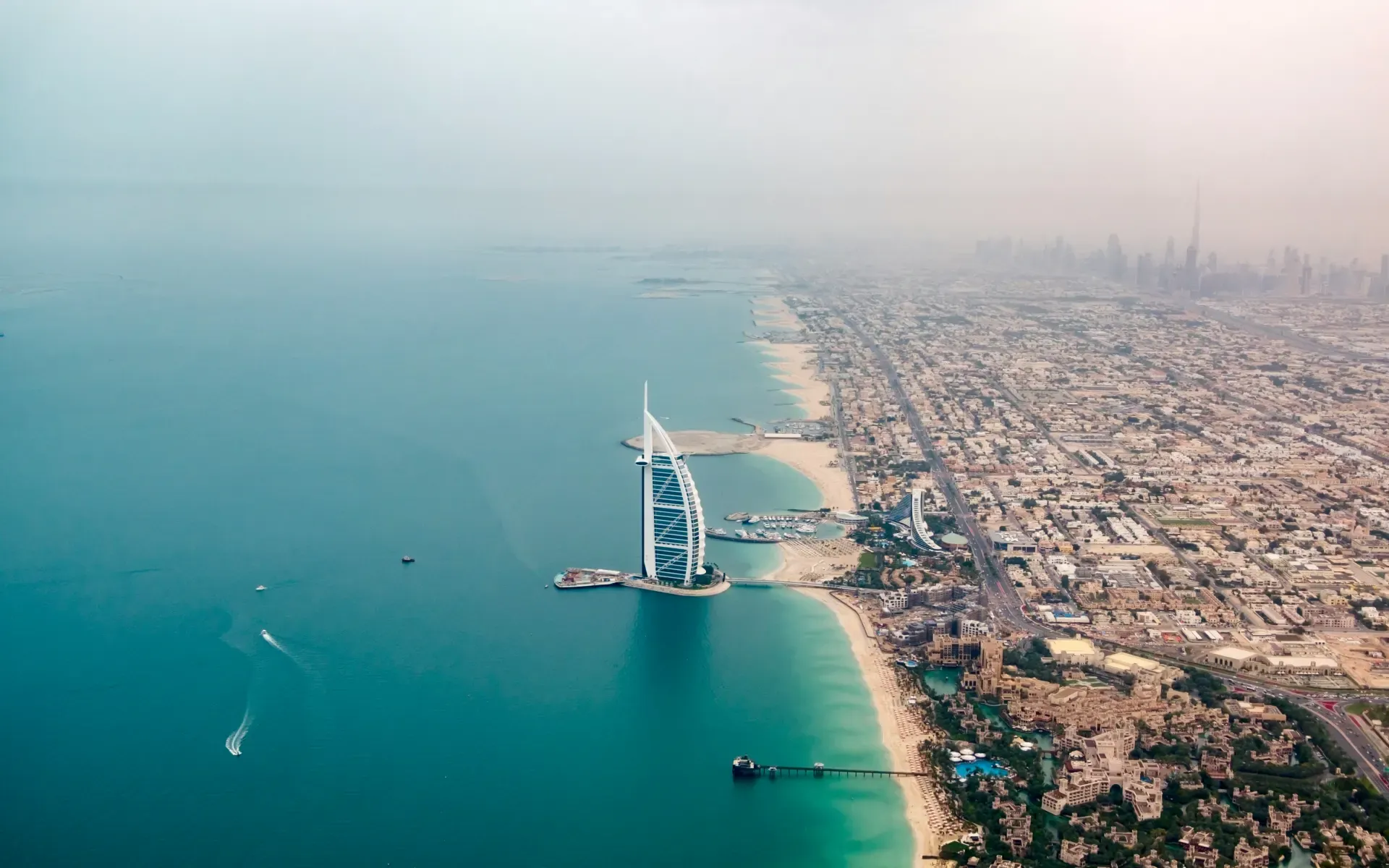
The UAE, and Dubai in particular, has become one of the world's great expat cities. There is no personal income tax, the infrastructure is exceptional, and English is the working language of business. The expat community is relatively large, with foreigners making up over 85% of the UAE's population. The cost of living is high, but for many expats working here, salaries more than compensate.
- Cost of living: $$–$$$$$
- Rent: $$$$$
- Groceries: $$$
- Healthcare: $$$–$$$$
- Dining out: $$–$$$
Dubai is one of the most expensive cities in the region, with one-bedrooms in popular areas like Dubai Marina and Downtown running $2,000–$4,000/month. The absence of income tax is the key financial draw for high earners. Healthcare quality in private facilities is excellent, and the government system is available to residents with mandatory insurance.
- Top cities for expats: Dubai, Abu Dhabi
- Main airport: Dubai International Airport (DXB); Abu Dhabi International Airport (AUH)
- Average Going deal: $691 roundtrip
- Visa option to know about: The UAE's Golden Visa provides long-term residency (5–10 years) for investors, skilled professionals, and entrepreneurs. A Freelance Visa is also available for remote workers.
South Africa

South Africa is one of the most culturally rich and geographically diverse countries on earth. For Americans earning in dollars, it offers extraordinary purchasing power. Cape Town consistently ranks among the world's most beautiful cities, and the country's wine, food, and outdoor culture are world-class. Safety is a consideration that deserves some research before moving. Expats there typically live in well-established neighborhoods, particularly in Cape Town, Johannesburg, and along the Garden Route.
- Cost of living: $
- Rent: $
- Groceries: $
- Healthcare: $
- Dining out: $
The favorable USD-to-ZAR exchange rate is the key draw. A one-bedroom in a safe Cape Town neighborhood runs roughly $500–$900/month. Private healthcare is very affordable in dollar terms and is the standard for expats, as the public system is under strain. Dining and entertainment are a bargain.
- Top cities for expats: Cape Town, Johannesburg, Durban, the Garden Route
- Main airport: Cape Town International Airport (CPT); O.R. Tambo International Airport, Johannesburg (JNB)
- Average Going deal: $920 roundtrip
- Visa option to know about: South Africa's Critical Skills Visa is available for professionals in designated fields. A Retired Person Visa is also available for those with proof of income or pension.
Already eyeing flights to your new home (or excited to have your stateside family and friends over to visit)? Going members get notified the moment prices drop to their dream destinations. Start saving before your move even begins.
What to look for in an expat-friendly country
Choosing a country to live in is not like choosing a vacation destination. You're not looking for the most Instagram-worthy beaches or the most exciting nightlife (though those are nice to have). You're looking for a place where daily life actually works for you. Here are the factors that matter most.
Cost of living
This is usually the first thing people look at. Your dollar goes a lot further in Medellín than in Munich. But don't just look at rent. Factor in healthcare costs, transportation, groceries, utilities, and the lifestyle you want to live. A "cheap" country that requires an expensive car, imported food, and private school for your kids can add up faster than you'd expect.
Healthcare quality and access
Healthcare is nonnegotiable, and it's one area where many countries outperform the US on both quality and cost. Look into whether you'll have access to the public system as a resident, how strong private options are, and whether you need international health insurance. Countries like Portugal, Spain, Germany, and Costa Rica have excellent public systems that legal residents can access. In others, like the UAE or Thailand, the private system is the way to go and is typically very affordable.
Visa and residency options
How easy is it to stay long-term? Some countries, like Panama, actively court American expats with straightforward visa programs. Others require patience, paperwork, and often a local lawyer. Know whether you're looking for a digital nomad visa (typically one to two years), a temporary residency visa, or a path to permanent residency. Each has different income requirements, documentation needs, and renewal timelines.
Safety and stability
Overall crime rates matter, as well as political stability, earthquake risk, hurricane exposure, and quality of local emergency services. The US State Department's travel advisories are a starting point, but dig deeper: Talk to people actually living there, look at neighborhood-level safety data, and understand what precautions locals take. Almost everywhere has both safe and less-safe areas.
Expat community and social life
This might sound less practical, but it's actually one of the biggest factors in whether an expat experience succeeds or fails. A strong expat community gives you a ready-made social network, people who understand the bureaucratic learning curve you're on, and a support system for the harder days. Facebook groups, Meetup.com, and InterNations are great places to gauge how active a community is before you arrive.
Language and cultural integration
English proficiency in your destination country makes daily life significantly easier, especially early on. That said, learning even basic phrases in the local language pays massive dividends in how locals receive you. Countries where English is widely spoken (like Singapore, the UAE, Australia, and New Zealand) have a lower adjustment curve. Romance language countries like Spain, Portugal, and Colombia are manageable with some study, and many expats find the language-learning process enriching.
Best country for expats: Sorted by what matters most to you
Not everyone is moving abroad for the same reason. Here's a quick breakdown by priority, using the countries covered in this guide.
Best country for expats to retire
For retirees, the priorities are typically cost of living, healthcare access, safety, and climate.
- Portugal: The D7 Passive Income Visa was practically designed for retirees. Add world-class healthcare, mild weather, and a welcoming culture, and it's hard to beat.
- Panama: The Pensionado Visa is one of the world's most generous retirement programs, with discounts on medical care, restaurants, and flights.
- Costa Rica: A long-established retiree community, excellent healthcare through the CAJA system, and stunning natural surroundings.
- Mexico: Proximity to the US, affordable private healthcare, and a huge range of environments from beachside to highlands.
Best country for expats with kids
Families need to think about school options, safety, kid-friendly infrastructure, and healthcare.
- Germany: Excellent public schools, free university for residents, strong safety, and great family benefits.
- Singapore: World-class education system and extremely safe. Higher cost, but the schooling quality is exceptional.
- New Zealand: Outdoor lifestyle, welcoming culture, and strong public schools with English instruction.
- Costa Rica: A nature-rich environment, good international schools in the Central Valley, and a well-established expat family community.
Best country for expats on a budget
If stretching your dollars is the priority, these destinations offer the best bang for your buck.
- Colombia: One of the lowest costs of living in Latin America for the quality of life on offer.
- Thailand: Southeast Asia's classic budget destination, with excellent infrastructure in major cities.
- Mexico: Range of cost levels. You can live very cheaply or very comfortably depending on your location and lifestyle.
- South Africa: An extremely favorable exchange rate for dollar earners, with a high standard of living in expat-friendly areas.
Best English-speaking country for expats
If language barrier is your biggest concern, these countries make the transition smoothest.
- Australia: English as a native language, familiar culture, and a strong economy.
- New Zealand: The same, with arguably better work-life balance and more stunning scenery.
- Singapore: English is an official language of government, business, and daily life.
- United Arab Emirates: English is the business standard, and navigating daily life is straightforward for English speakers.
Practical tips before you make the move
Moving abroad involves a lot more paperwork than most people expect. Here are the essential things to get right before you go.
Understanding taxes as an American abroad
The US taxes its citizens on worldwide income, regardless of where they live. That means even if you're paying taxes in Portugal, you still need to file a US tax return. The good news is that the Foreign Earned Income Exclusion (FEIE) and the Foreign Tax Credit (FTC) prevent most expats from double-paying. But the rules are complex enough that working with a tax professional who specializes in expat taxes is strongly recommended before you go.
Banking and finances from overseas
Managing money across borders used to be painful. It's gotten much better. A few things to consider setting up before you leave:
- Checking account without fees: Having a bank account without ATM fees or foreign transaction fees is a game-changer. It's the standard recommendation in expat communities.
- Money-transfer account: Services like Wise or Revolut are great for international transfers and spending in local currencies.
- Keep your US bank account: You'll need it for paying US obligations and receiving income if you’re still paid by a US source.
- Understand FBAR requirements: If your foreign bank accounts exceed $10,000 at any point during the year, you're required to file an FBAR (Foreign Bank Account Report) with the US Treasury.
Healthcare: public vs. private options abroad
Your healthcare strategy depends heavily on your destination. A few general principles:
- Check your existing coverage first: Some US health insurance plans have limited international coverage. Check before you cancel anything.
- Look into international health insurance: Companies like Cigna Global, Aetna International, and Allianz offer plans designed for long-term expats.
- In countries with strong public systems (Portugal, Spain, Germany, Costa Rica), becoming a legal resident typically opens access to the public healthcare system.
- Travel insurance is not a substitute for health insurance if you're living abroad long-term. It covers emergencies and short trips, not ongoing medical needs.
- Before purchasing any supplemental plan, check whether your existing health insurance or credit card already includes international coverage.
Finding your expat community
One of the most underrated parts of a successful move is having people around you who get it. A few places to start:
- Facebook groups: Search "[City] Expats" or "Americans in [Country]", and you'll find active communities with years of accumulated local knowledge.
- InterNations.org: A global expat networking platform with events and forums in most major cities.
- Meetup.com: Great for finding specific-interest groups (hiking clubs, language exchanges, board game nights) wherever you land.
- Reddit: Subreddits like r/expats, r/digitalnomad, and country-specific communities are invaluable for honest, crowdsourced advice.

How Going can help you get there for less
Going isn't a relocation service, and we're not going to help you navigate Portuguese residency paperwork or find an apartment in Medellín. But we do help you, your friends, and your family find great deals on flights. As an expat, that matters a lot.
Going members get alerts on flight deals when prices drop significantly below normal. Premium and Elite members get deals throughout the entire US and internationally.
Whether you're relocating to your new home, or bringing family over to experience your new life, Going helps you do it for less.
Frequently asked questions
What is the best country for American expats?
Which country has the best healthcare for expats?
What is the easiest country for Americans to move to?
What is the best Latin American country for expats?
What is the best country for Black American expats?
Last updated May 14, 2026