Budget Travel Tips: 20+ Recommendations for Low-Cost Travel



August 10, 2026
5 min read
Table of Contents
There are plenty of people who wish they could travel more, and dozens of reasons why those same people may think that’s an unachievable goal. The phrase, “I’d like to travel more” is very often followed by, “but…”
Truth is, budget travel isn't about roughing it. It's about being intentional so you can travel more often, spend less per trip, and stop waiting for the perfect moment. If you’re looking to maximize the amount of travel you can do with limited vacation time, a busy schedule, or a tight budget, you’re in luck. We’re living in the golden age of travel, and exploring the world has never been easier, more accessible, or cheaper.

Key takeaways
- A deal-tracking tool can help you find the right budget-conscious ticket a lot quicker than manually searching for it yourself. Going's team of flight experts monitors fares to hundreds of destinations, saving members an average of $550 per international ticket.
- Flying carry-on only helps avoid checked-bag fees. For example, starting in mid-2026, American Airlines charges $55 for the first checked bag on basic economy fares, according to Skyscanner.
- Hostels are the biggest lodging lever when it comes to budget travel, with dorm beds running $6–$10 a night across Southeast Asia and $10–$15 a night in parts of Latin America, Georgia, and Bulgaria, per Hostelworld's 2026 backpacking guide. Staying outside a city's center, in less-popular destinations, or cities with lower costs of living can cut nightly rates sharply. For example, the daily price of a trip to Zurich averages nearly $164 versus less than $50 in Budapest, according to Statista.
- Eating like a local instead of a tourist can cut food spend by more than half. A full street-food meal in Thailand rarely tops $4–$5, and eating that way for all three meals can keep daily food costs under $15, per Thailand's 2026 travel cost breakdown.
- Regional rail and transit passes beat point-to-point tickets on longer trips, with a 2026 Eurail Global Pass covering 15 travel days within two months running about €553 (up to 20% off for travelers under 27), according to Seat61's Eurail guide.
- Free museum days, national park fee-free dates, and library museum passes go a long way toward saving your budget. Bank of America and Merrill cardholders get free admission to 225+ museums on the first full weekend of every month, per FinanceBuzz, and 2026 offers 10 fee-free days at US national parks, according to Frommer's.
- A no-foreign-transaction-fee card and a fee-rebating debit account eliminate two of the sneakiest travel costs: the 1–3% charged on every foreign purchase and the $5+ ATM surcharges abroad, per NerdWallet and Thrifty Traveler.
Switch to a budget-friendly mindset
Take shorter trips more often
When you have a limited number of vacation days, spending them all at once means you'll wait out the rest of the year with nothing planned. Using a few here and there means you're traveling more often throughout the year—and often spending less per trip.
It's also worth noting that international flights can cost less than traveling across the US. We’ve seen deals like NYC to Madrid nonstop for $275 roundtrip, and Los Angeles to Shanghai for $313 roundtrip. When prices like that come up (and they do, regularly in the Going app), a week abroad becomes easier to justify than you might think.
Explore close to home
No matter where you live, there are trips you could take from home, whether it’s for a weekend or just an afternoon. Pack a picnic, and go for a scenic hike with your family. Go to a museum or gallery. Check out tours on Viator or Airbnb to find new things to do in your city. If you approach your own backyard with the same curiosity as a foreign place, you don’t even have to get on a plane to have an adventure.
Be sure your credit card earns rewards
If you're spending money anyway—on groceries, utilities, subscriptions, gas—there's no reason that spending shouldn't be working toward your next trip. If you pay off your credit card bill each month, look into a card that offers frequent flyer miles, hotel points, or the ability to “erase” travel expenses. Once you’ve racked up enough points, you can use those to pay for part or all of your next flight, so it’s basically nothing out of your pocket.
Check out our beginner's guide to points and miles if you're just getting started.
Lose the “once-in-a-lifetime” mindset
We’re in the golden age of travel, and international flights can often be found for just a few hundred dollars. Yet, people often put off their dream trips because they want to wait until they can “do it right” (whether that means splashing out on a lavish hotel or going for more than two weeks). But since they can’t “do it right” at the moment, they don’t end up doing it at all. Let go of the pressure to make every trip "worth it," and you'll travel more often for far less.
How to save money before you travel
Before beginning your flight search, assess your finances so the trip doesn't unexpectedly derail your budget elsewhere.
Examine your priorities and eliminate expenses
This takes a little soul-searching and a lot of honesty, but it's worth it. Look at your disposable income, and ask whether your spending actually reflects your priorities. Maybe you can swap the daily coffee shop run for coffee you make at home. Cut down on takeout. Drop one or two streaming services you barely use.
Cutting even $80–$100 per month and redirecting it toward a travel fund adds up to a meaningful extra trip within a year, often without changing your daily life in any noticeable way.
Stay focused on goals
Once you've decided to travel more, reinforce the commitment. Think of potential expenses in travel terms: This season's impulse buy might be two more nights somewhere you actually want to be. Put a photo of your destination somewhere visible. The more concrete and present the goal is, the easier it is to make the trade-offs that fund it.
Get a side gig
If you have skills beyond your 9-to-5—or if what you do in your day job is in demand on the freelance market—consider taking on extra work to build your travel fund. The gig economy offers dozens of options: freelance writing or design, driving for a rideshare company, tutoring, dog walking, selling handmade goods, or running errands as a virtual assistant.
Use a budgeting app to save
Financial apps make it far easier to save toward a specific goal because they make progress visible. You Need A Budget helps you figure out exactly how much you can put toward travel. Acorns rounds up purchases so you save with minimal effort. Albert lets you move money into a dedicated travel bucket so you can watch it grow in a tangible way.
Set a target, automate a weekly or monthly transfer into a dedicated travel account, and treat it like a bill that must be paid. Within a few months, the balance will surprise you.
How to find cheap flights on a budget
Flights (alongside accommodations) are usually one of the single biggest expenses of any trip, making them a high-leverage place to save.
Use flight search tools and deal alerts
The most efficient approach is to stop manually searching and let deal-tracking tools do the work instead. Google Flights excels at comparing routes and dates with its price graph and email tracking, Skyscanner is built for flexible "everywhere" searches and multi-airport alerts, and Hopper pushes mobile buy-or-wait predictions. Each has a different strength, per Upgraded Points' comparison of flight deal alert sites.
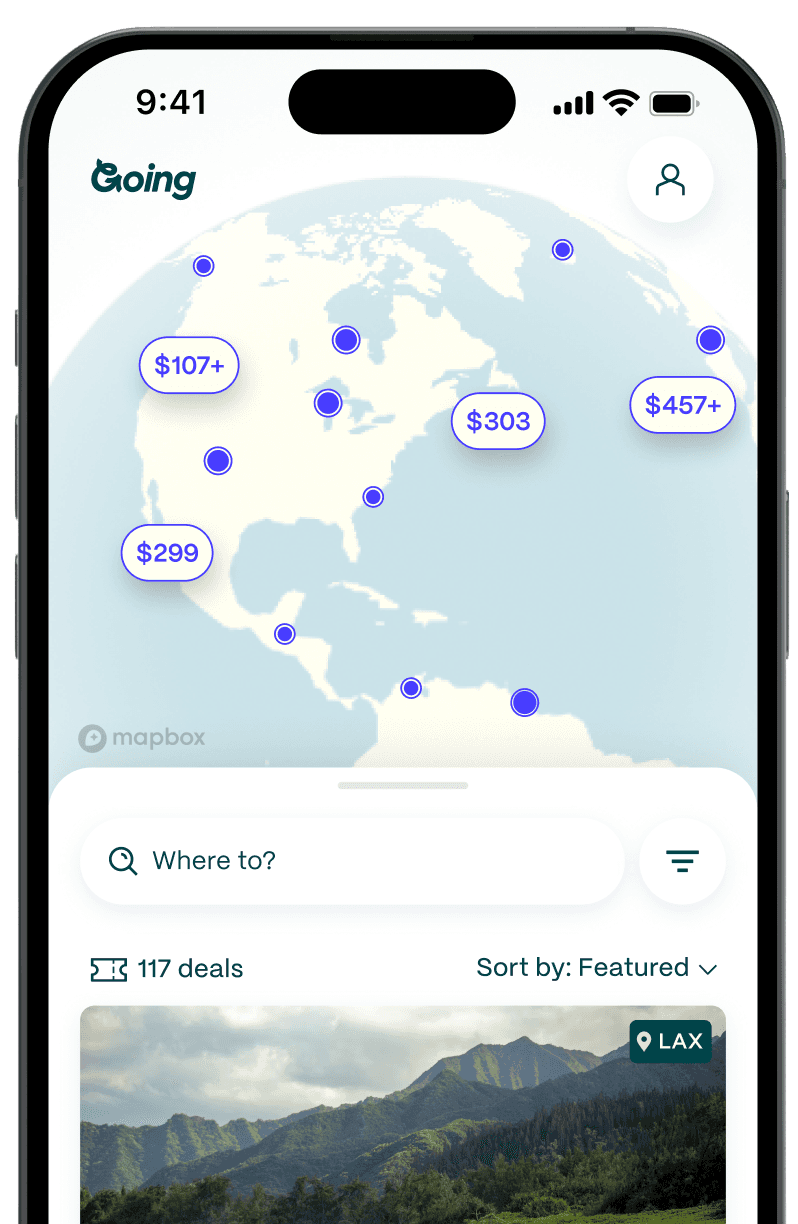
Going takes a different approach: Instead of you searching, a team of flight experts monitors fares to hundreds of destinations and emails you only when a deal clears their bar, with typical savings of $550 per international ticket.
Fly carry-on only to dodge bag fees
Flying carry-on only avoids the checked-bag fees many airlines now charge even in basic economy. For instance, starting mid-2026, American Airlines charges $55 for the first checked bag on basic economy fares, per Skyscanner's airline baggage fee guide. Skipping the checked bag also means skipping baggage claim wait times, a nice bonus on a short trip.
Take advantage of long weekends and holidays...
You may not be able to pull off a 40-day PTO optimization plan, but even scheduling one or two trips around existing holidays can give you bonus days to extend what you already have. Departing after work on a Thursday and returning late on the Monday after a long weekend (using only two vacation days) gives you a five-day trip.
Also worth noting: If you're not sentimental about major holidays, use those extra days off to travel rather than stay home. Just be aware that flight and accommodation costs tend to spike around the holidays themselves, so this tactic works best when you have some flexibility on the exact travel dates.
...And shoulder seasons…
Shoulder season, the stretch between peak and off-season, is the budget traveler's sweet spot: decent weather, smaller crowds, and meaningfully lower prices. In most parts of the world, spring (March–April) and autumn (September–October) qualify.
...And 2-for-1 tickets and long layovers
A long layover in an interesting city isn't an inconvenience—it's a free bonus destination. Airlines have increasingly built itineraries designed for exactly this: 2-in-1 tickets and stopovers that let you explore a city on the way to your final destination at no extra airfare cost. Recent examples Going has sent members include LAX to Rio de Janeiro with a stop in Lima and East Coast flights to Europe with a stop in Iceland.
Once you see that layovers don’t have to be a burden, you open up a whole new world of possibilities. And who knows, maybe you’ll fall in love with that layover destination, and it will become your next final destination.
Go where—and when—the deals dictate
Most people decide where they want to go, pick dates, and then search for flights. Flip that script. If you're open to a range of destinations, keep an eye out for deals and book when something you like comes up. This is exactly what Going is built for. Members set their home airports, tell us where they want to go (or let us surprise them), and get alerted when fares drop to exceptional prices.

Prioritize inexpensive destinations
We’ve all got those lists of places we’ve dreamed of going for ages, but those aren’t necessarily budget-friendly destinations. If money is what’s holding you back from more trips, help each dollar go farther by heading to places that are cheaper to travel in. Places in South America, Southeast Asia, and Eastern Europe, for example, tend to be on the less expensive end of the spectrum.
Check out our list of the world's cheapest travel destinations for inspiration.
Find a travel buddy or group...
Shared costs make a real difference. A rental car split two ways costs half as much. A vacation rental shared among four people can cost less per person than a budget hotel room. Companies like Intrepid, Contiki, and Globus offer group tours organized by age, travel style, or interest—built-in companions plus the purchasing power of a group.
See our tips for traveling with friends for how to make it work smoothly.
...Or go solo
Solo travel has budget advantages that don't get enough credit. Single travelers can be far more flexible in ways that are much harder to coordinate with a group: departing on short notice, taking the last available seat, staying in a hostel dorm, or adjusting plans on the fly. Solo trips also tend to generate deeper engagement with a place.
Read our solo travel tips for everything you need to know before going it alone.
How to save on accommodation
Lodging is another expensive line item on most trips, and it's where budget travelers can make dramatic cuts, without always sacrificing much comfort.
Hostels, guesthouses, and homestays
Hostels can, in fact, be top notch, with dorm beds running $6–$10 a night across much of Southeast Asia and $10–$15 a night in parts of Latin America, Georgia, and Bulgaria, according to Hostelworld's 2026 guide to the best-value backpacking destinations. Guesthouses and homestays, common throughout Asia, Latin America, and Eastern Europe, often undercut hotel prices while adding a home-cooked breakfast and local insight.
Note that staying in established, locally owned hotels or B&Bs helps you directly support the local economy and avoid indirectly displacing residents due to short-term rentals. These accommodations typically follow regulations, promote more sustainable practices, manage tourist numbers more responsibly, and are less likely to strain infrastructure.
Book direct and stay just outside the tourist center
Two habits consistently lower accommodation costs. First, booking directly with the hostel or hotel rather than through a third-party site often gets you a lower rate, since owners avoid a booking-platform commission and are willing to pass some savings on if you ask.
Second, staying just outside the main tourist center (even a 15–20 minute walk from major sights) cuts nightly rates substantially, as prices spike around landmarks. Staying in less-popular destinations, as well as in cities with lower costs of living, can also cut nightly rates sharply. For example, the daily price of a trip to Zurich averages nearly $164 a day for budget travelers, while Budapest can come in under $50 a day, per Statista's city cost comparisons.
How to eat cheap while traveling
Food is where a lot of travel budgets balloon, but it can also be one of the easiest categories to control if you plan ahead.
Shop groceries, markets, and bakeries, and pack picnics
Shopping at local grocery stores, open-air markets, and bakeries for breakfast and lunch (instead of restaurants for every meal) can cut a day's food spend by more than half. Picnic-style meals from a market are also one of the best ways to experience local produce and culture, not just a cost-saving shortcut.
In budget-friendly destinations like Thailand, a full meal with a drink from a night market or roadside vendor rarely exceeds $4–$5, and eating street food for all three meals can keep total daily food costs under $15, according to Thailand's 2026 travel cost breakdown.
Eat your big meal at lunch
When you do want a sit-down restaurant experience, eat your big meal at lunch instead of dinner. Many restaurants, especially in Europe and Latin America, offer a discounted fixed-price lunch menu (Spain's "menú del día" is the classic example) that can cost a third of what the same meal would run at dinner.
Getting around: cheap local transportation
Local transportation is another category where the “familiar” route (e.g., rideshares, taxis) tend to be the most expensive choice available.
Use public transit instead of taxis and rideshares
Taxis and rideshares are the default for many travelers, but public buses, trams, and metros typically cost a fraction of a rideshare fare and, in most cities, are safe, frequent, and easy to navigate with a translation app or transit app in hand. Many cities also offer multi-day or weekly transit passes that work out cheaper than paying per ride if you're stopping in one place for more than a couple of days.
Buses, trains, and regional travel passes
For longer regional trips, buses and trains can often be cheaper than domestic flights or rental cars, and they let you see the areas in between destinations. In Europe specifically, a rail pass can simplify multi-country trips. A 2026 Eurail Global Pass covering 15 travel days within two months runs about €553, with youth (under 27) discounts up to 20% off, according to Seat61's Eurail guide. Whether a pass or individual point-to-point tickets work out cheaper depends on your itinerary and how far in advance you book, so it's worth pricing both before committing.
Free and low-cost activities
Sightseeing doesn't have to come with an admission fee attached.
Free museum days and walking tours
Many major museums offer a free day or evening each week or month. The Smithsonian museums in Washington, DC, are free year-round, and Bank of America and Merrill cardholders get free general admission to more than 225 participating museums nationwide on the first full weekend of every month through the bank's "Museums on Us" program, according to FinanceBuzz. Smithsonian Day, held every September 17, also opens participating museums and cultural centers nationwide for free, per National Today.
Free, tip-based walking tours are available in most major tourist cities worldwide, including cities like Madrid to Buenos Aires. You can join a 2–3 hour guided tour with no upfront fee and tip the guide afterward based on what you felt it was worth.
National park free-entry days and library passes
If you're exploring US national parks, mark your calendar for the National Park Service's fee-free days. In 2026 that includes Presidents Day, Memorial Day, Independence Day weekend, and several other dates when entrance fees are waived, according to Frommer's 2026 list of national park free days.
If you have a public library card, check whether your library participates in a museum pass program like Discover & Go, which lets cardholders reserve free or discounted tickets to dozens of museums, zoos, and science centers in participating regions, per SFPL and The Penny Hoarder.
Smart money tips: cards and fees
Fees on your payment cards add up. Here’s what to look out for.
Avoid foreign transaction and ATM fees
Foreign transaction fees, typically 1–3% of every purchase, add up fast if your card charges them. It can be worth switching to a no-foreign-transaction-fee credit card before you travel, such as those highlighted in NerdWallet's list of the best cards for international travel.
ATM withdrawal fees are just as sneaky, but plenty of cards waive these fees if you know which ones to use. Or, you can reach out to your bank to see if they will waive the fees retroactively, as well.
Use points and miles strategically
Beyond avoiding fees, using points and miles strategically can offset a chunk of travel costs. Redeeming a rewards card's transferable points for a flight or hotel stay, or applying airline miles toward an upgrade, effectively turns everyday spending into free (or heavily discounted) travel.
Going Elite members, for instance, get access to points-and-miles deals in premium cabins that can save up to $2,000 per international ticket compared to paying cash.

Make your trip pay for itself
Work remotely when possible
You don't have to become a digital nomad to take advantage of remote work. Even occasional remote arrangements can stretch limited vacation days significantly. Working from Lisbon for two weeks instead of your living room costs nothing extra on flights. Flying out Thursday, working Friday from your destination, enjoying the weekend, then working Monday and Tuesday before flying home Tuesday evening.
Read our guide to combining work and travel for more tips.
Try house sitting or home exchanges
Accommodation is typically the single largest travel expense after flights. Eliminating it changes the budget entirely. Sites like Trusted Housesitters connect homeowners and house and pet sitters. (Going members save on a Trusted Housesitters membership. Log into Going, and head to our Membership Perks page to redeem.)
List your own place when you're away
Any time you're out of town, listing your home on Airbnb or Vrbo means your space is working while you travel. It can take some effort to get set up—making sure your home is guest-ready, coordinating check-ins, managing the listing—but the payoff can be meaningful for some.
Negotiate for more vacation days
Your vacation allotment doesn't have to be fixed. You may be able to get a few extra days or work out a flex-time arrangement so that when you work overtime you can “bank” some of those hours to take additional days off. The best times to ask: when negotiating a new job, receiving a promotion, or during your annual review.
Read our guide on how to negotiate for more vacation time for strategies that actually work.
Extend work trips
If your job involves any travel at all, turn your business obligation into a personal adventure by adding a day or two on either end. The flights are already paid for. The only incremental cost is an extra night of accommodation and daily expenses—a fraction of what a separate trip to the same destination would cost.
Check out our tips for getting around cheaply in Europe once you're already there.
Create a saving strategy based on your destination

US
The US is enormous, and costs vary wildly by region and city. The key to budget travel domestically is knowing which markets are expensive by nature and planning around them.
- New York City is one of the priciest cities in the world, but free attractions (Central Park, the High Line, most major museums on suggested donation), and a world-class subway system mean you can keep daily costs surprisingly low.
- Miami peaks in price from December through March when northern visitors flood South Beach. Visit in May or June for a fraction of the cost.
- Las Vegas is one of the few major US cities where budget travelers can win with free buffet promotions and cheap flight competition.
- New Orleans rewards travelers who visit outside Mardi Gras and Jazz Fest. The food, music, and atmosphere are equally extraordinary year-round, and hotel rates drop dramatically in summer.
- Nashville has gotten more expensive as its popularity has exploded, but the live music scene is largely free.
- When visiting San Francisco, Washington DC, or Chicago, use public transit, eat at neighborhood spots rather than tourist-area restaurants, and travel in shoulder season.
- Key West and Myrtle Beach follow classic beach town pricing logic: Visit just before or just after summer, and you'll pay significantly less.
- Los Angeles is sprawling and car-dependent, which adds up. The budget hack here is booking accommodation in neighborhoods like Silver Lake, Echo Park, or Culver City and using the metro.

Japan
Japan's reputation for being expensive is largely outdated. Budget accommodation (hostels, guesthouses, capsule hotels) is widely available and often of excellent quality. The rail system is efficient enough to replace taxis almost entirely.
One of the most popular Japan budget tips is leaning on convenience stores (konbinis) for meals. Onigiri, hot foods, sandwiches, and prepared meals are genuinely good and cost $1–4 per item. It's cheaper than buying groceries, requires no kitchen, and is faster than any restaurant.

Europe
Europe rewards shoulder-season travelers more than almost any other region. Visiting in April–May or September–October cuts accommodation by 30–50% in most popular cities and makes the experience significantly more enjoyable.
Staying in smaller cities (Porto over Lisbon, Bologna over Florence, Seville over Barcelona) can also get you more for your money without sacrificing quality of experience. Budget airlines like Ryanair, EasyJet, and Wizz Air make inter-European travel extremely cheap once you're on the continent. Learn how to find cheap flights to Europe before you start booking.

Thailand
Thailand remains one of the world's best-value destinations for travelers willing to embrace local infrastructure. Street food costs $1–3 a meal and is frequently extraordinary. Guesthouses and budget hotels in cities like Chiang Mai cost $15–30 a night. Local transport—songthaews, tuk-tuks, overnight trains—is cheap and often enjoyable in its own right.
The single biggest budget mistake in Thailand is flying domestically when overnight trains and buses cover the same routes at a fraction of the cost—and save you a night's accommodation in the process.

Egypt
Egypt is undervisited relative to how extraordinary it is, which translates directly into excellent value. Accommodation, food, and local transport are all inexpensive by international standards. Your main costs (Pyramids entry, Luxor temples, Red Sea diving in Hurghada or Dahab) are also reasonable.
The key budget consideration is booking a reputable operator for Nile cruises and archaeological site visits, where the gap between cheap and mid-range affects the experience.

Caribbean
The Caribbean has a luxury reputation, but the right islands make it workable on a budget. Avoid the most expensive options (St. Barts, British Virgin Islands) in favor of better-value destinations like the Dominican Republic, Jamaica, Puerto Rico (no passport required for US travelers), and Curaçao.
All-inclusive resorts, counterintuitively, can be valuable depending on how you prefer to eat and drink on vacation. Travel in late April through early June, just before hurricane season, for the lowest prices of the year.

Join Going and save on flights
Every budget travel strategy in this guide becomes more powerful when the flights are cheap. And the most reliable way to find cheap flights is to have someone watching fares for you around the clock.
That's what Going does. We search dozens of websites, airlines, and OTAs to find the best deals, and when we find a cheap flight departing from your home airport, we send a push notification or email with everything you need to know to book the deal.
We search dozens of flight booking sites every day so you don't have to.
The original article written by Jessica Speigel has been modified to include additional tips and information.
Frequently asked questions
Can you go on a trip with $500?
Is $1,000 enough to travel?
How can I travel on a budget?
What is the cheapest way to travel?
How do I travel cheap internationally?
Last updated August 10, 2026
Articles you might like
View All